Category Archives: Atmosphere

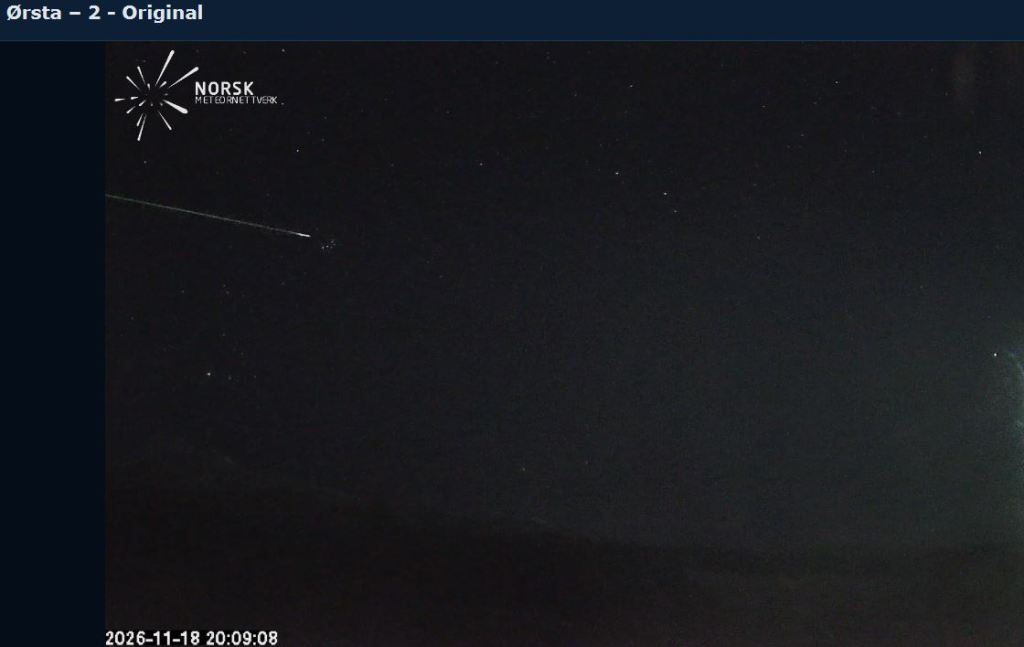
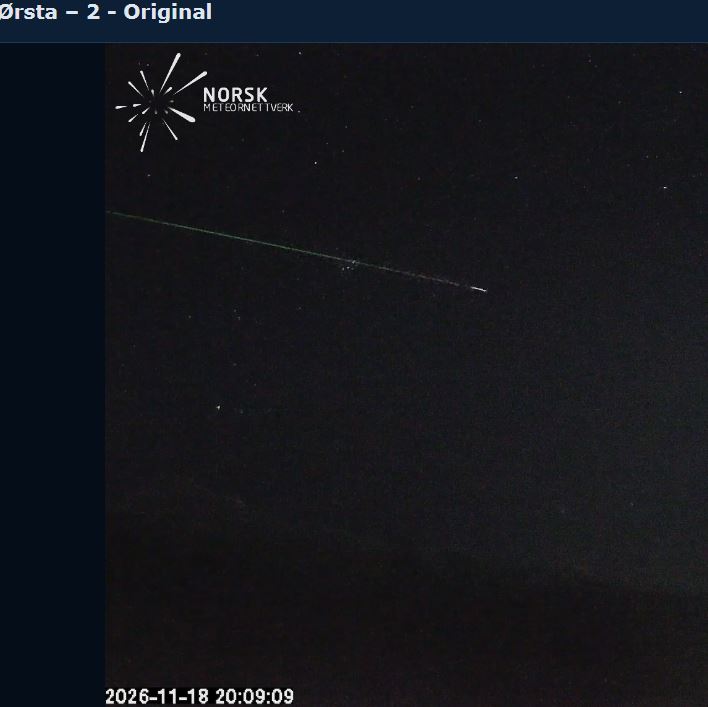
Rare “Earth-grazer” meteor captured over Ørsta, Norway. November 18, 2026.

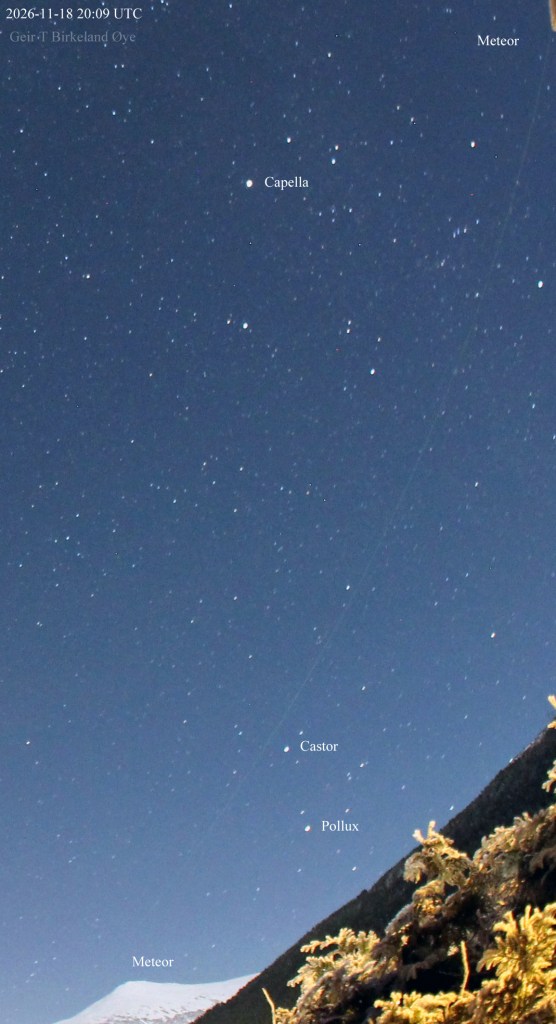
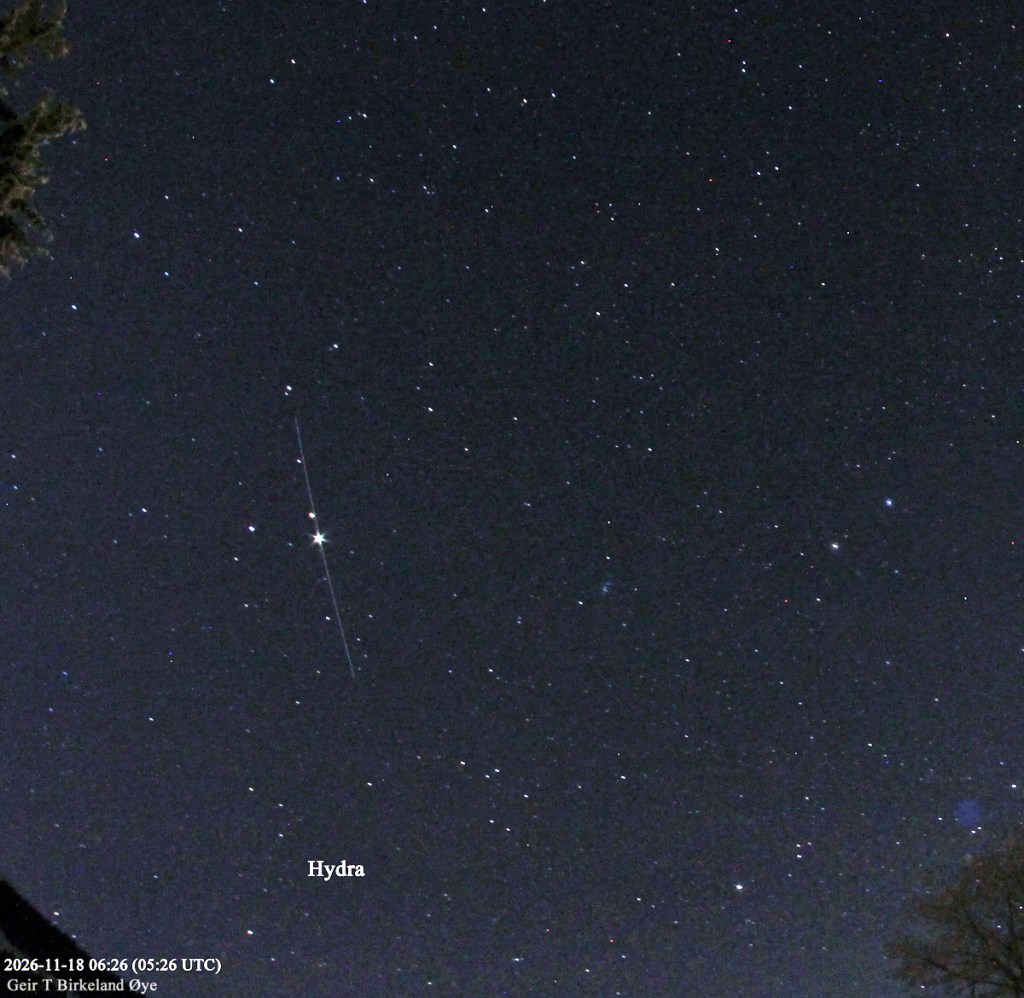
At 21:09 local time on November 18, I was fortunate enough to both witness and photograph a rare type of meteor known as an Earth-grazer skimming the upper atmosphere above Norway.

Equipment: Canon 650D with an 8 mm fisheye lens at ISO 1600. The event was also recorded by my AllSky7 camera (AMS 135), which I operate in collaboration with the Norwegian Meteor Network. The sky was somewhat affected by moonlight.Unlike an ordinary meteor that quickly burns up in the atmosphere, this one appeared to glide across the sky on an exceptionally shallow trajectory. From Ørsta, it was first visible low in the northeastern sky near Castor and Pollux in Gemini before tracing a fine, needle-thin streak of light among the stars and passing close to the Pleiades.

Preliminary calculations suggest that it crossed a large part of Norway before escaping back into space.Remarkably, this is the second Earth-grazing meteor I have witnessed from Ørsta. The first was the famous Møre fireball on December 27, 2015.
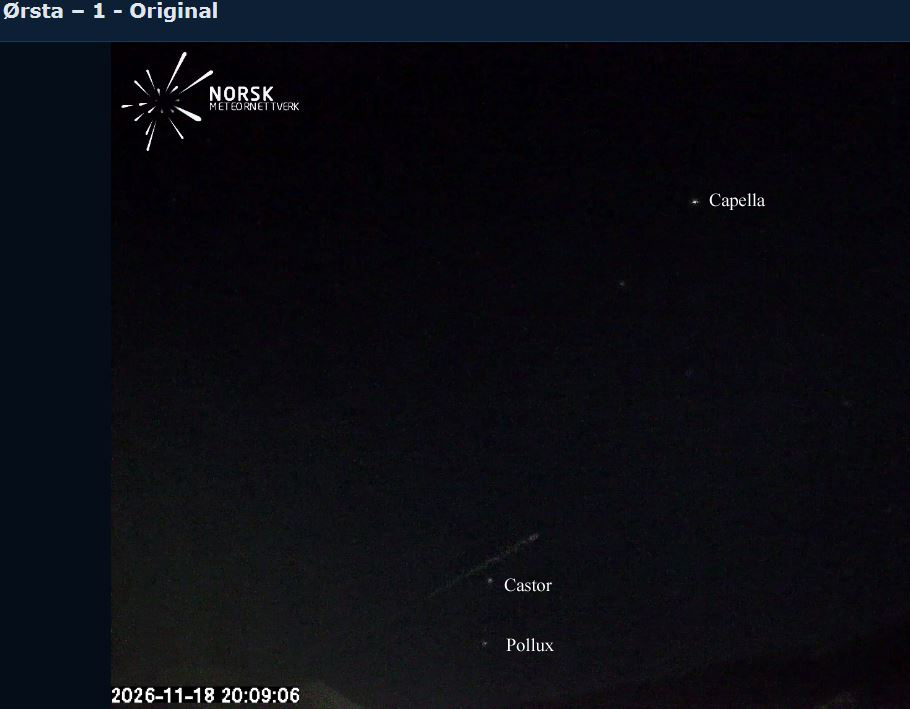
Link to report: Norsk meteornettverk

(Note: While the automated solver inverted the direction and speed due to the grazing angle, the report confirms multi-station detections across southern Norway.)
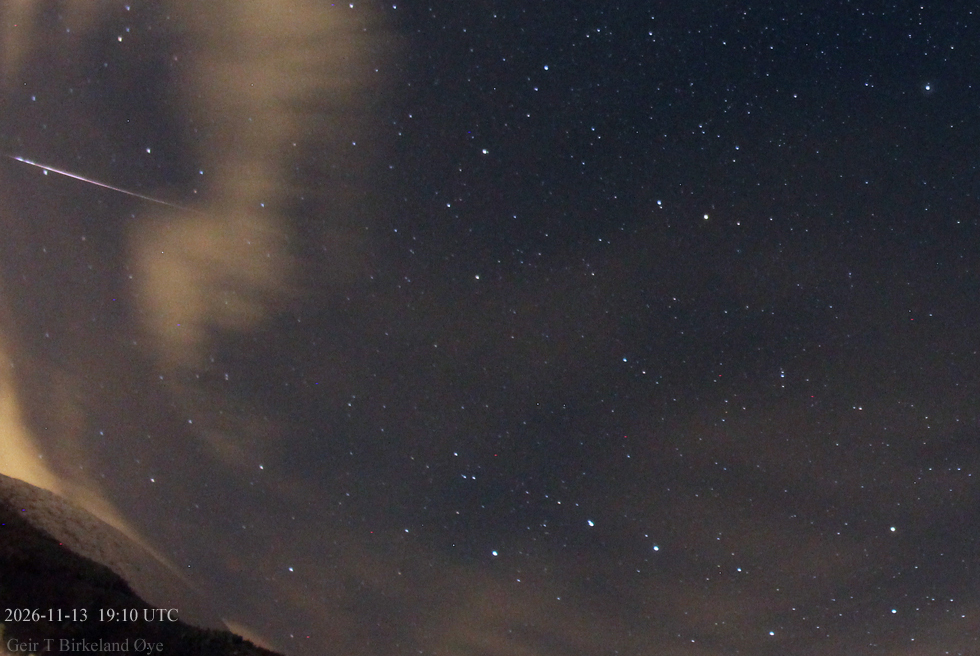
Sporadic Meteor and Red Persistent Train. November 13, 2026.

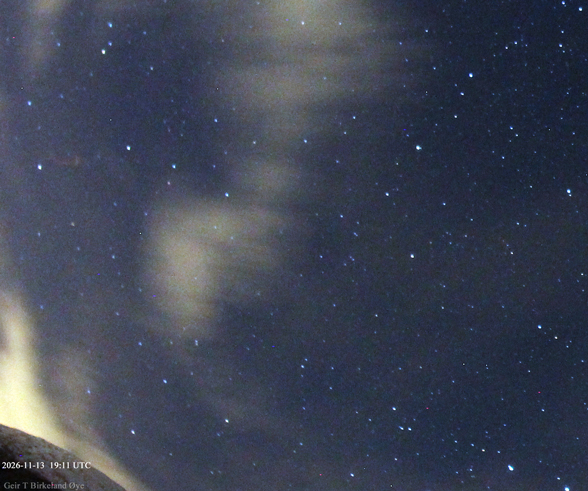
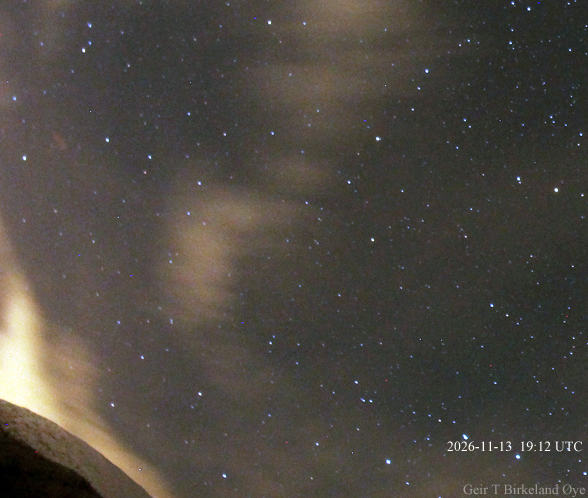
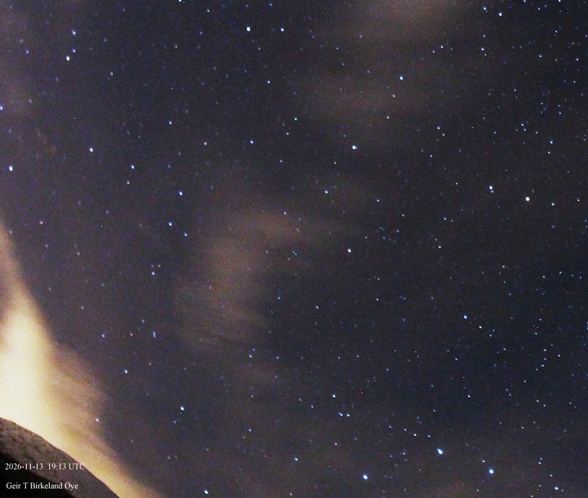
On November 13, 2026, at 19:10:43 UTC, my DSLR camera, located in Ørsta, Norway, captured a bright sporadic meteor followed by a faint, reddish persistent train in consecutive one-minute exposures from 19:11 to 19:13 UTC. Despite drifting thin clouds and challenging sky conditions, the red-orange afterglow—consistent with chemiluminescent emission from meteor-trail chemistry—can be seen drifting against the background stars in the cropped follow-up frames. DSLR images cannot identify the emitting species.

Details: Canon EOS 650D, 8 mm fisheye lens, ISO 1600.

The meteor was simultaneously recorded by my AllSky7 station (AMS 135) and four other stations in the Norwegian Meteor Network (Norsk meteornettverk). According to the network’s triangulation data, the meteoroid entered the atmosphere at 59.4 km/s and disintegrated between 113.4 km and 77.0 km altitude over the coast near Måløy.

Link to report: Norsk meteornettverk

A rough mesospheric wind and orbital analysis (with substantial uncertainty)

Based on the Norwegian Meteor Network’s triangulation data, the meteoroid was on a hyperbolic, retrograde orbit (e = 1.056, i = 114.0°, perihelion distance q = 0.223 AU). It entered the atmosphere at 59.4 km/s and disintegrated between 113.4 km and 77.0 km altitude, at an approximate line-of-sight distance of 190 km from Ørsta.

By tracking the apparent angular drift of the persistent train against the background stars between 19:10 and 19:13 UTC, I estimate that its bright core moved roughly 3.3°–3.8° northwestward. If the distance to the observed part of the train was about 190 km, this corresponds to an apparent displacement of approximately 11–12.5 km over three minutes, or roughly 60–70 m/s in the plane of the sky. This is only a rough estimate: perspective and uncertainty in the distance affect the calculation. The train’s changing, wavy appearance may be consistent with wind shear, but the images alone cannot establish the wind profile.

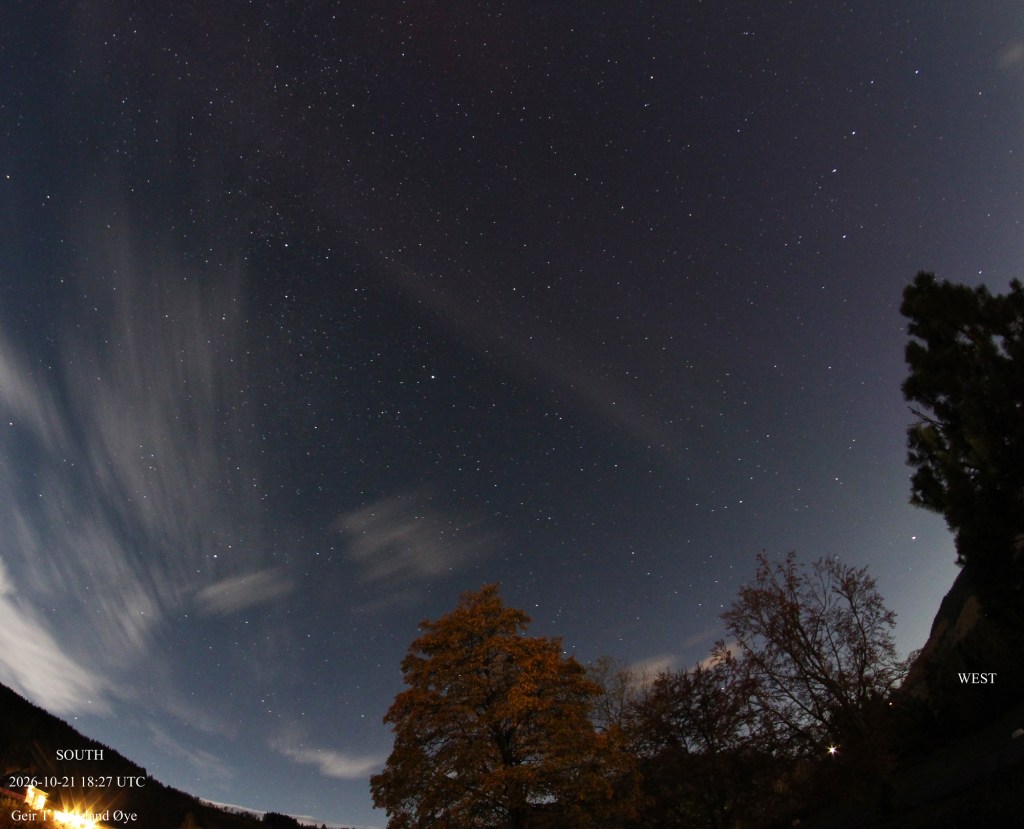
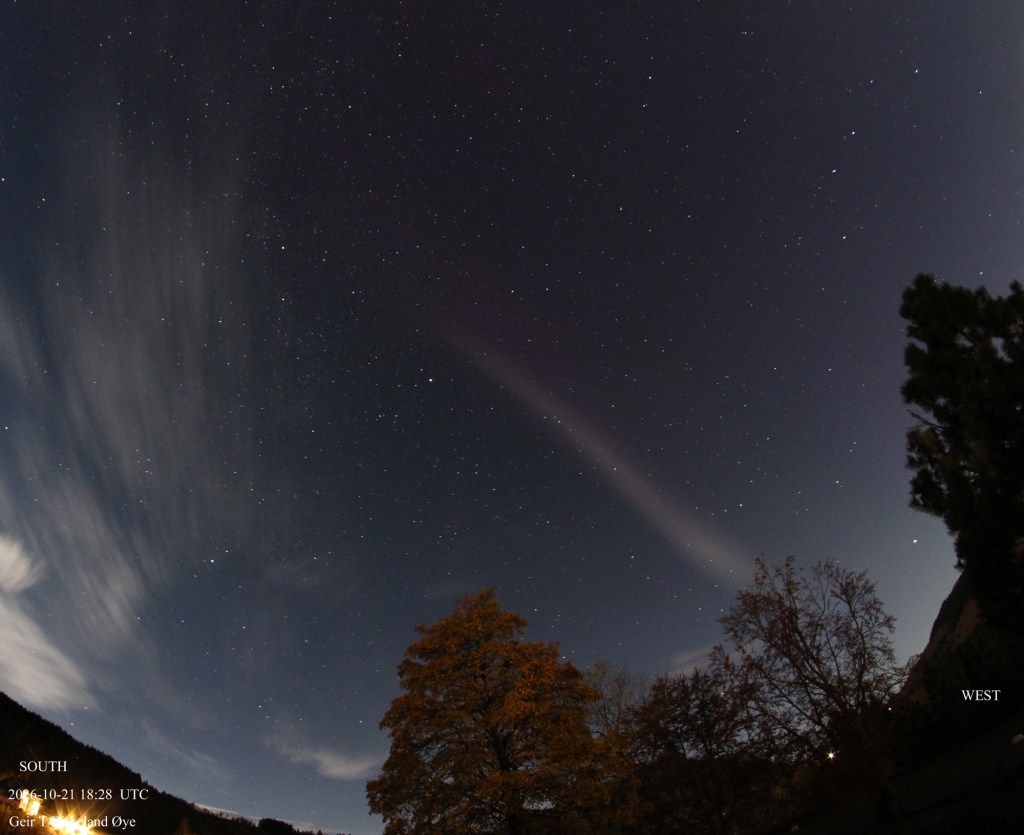
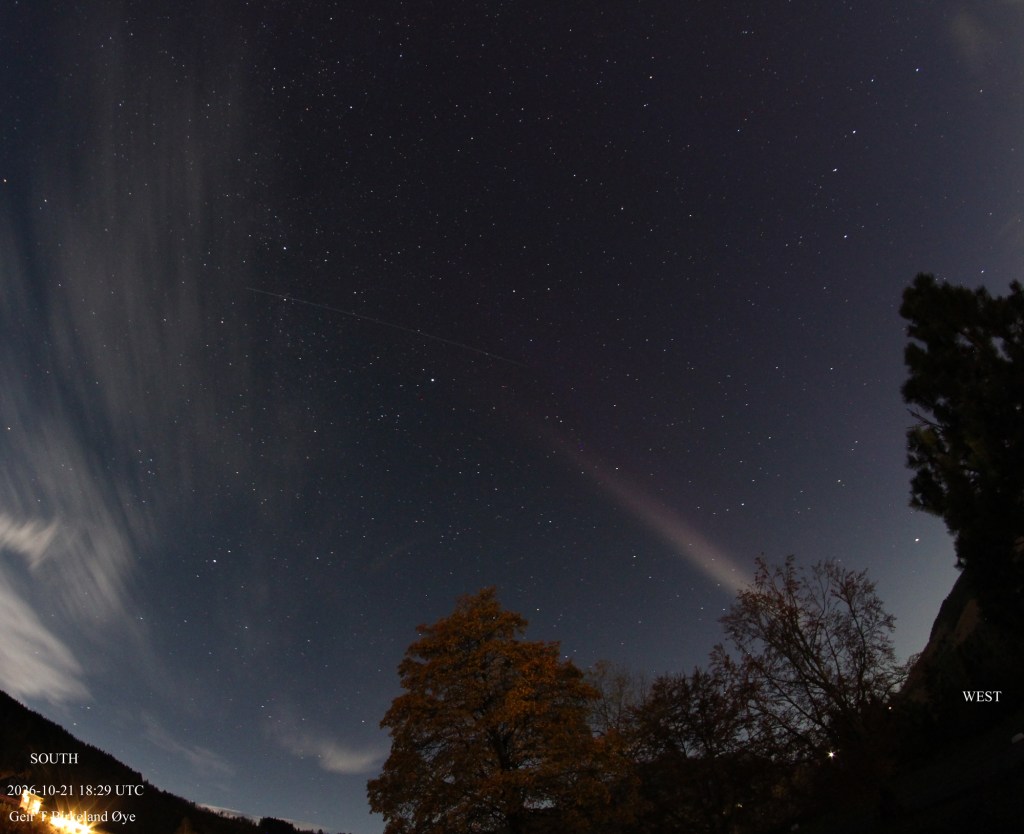
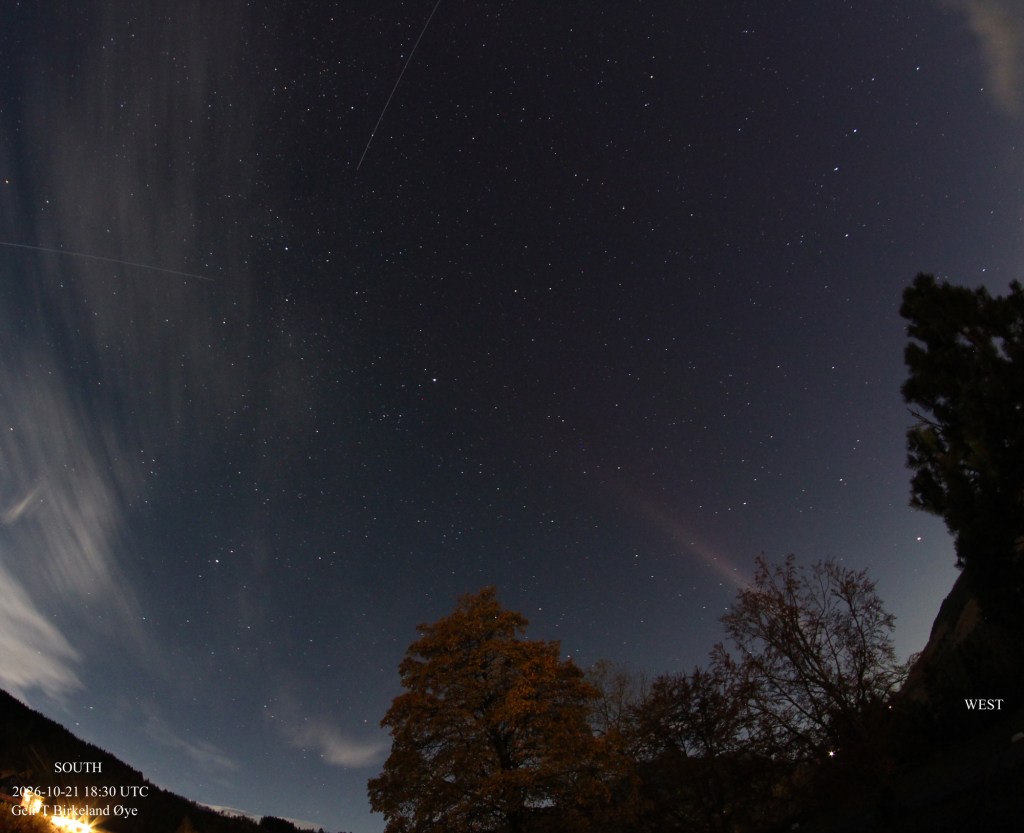
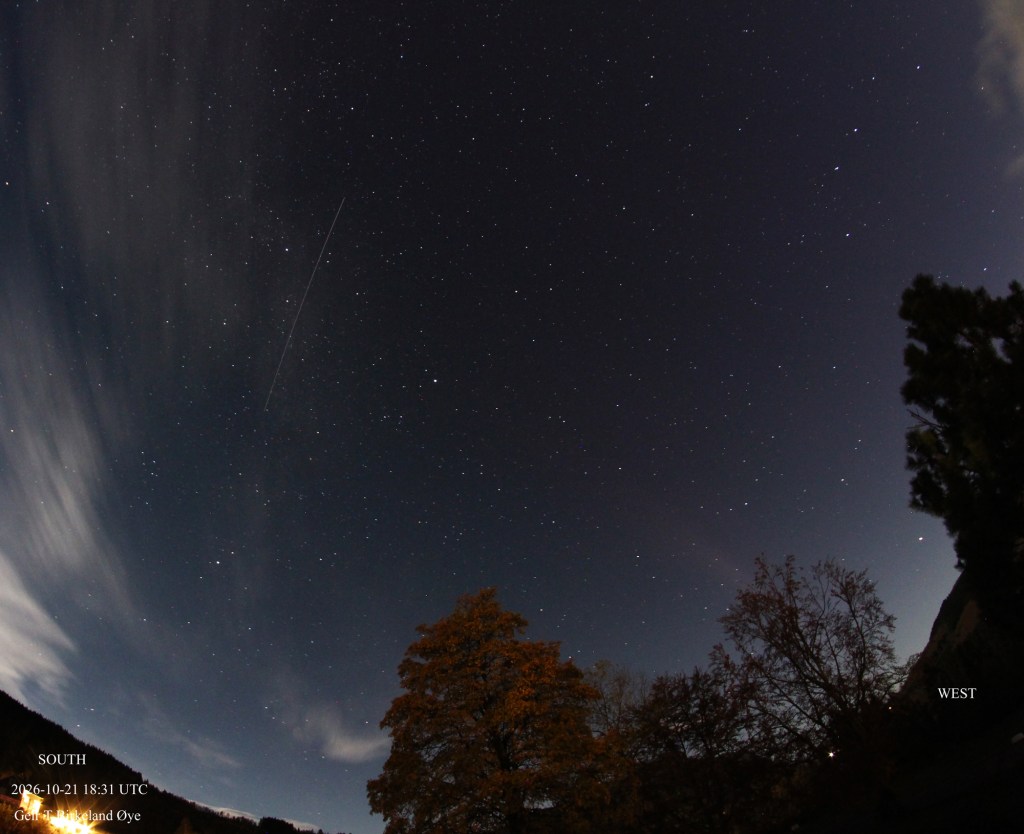
Short-lived STEVE over Ørsta, Norway. October 21, 2026.

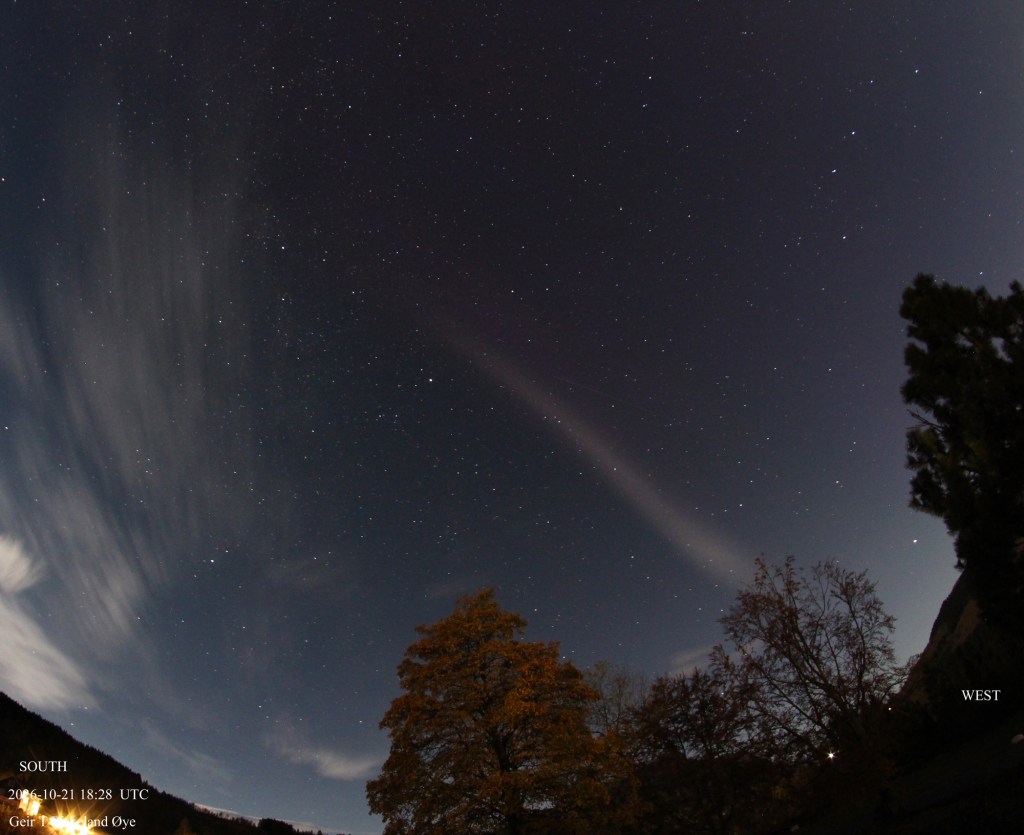
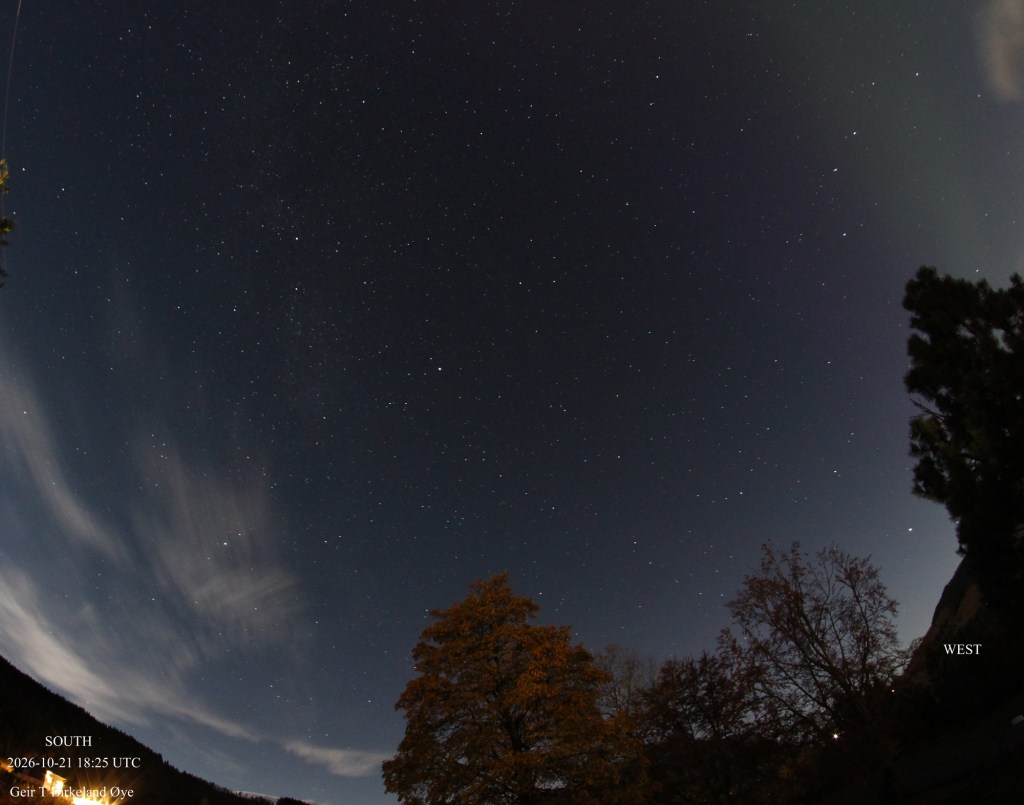
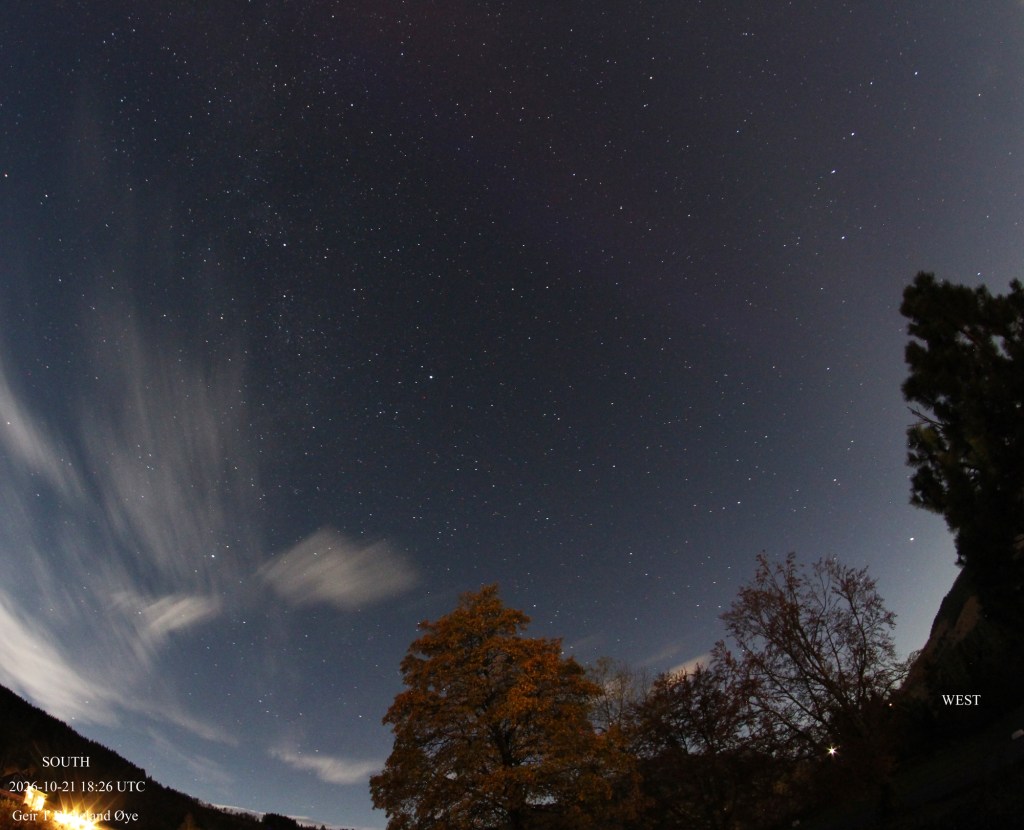
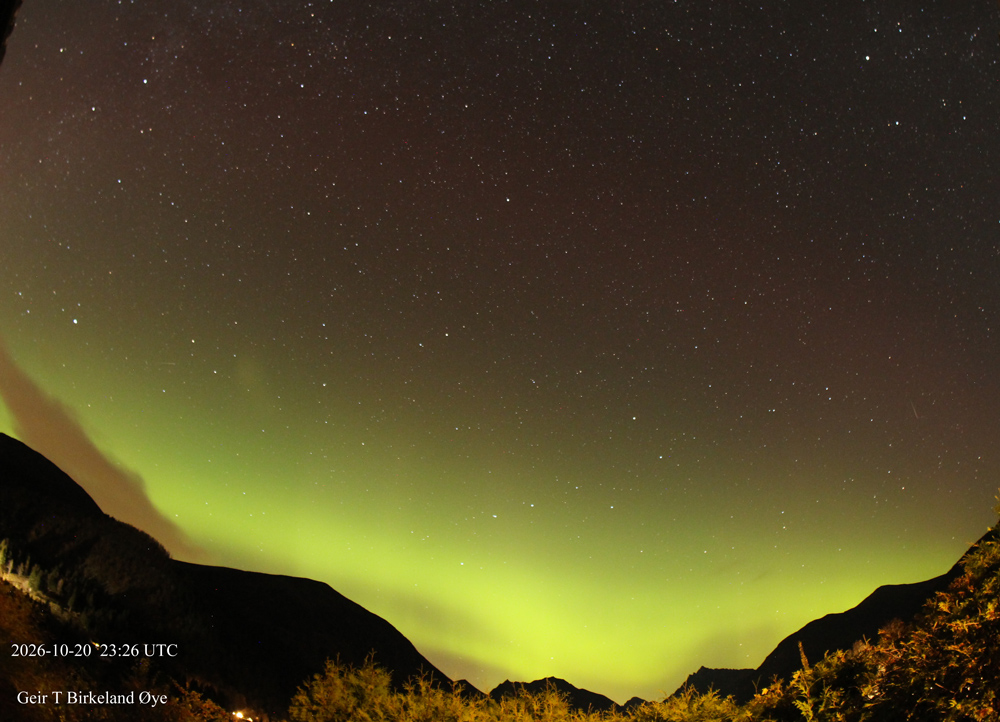
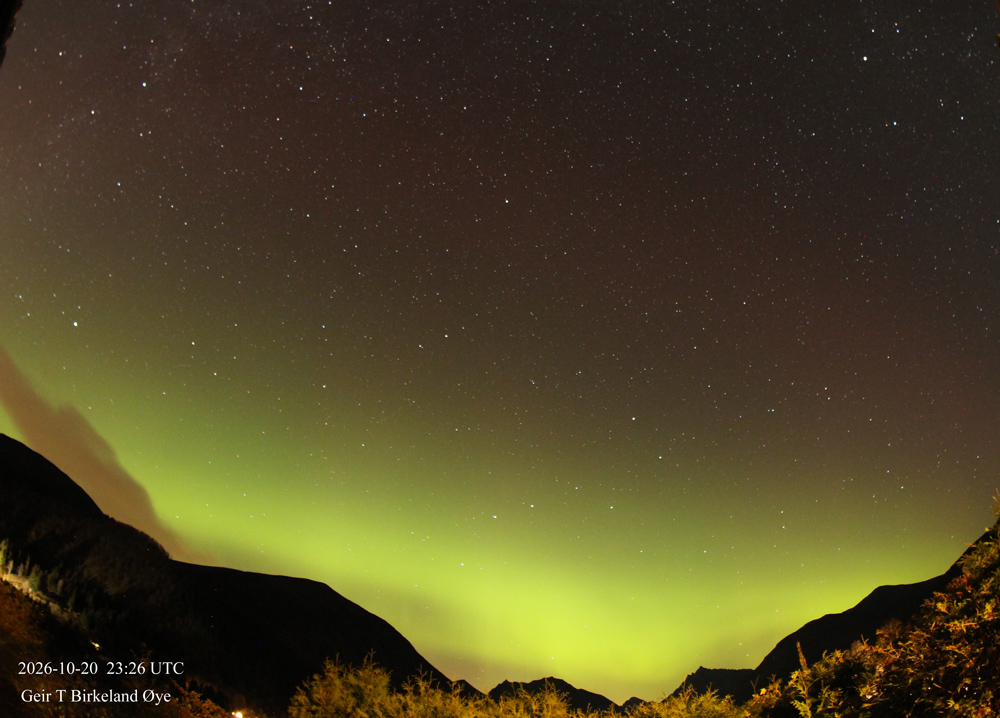
A very dynamic and short-lived STEVE (Strong Thermal Emission Velocity Enhancement) event captured from Ørsta, Norway.

I arrived at home after an approx 9 hour long drive, and had the camera set up quickly. Just a few minutes before the event took place. Not optimal conditions with a brigthly moonlit sky and clouds. The images with timestamp(s) shows how the phenomenon developed. Please, note image with timestamp 18:26 UTC looks like a SAR arc. The subauroral location, and mauve color profile, is typically STEVE, but the longivity was short.

The subauroral arc developed, peaked in intensity, and dissolved completely in a span of just 4 minutes (18:27 – 18:31 UTC). This rapid lifespan perfectly matches local magnetometer deflections from the region, which showed a sharp, short-lived magnetic disturbance exactly at this time.

The sequence clearly illustrates the incredible speed and volatile nature of the subauroral ion drifts (SAID) driving the phenomenon.

The Lifecycle of the STEVE Phenomenon.

Trigger and Onset: STEVE is triggered by geomagnetic storms following solar activity. It often develops about 1 hour after a substorm onset, sometimes evolving from a Stable Auroral Red (SAR) arc as temperatures rise in the ionosphere.

Active Display: A narrow ribbon of super-heated gas (sub-auroral ion drift) creates a vibrant mauve or purple arc in the sky. 

Dissipation:As the high-speed ion drift slows down and the gas cools, the emissions quickly fade, and the phenomenon disappears from view.

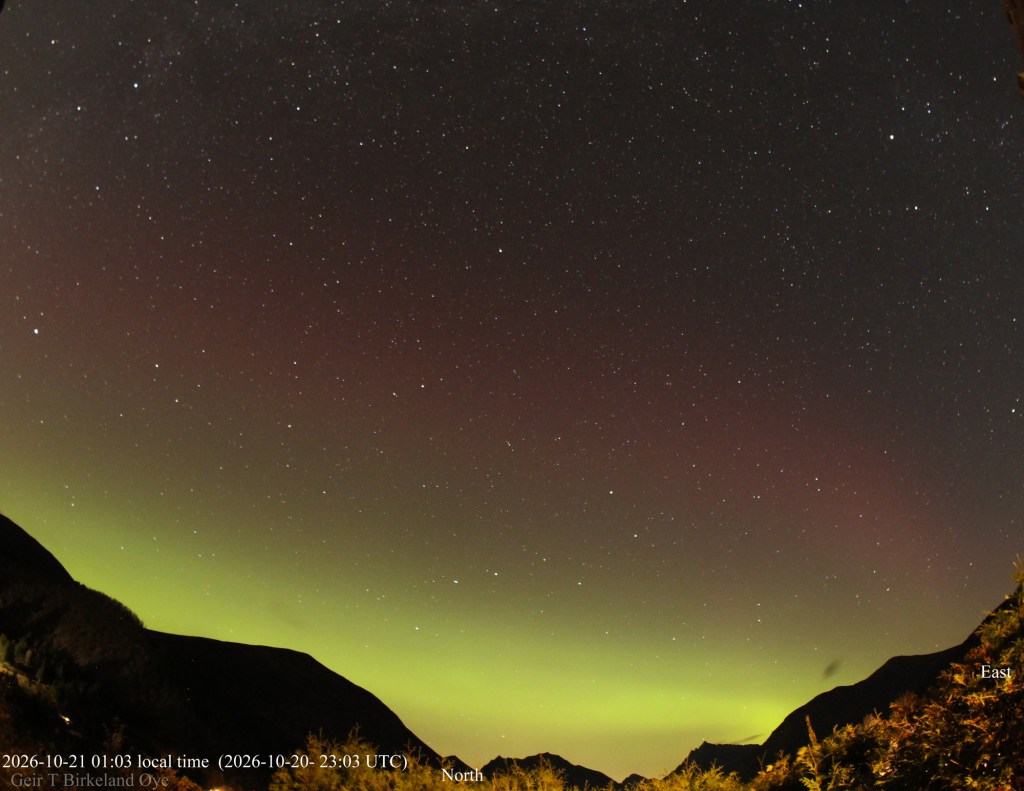
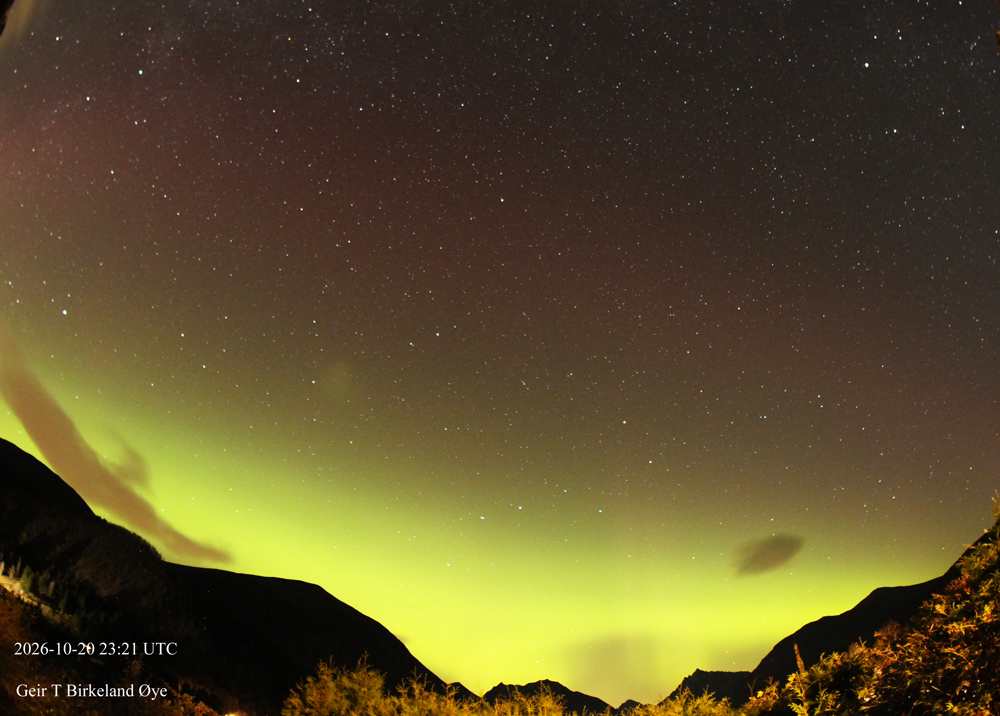
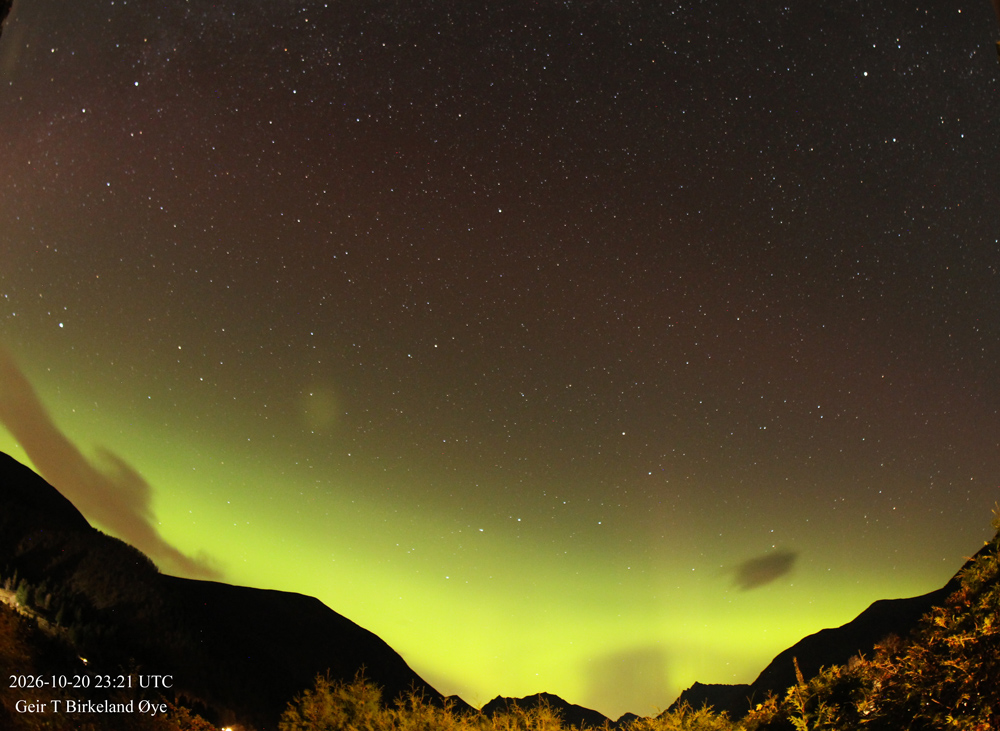
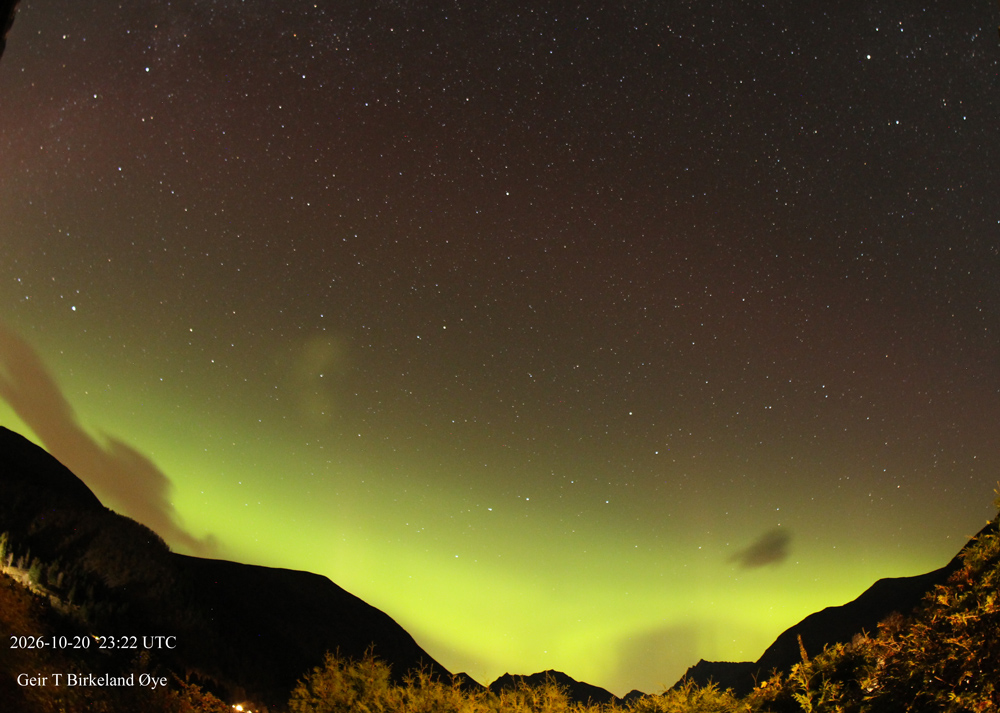
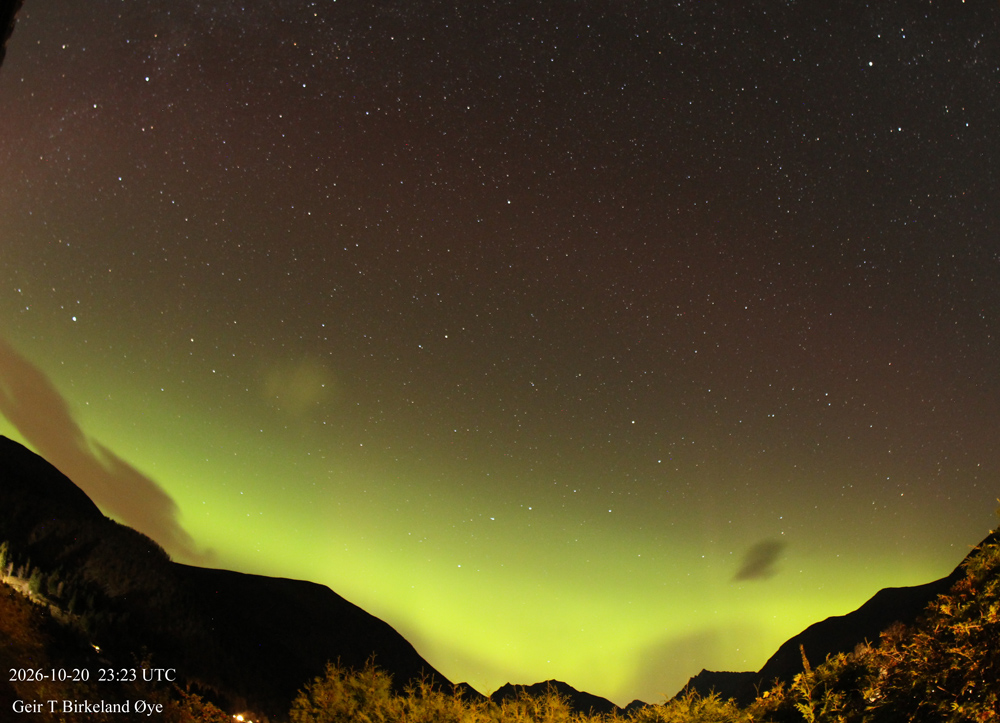
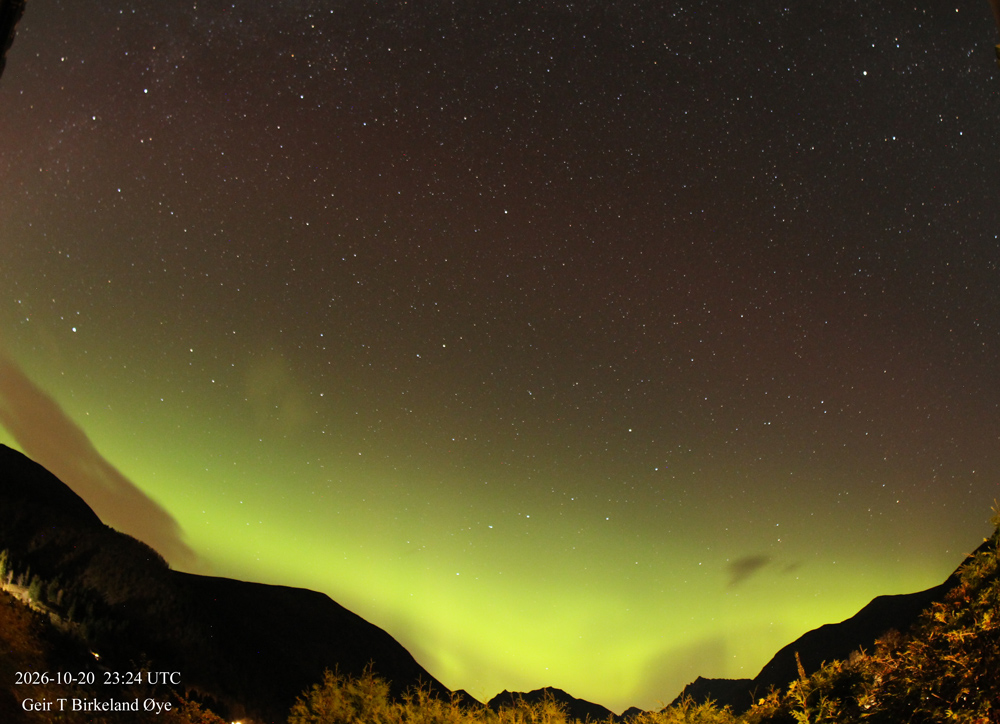
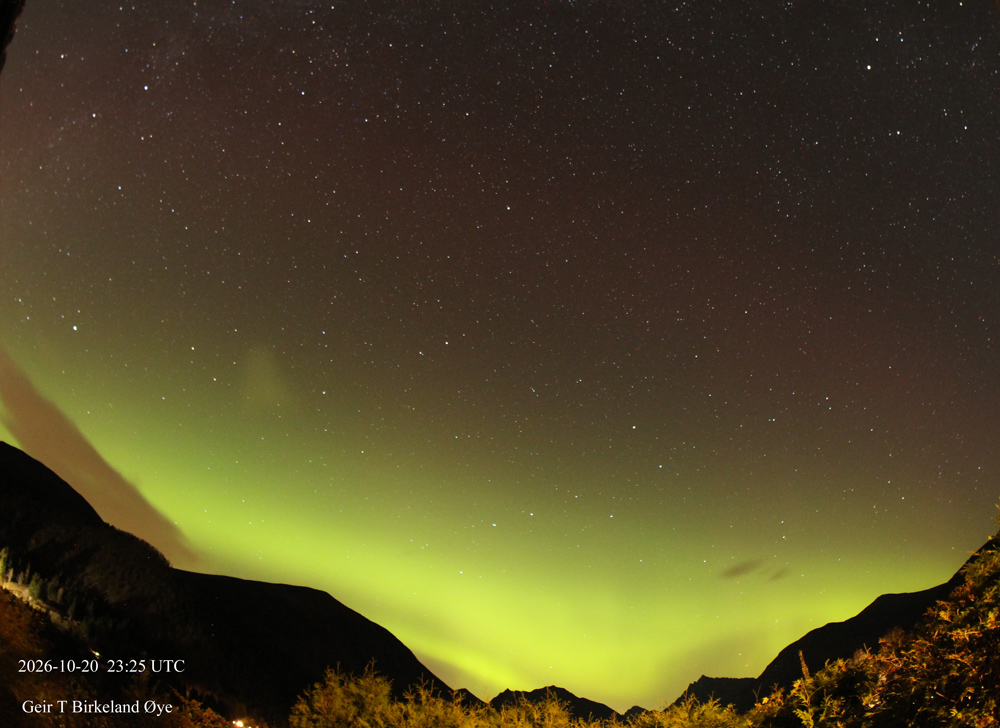
Red arc, green blobs. October 21, 2026.

An enduring red arc was observed from 00:45 to 02:46 local time. Clouds interfered with the observation, it looks like RAGDA, but some would probably classify it as SAR arc. Interestingly detail, there were green spherical blobs under the red arc. Please, see photos. Time, date, orientation etc is included in the images. Location: Ørsta, Norway. Details: Canon 650D, 8 mm fisheye lens, iso:1600.

Red Arc, and Aurora Corona. October 30, 2025.

There was a Red Arc lingering in the western sky from about 20:38 – 21:02 UTC. It was followed by a beautiful display of aurora corona.

Beautiful aurora corona overhead. These are most commonly seen in Northern-Norway, but these were observed from Ørsta, Norway (62nd Lat. N). Details: Canon 650D, 8mm fisheye-lens.

Polar stratospheric clouds. January 31, 2025.

According to NASA’s MERRA-2 climate model, the temparature in the stratosphere was sufficiently low (on January 31, 2025) to form Polar Stratospheric Clouds. In the western sky after Sunset there was something I reckon was PSC clouds. Location: Ørsta, Norway. Photo details: Canon 800D, Sigma 50-500mm lens.

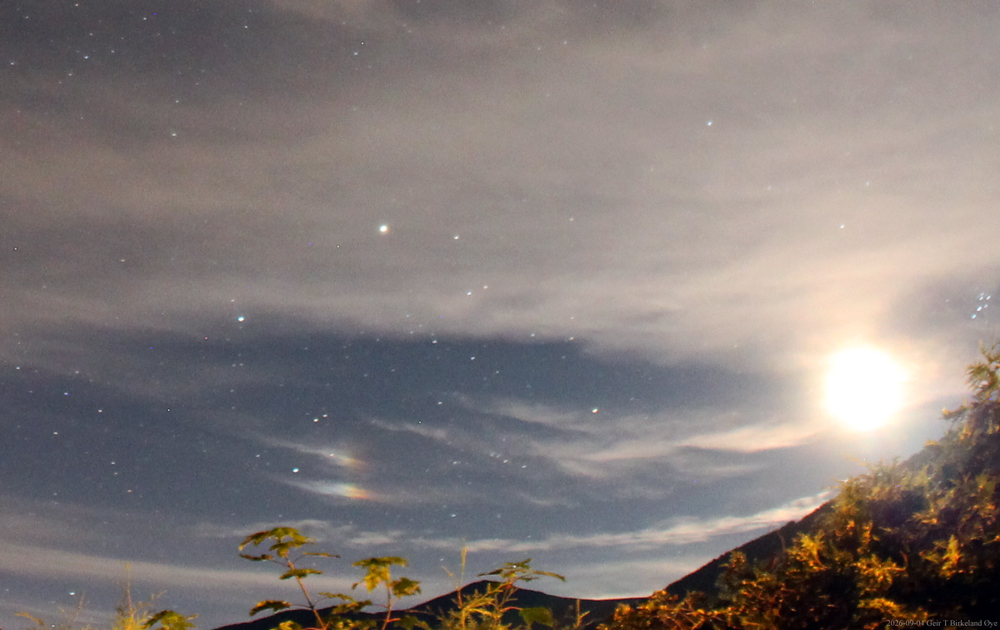
Lunar Upper Tangent Arc and Aurora Borealis. November 19, 2024.

As the bright moon was about to rise, I noticed an Upper tangent arc above the mountainside. A brief, and mild display of the northern lights occured, and colored the wintry scene. A few images of the display displayed below. Photo details: Canon 650D, Samyang 8mm fisheye-lens.