Blue‑tinged auroral corona observation
20 April 2026 — Ørsta, Norway
Time: 23:15–23:30 UTC (initial structured onset ~23:18 UTC)
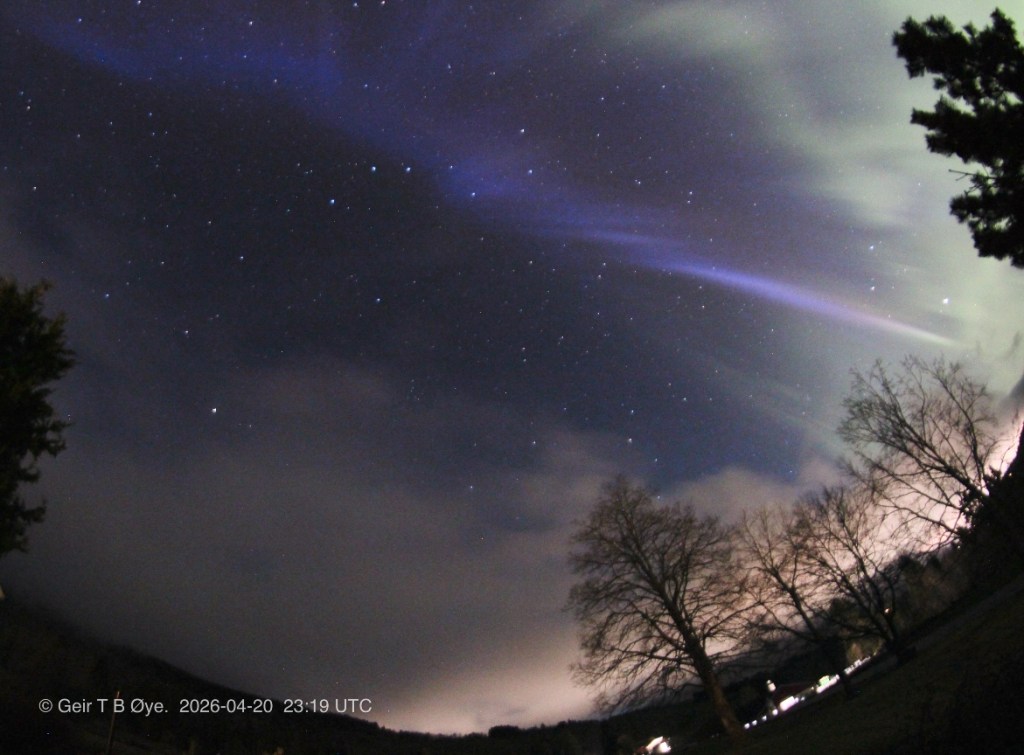
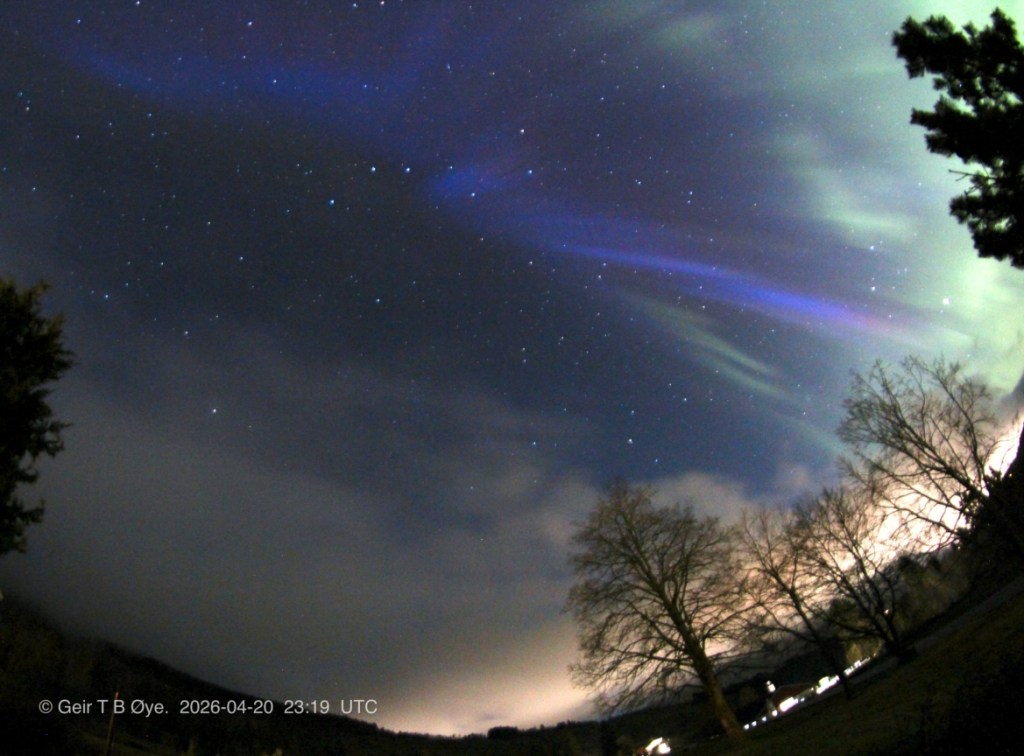
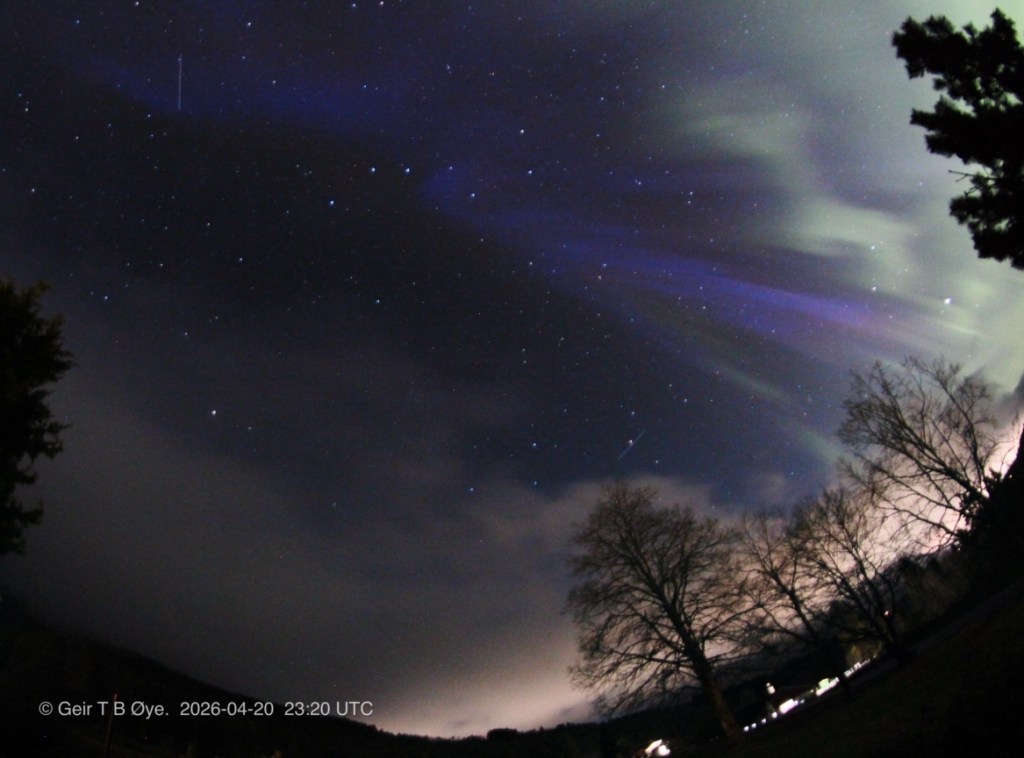
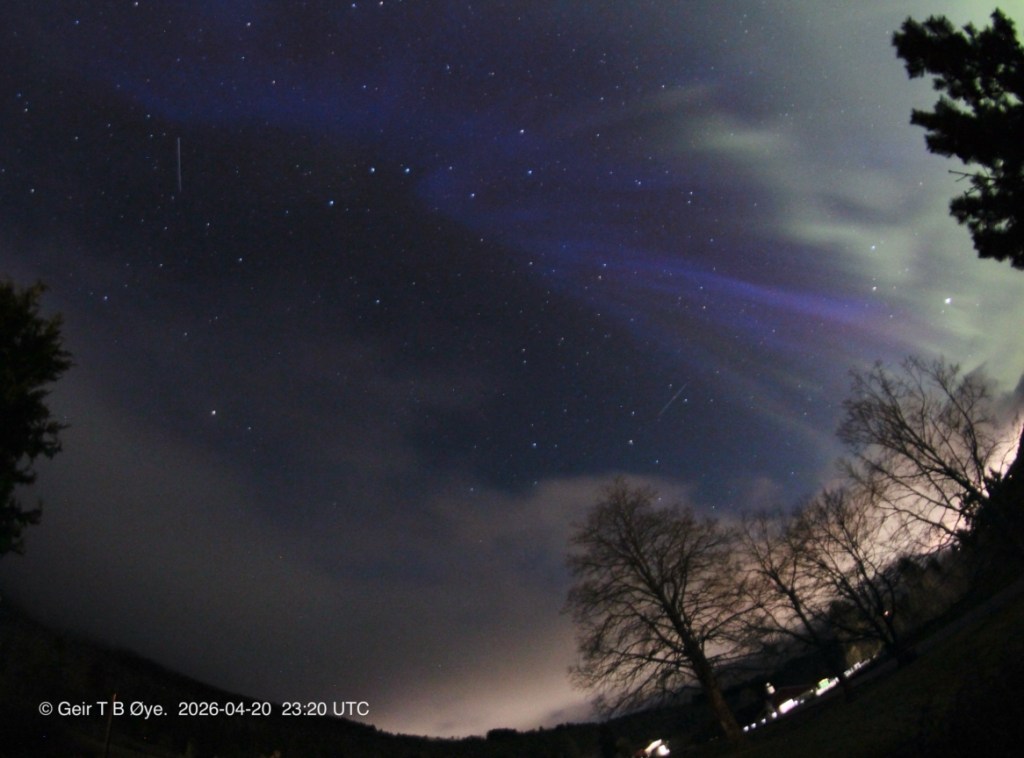
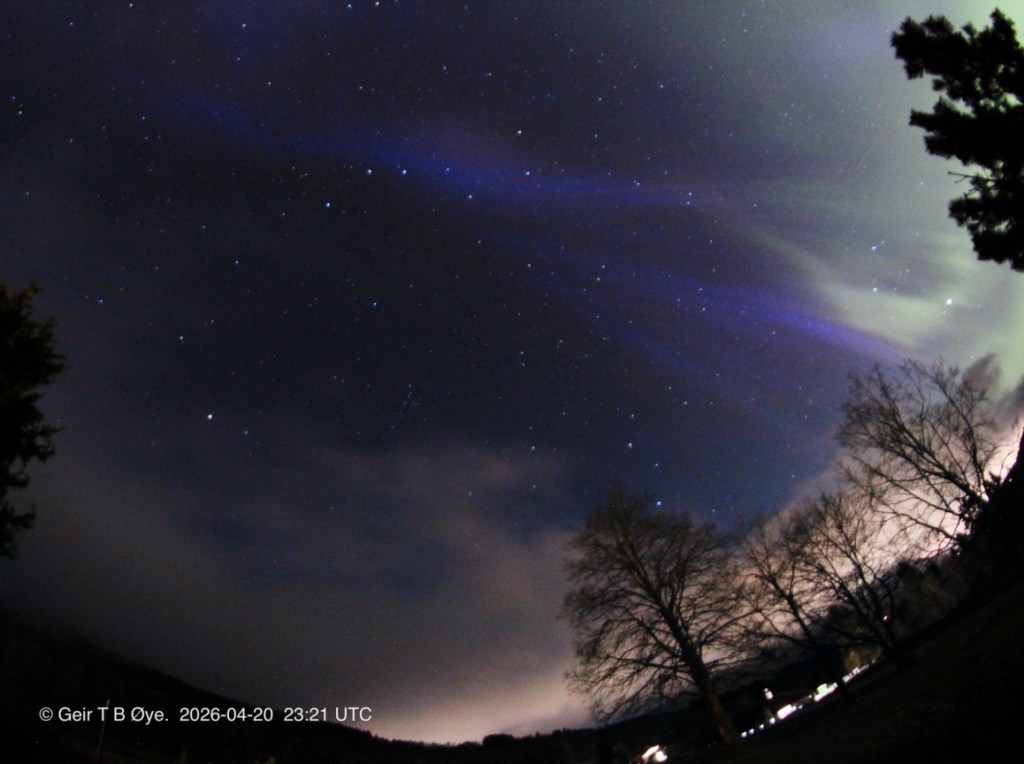
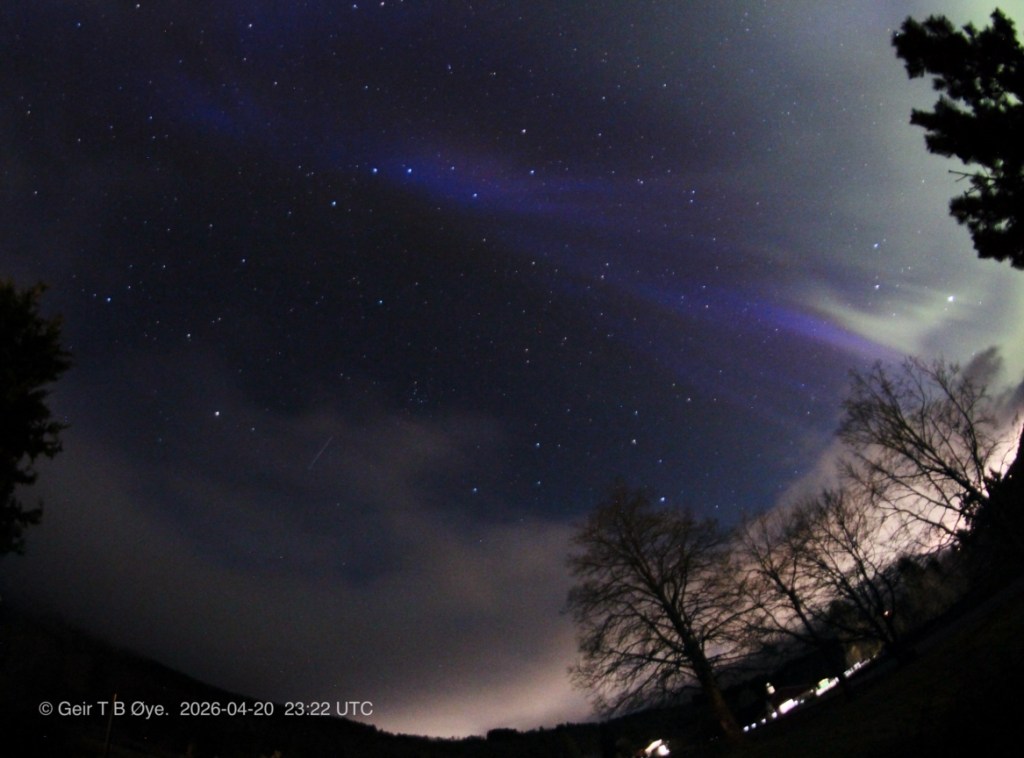
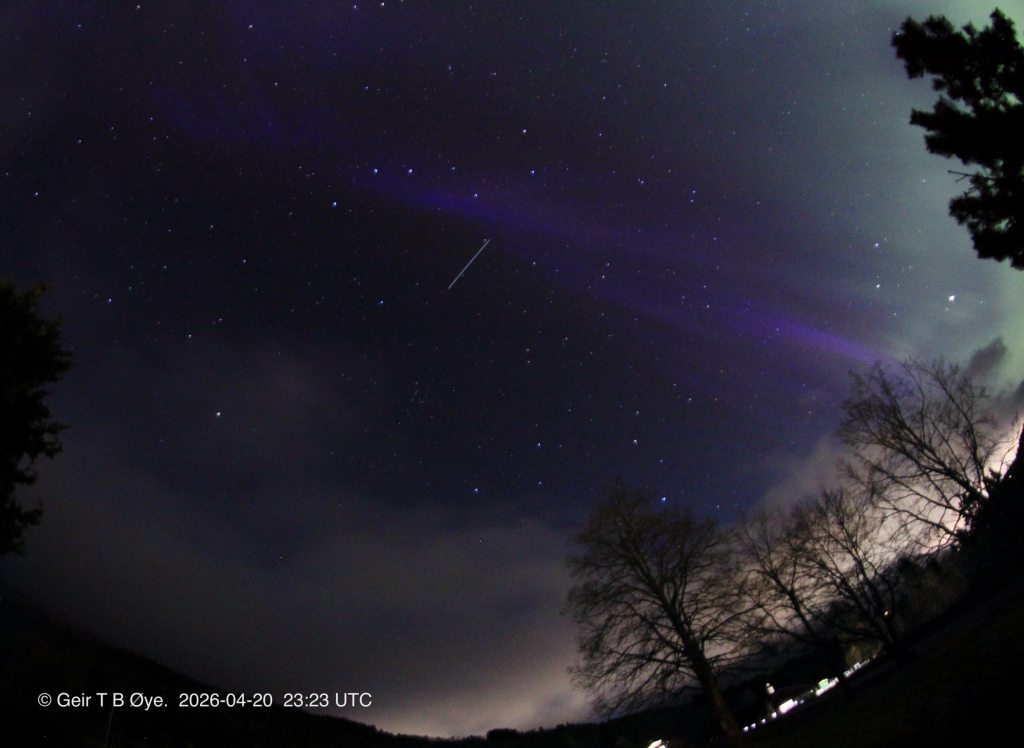
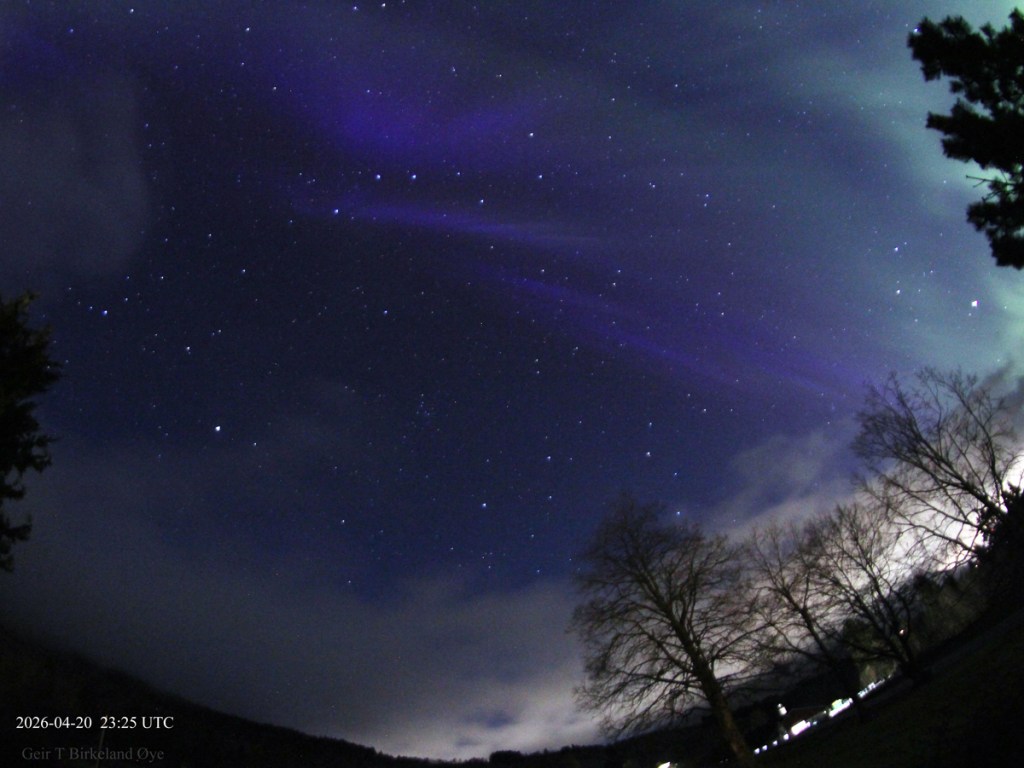
Observation type: DSLR documentation of a partial auroral corona with blue‑violet lower emission.
Observer: Geir T. Birkeland Øye
Location: Ørsta, Norway
Instrument: Canon 650D, 8 mm fisheye, ISO 1600, short‑exposure sequence
Summary
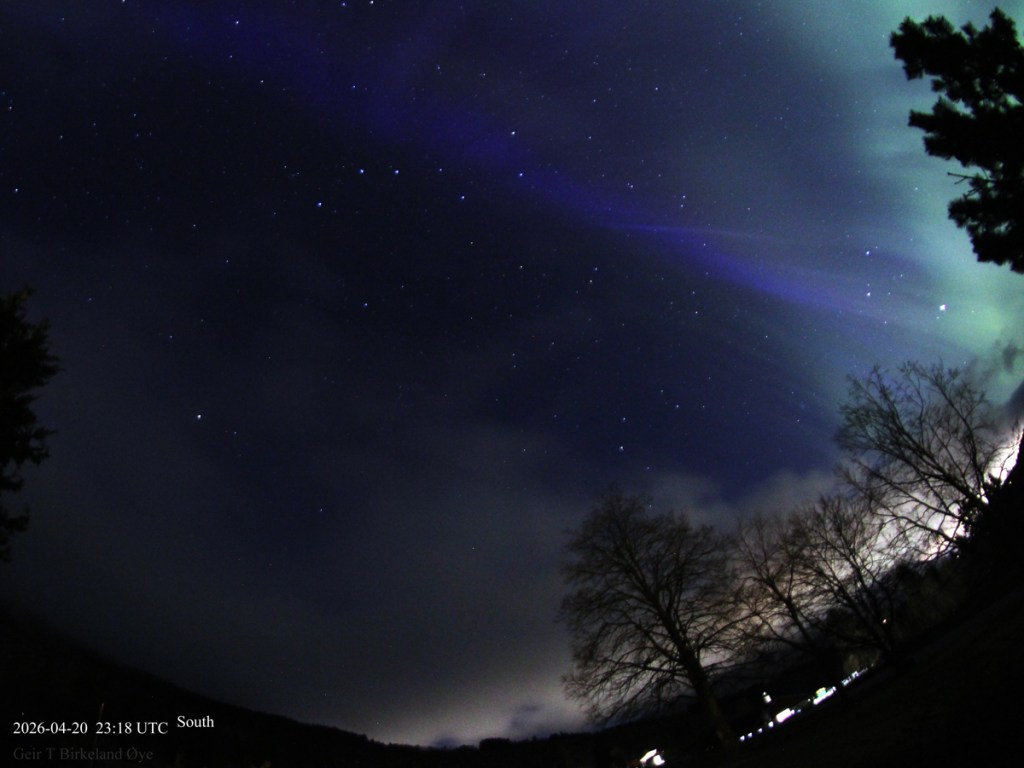
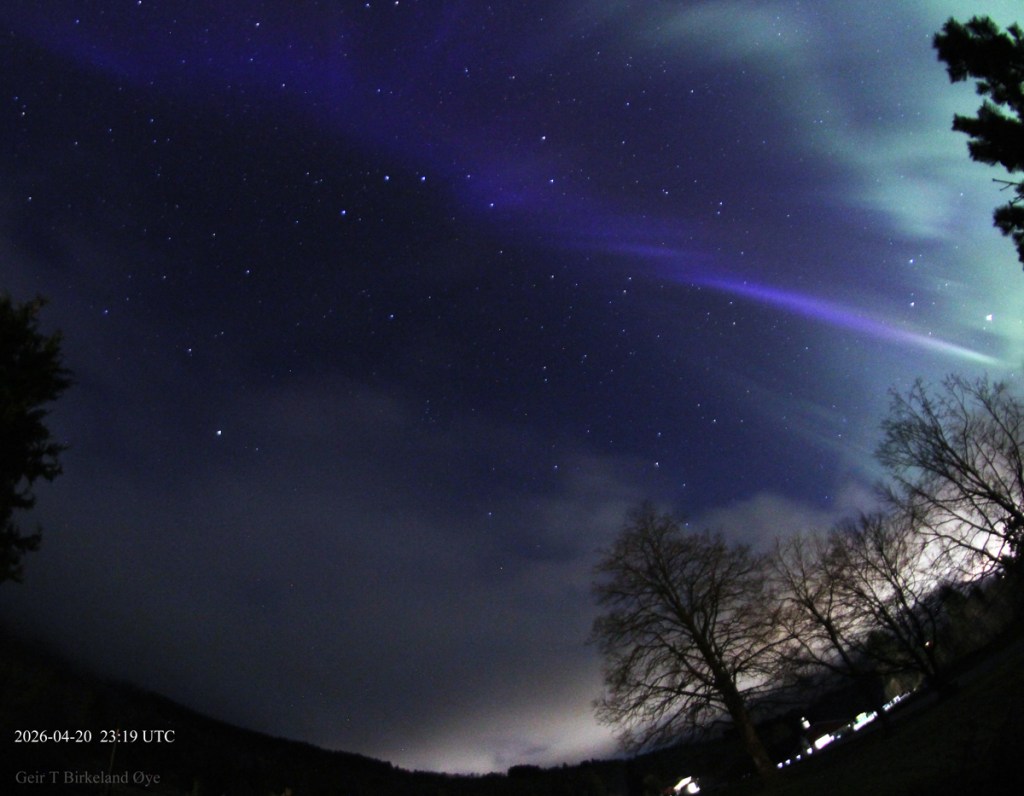
A short‑exposure DSLR sequence recorded the development of a partial auroral corona directly overhead. The first structured rays appeared around 23:18 UTC, marking a brief local intensification during otherwise quiet geomagnetic conditions.
The lower part of the structure showed a blue‑violet tint, transitioning into green emission at higher altitudes. This colour impression is consistent with mixed auroral emissions and may include contributions from molecular nitrogen processes (N₂ / N₂⁺), although no spectroscopic data are available to confirm line dominance.
Auroral structure
The event formed a corona‑like pattern, with rays converging toward the zenith.
The geometry was not fully symmetric, and the corona did not develop into a stable, mature form.
Such partial or transient corona formations are well‑known during short‑lived intensifications.
Geomagnetic context
Global geomagnetic activity on 20 April 2026 was quiet to moderate (Kp 1–3).
However, regional Scandinavian magnetometer data show small, coincident disturbances during the observation window, consistent with a brief localised enhancement.
Short‑duration variations of this type are not always visible in 3‑hour Kp indices but can still produce brief auroral brightenings.
Geomagnetic data (TRO2A, local time)
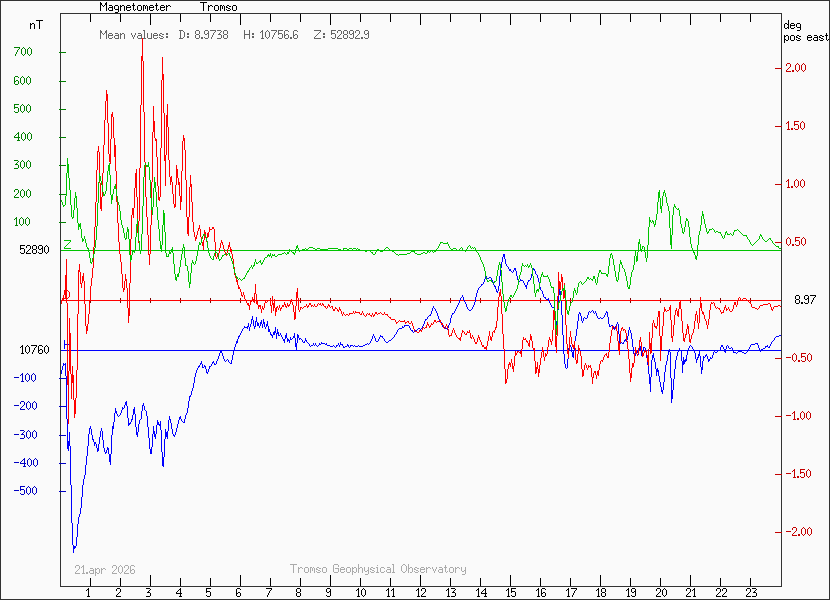
Geomagnetic signature (TRO2A magnetometer)
The small disturbance visible around 01:20 local time corresponds to 23:20 UTC on 20 April, matching the timing of the observed auroral intensification.
The H‑component shows a weak but clearly defined negative dip lasting a few minutes, while the D and Z components display synchronous minor variations. Such brief, low‑amplitude deviations are typical of localized auroral onset‑type intensifications and do not necessarily appear in the 3‑hour Kp index.
This signature supports the interpretation of a short‑lived auroral intensification with partial corona formation.
Source: Tromsø Geophysical Observatory (TRO2A)
The Solund (SOL1A) magnetometer shows weak but coincident variations around 23:20 UTC that correlate with the TRO2A negative dip. Although the SOL1A signal is smaller, the synchronous behaviour supports that the brief intensification observed in Ørsta was a real regional (localized) auroral enhancement rather than an instrumental anomaly.
Seasonal light conditions
At this time of year, the Sun remains only a few degrees below the horizon.
This twilight regime in the upper atmosphere can:
- increase contrast between aurora and background sky
- make faint emissions more visually apparent
- influence colour balance in photographic recordings
It does not increase auroral emission strength itself.
Interpretation
The event is best described as a short‑lived auroral intensification with partial corona formation, displaying a visually enhanced blue‑violet lower region.
The colour impression likely reflects a combination of:
- molecular nitrogen emissions
- rapid temporal changes during onset
- viewing geometry near zenith
- seasonal twilight contrast
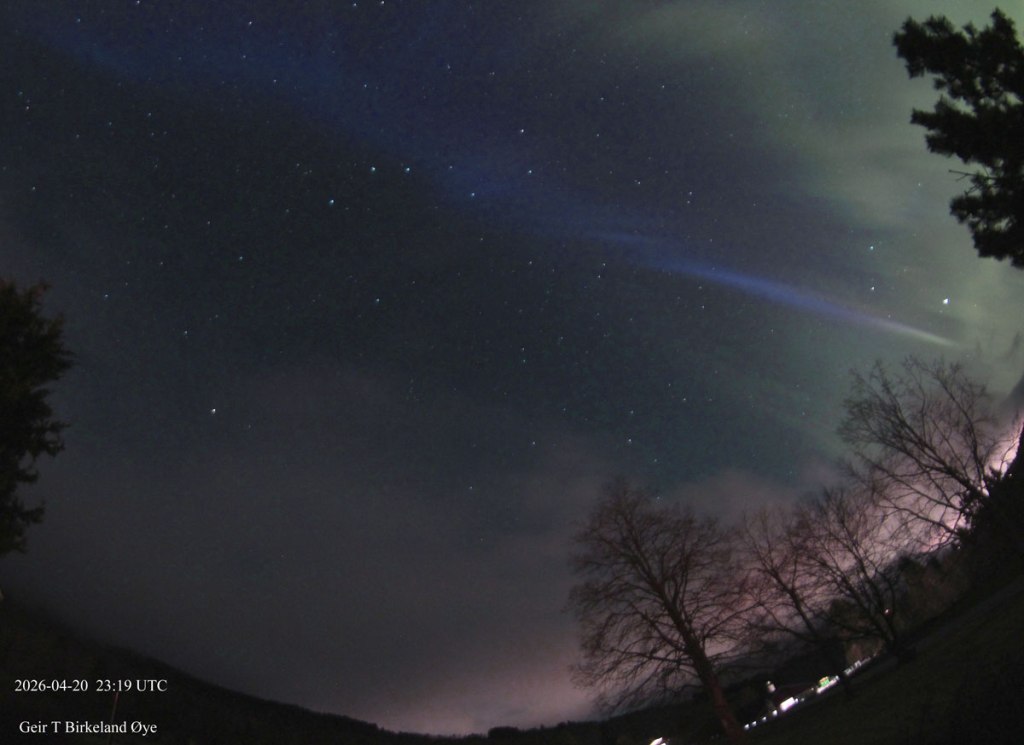
Corrected master version (cyan/blue reduction applied).
Additional reading

