RAGDA – Auroral Dunes A sequence of auroral activity was photographed over Ørsta. The evening began with a RAGDA‑type green arc, followed by a southern auroral band, and later long, parallel light bands consistent with auroral dunes. Timeline of images (local time, but time is UTC on images) 22:03 – RAGDA‑like green arc low in the sky 22:52 – green patch 23:03 – first thin parallel stripes 23:06 – clearer stripes; brighter aurora above 23:40 – distinct banded pattern 23:42 – strong, well‑defined parallel bands (auroral dunes) 23:46 – weaker but still visible banded structure 00:00 – final faint stripes before fading Notes: Parallel banding visible from 23:03 to 00:00. Eight images covering the full progression.
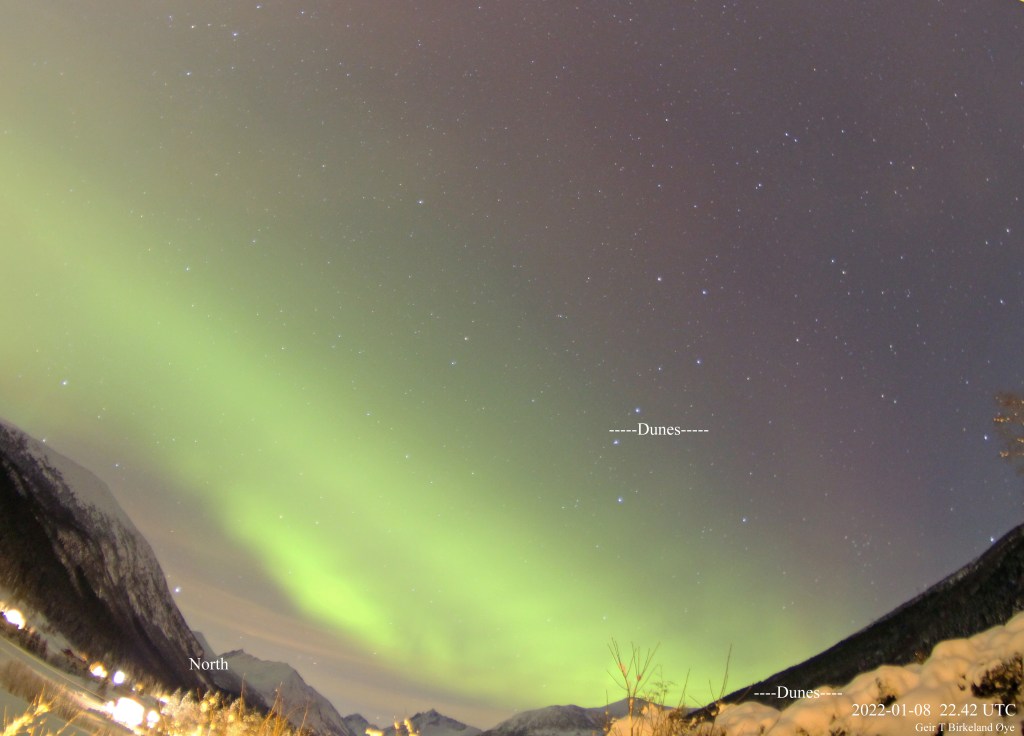
Local time: 23:42 – strong, well‑defined parallel bands (auroral dunes)
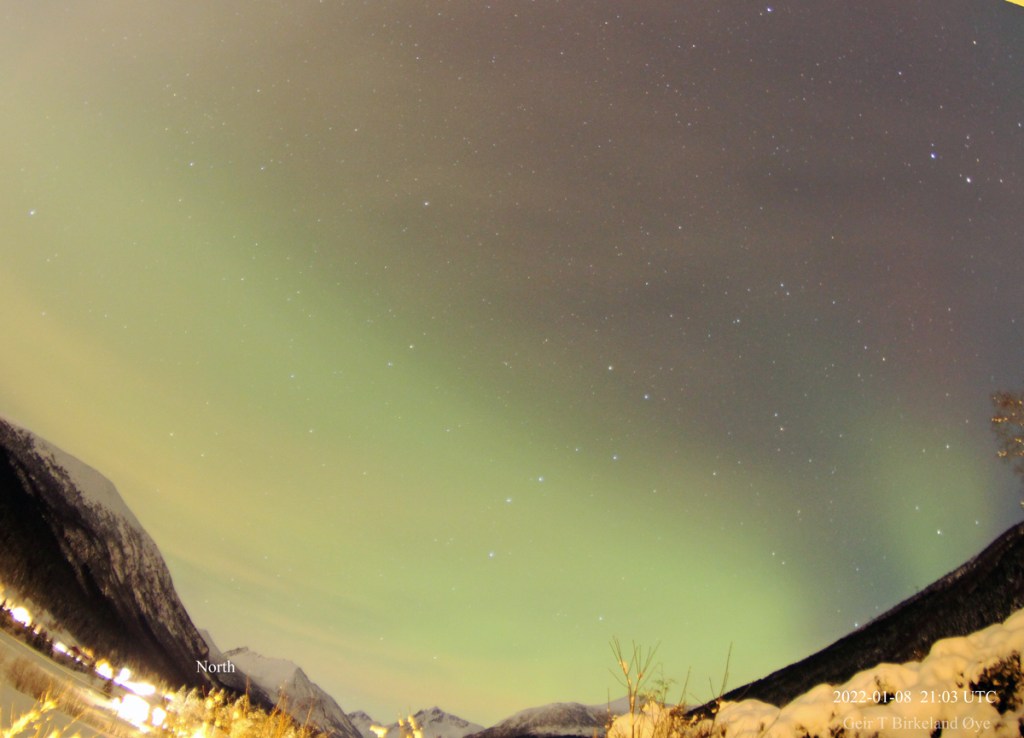
Local time: 22:03 – RAGDA‑like green arc
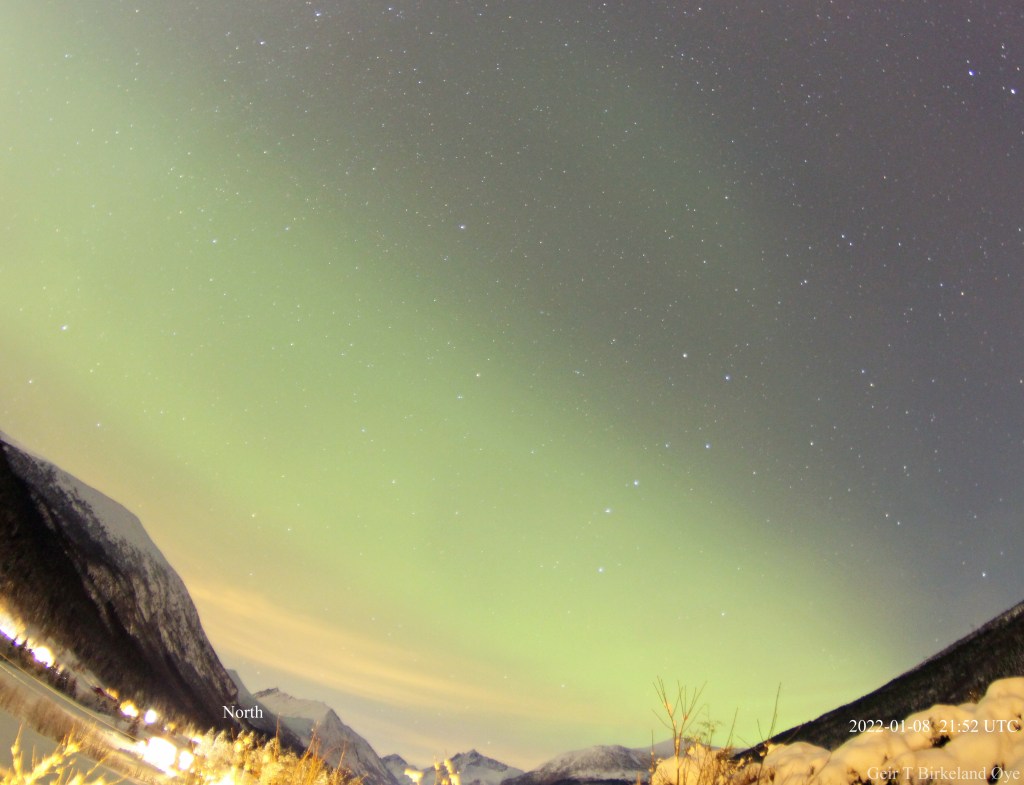
Local time: 22:52 – green (proton) patch
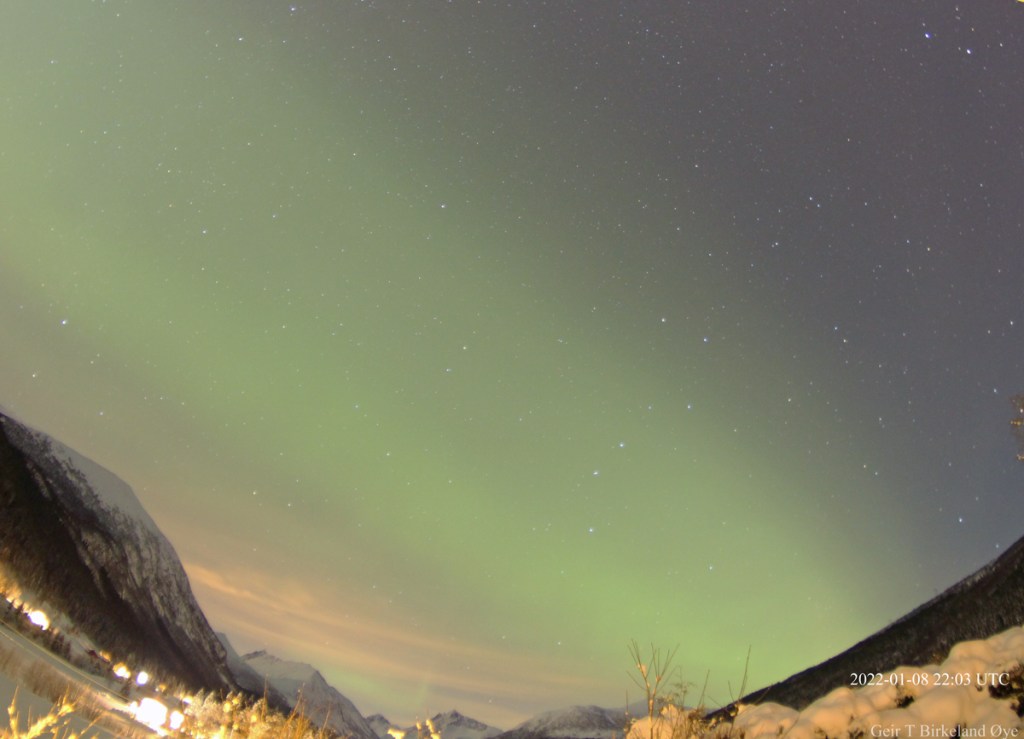
Local time: 23:03 – first thin parallel stripes
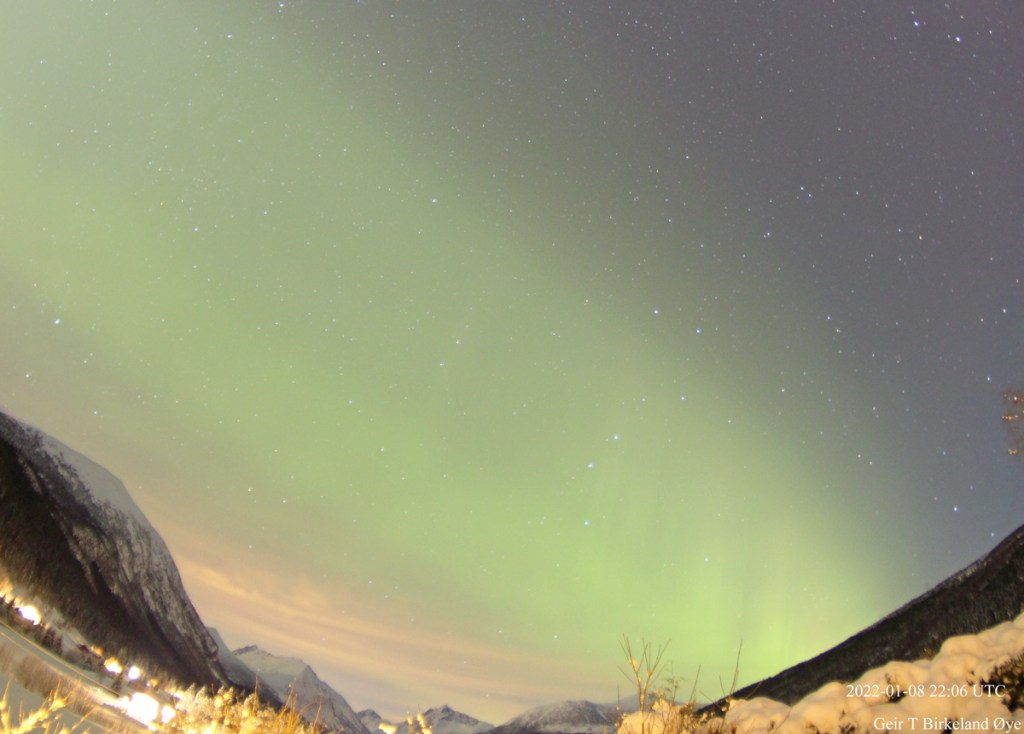
Local time: 23:06 – clearer stripes; brighter aurora above
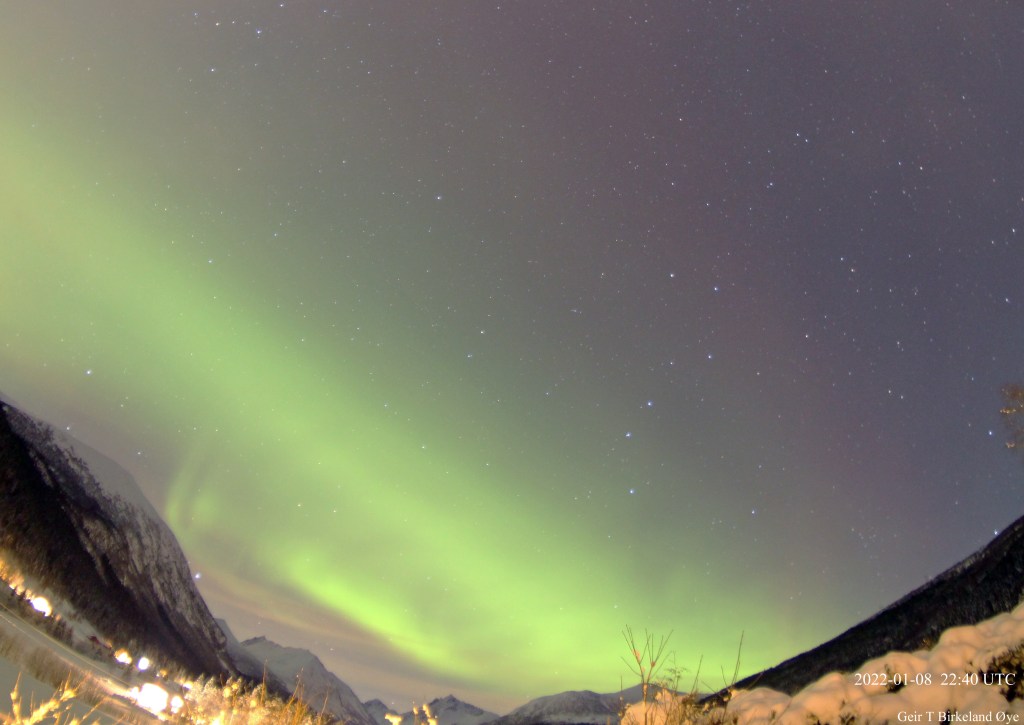
Local time: 23:40 – distinct banded pattern
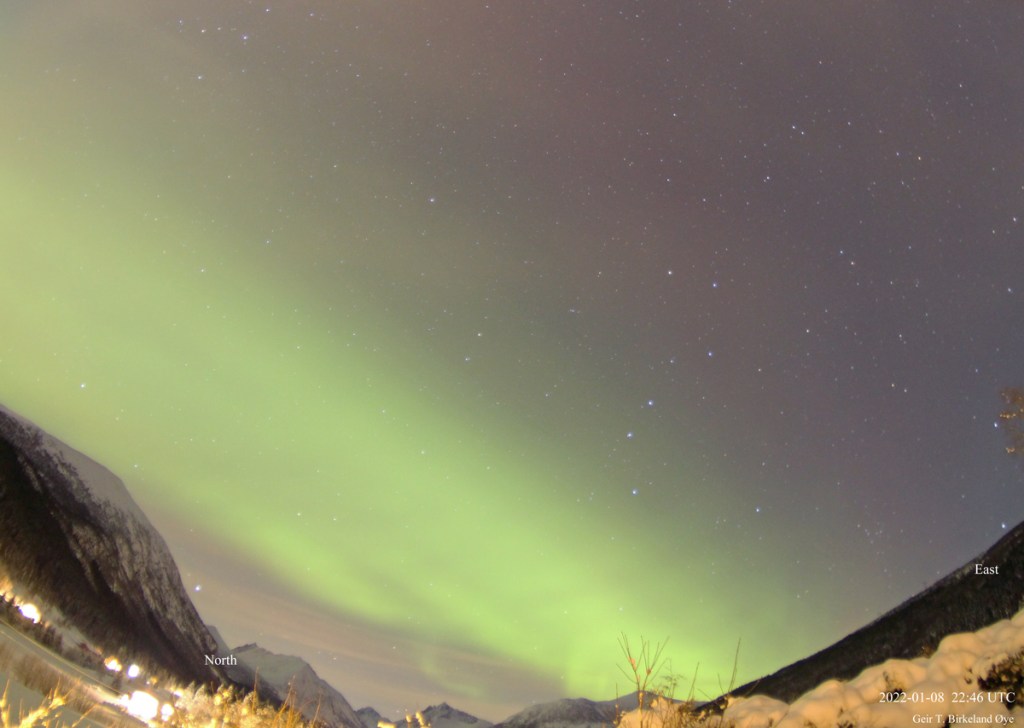
Local time: 23:46 – weaker but still visible banded structure
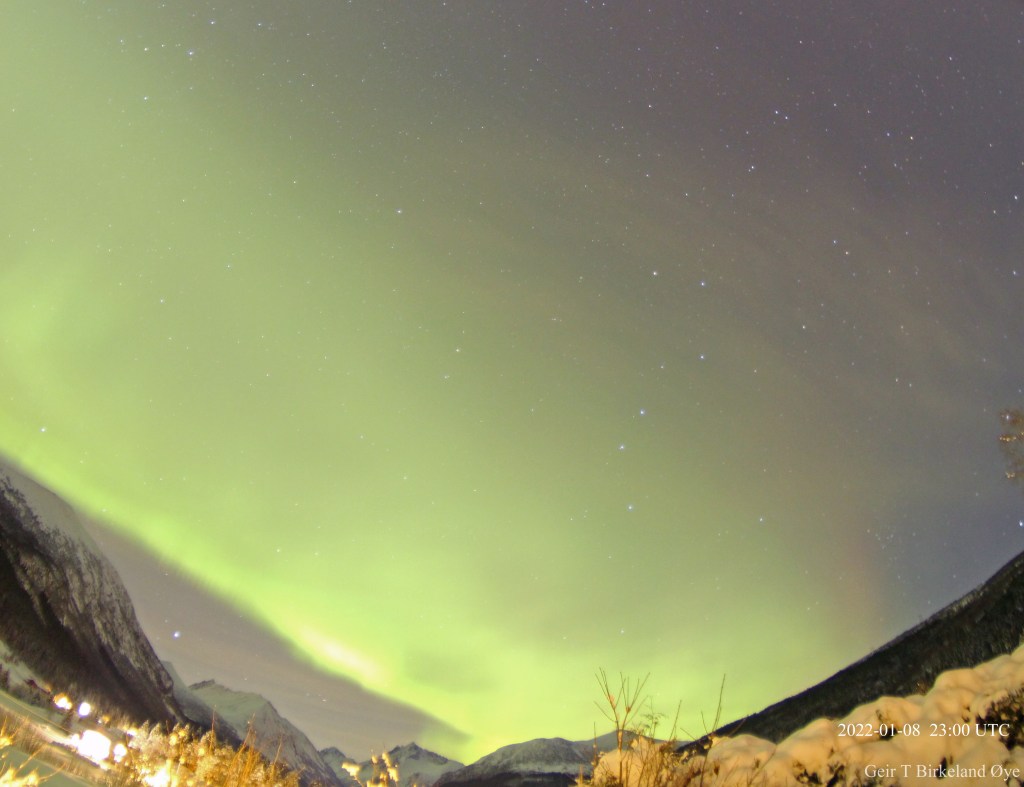
Local time: 00:00 – final faint stripes before fading
Summary
This sequence documents the transition from a faint southern structure into clearly defined parallel bands and later auroral dunes. The images are numbered in chronological order to show the development step by step.
This observation was recently recovered from a broken cameras’ memory card, and now presented.
RAGDA → Auroral Dunes
A rare light transformation in Earth’s upper atmosphere
– RAGDA – a quiet glow high in the ionosphere
RAGDA is a faint, wide glow that appears south of the normal auroral zone.
It forms in the F‑region, about 200–300 km up, where electric fields push ions sideways and heat oxygen.
The light is calm and diffuse – often a sign that the upper atmosphere is changing.
– Auroral Dunes – wave patterns in the green aurora
Auroral Dunes are a rare auroral pattern that looks like parallel waves or sand dunes.
They form much lower, around 100 km, where oxygen emits green light after being hit by energetic particles.
The wave pattern is shaped by atmospheric gravity waves imprinting structure into the aurora.
– The transition
Under certain conditions, a calm RAGDA band at 200–300 km can change shape, become more wavelike, and drift into the auroral zone.
As energy increases and gravity waves take over, the emission shifts toward 100 km, forming Auroral Dunes.
This represents a smooth transition between two heights, two energy regimes, and two atmospheric layers – a phenomenon rarely documented.

