Red Arc and STEVE-Like Feature Observed— November 5, 2023
Auroral Observation Report by Geir T. Birkeland Øye
Location: Ørsta, Norway (approx. 62.2°N, 6.1°E)
Time of Observation: 16:40 – 17.08 UTC
Published: November 6, 2023.
Contact: gtboye@outlook.com
Event Summary
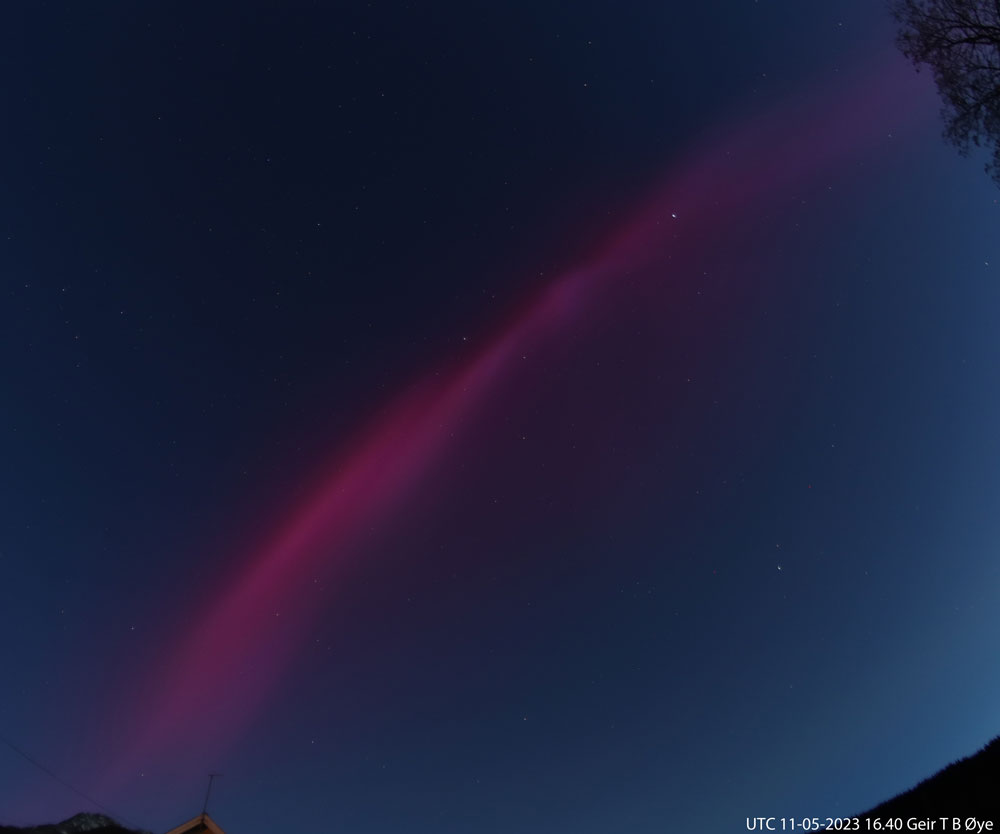
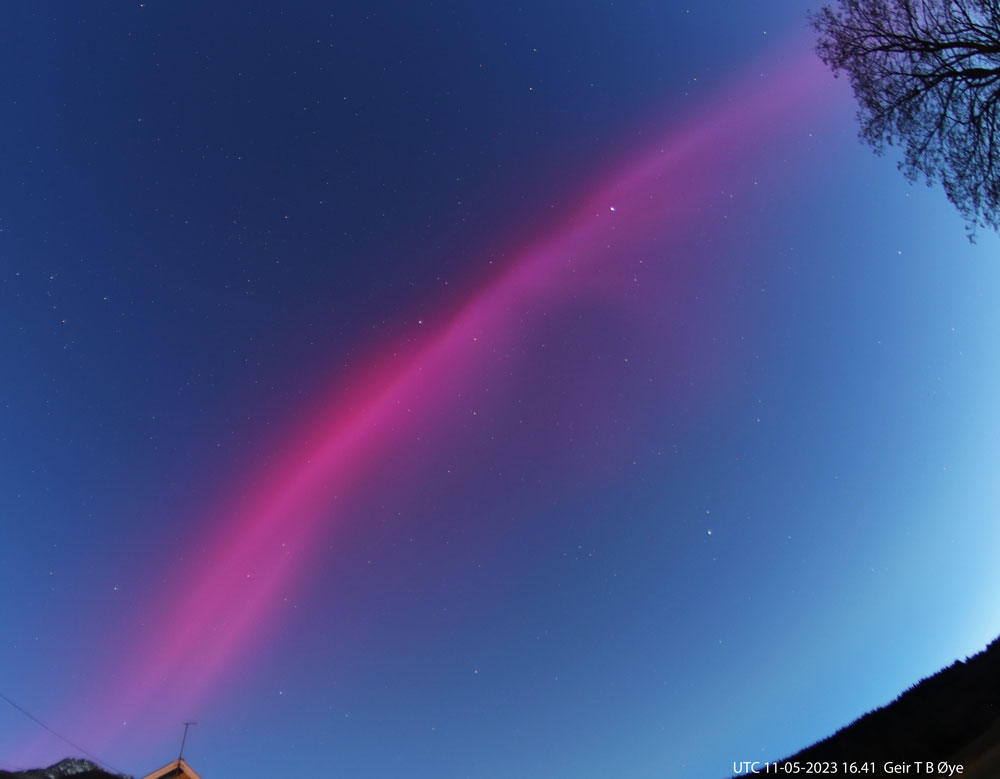
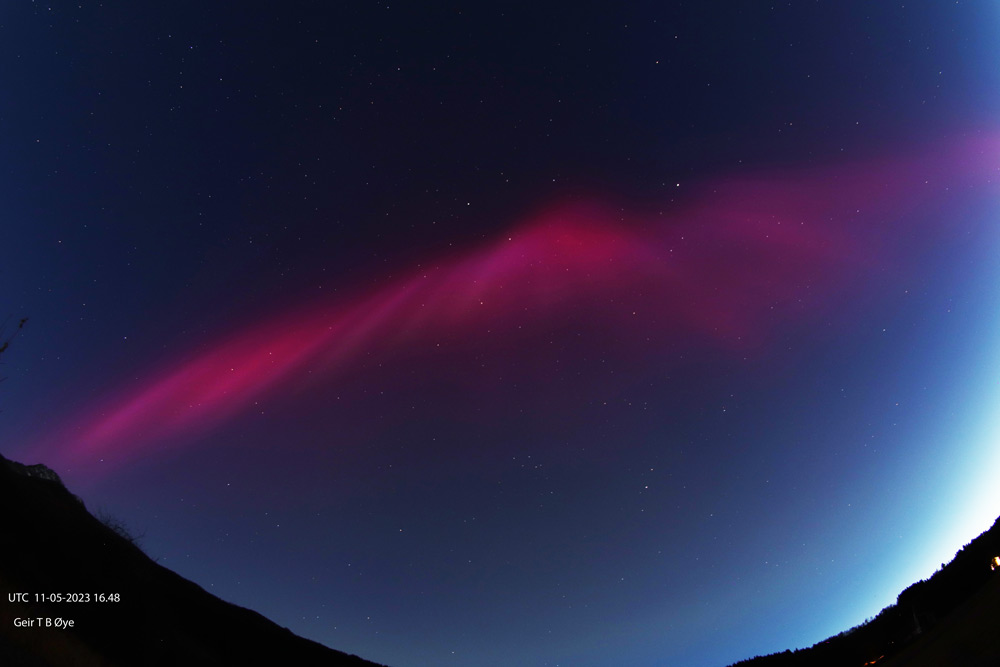
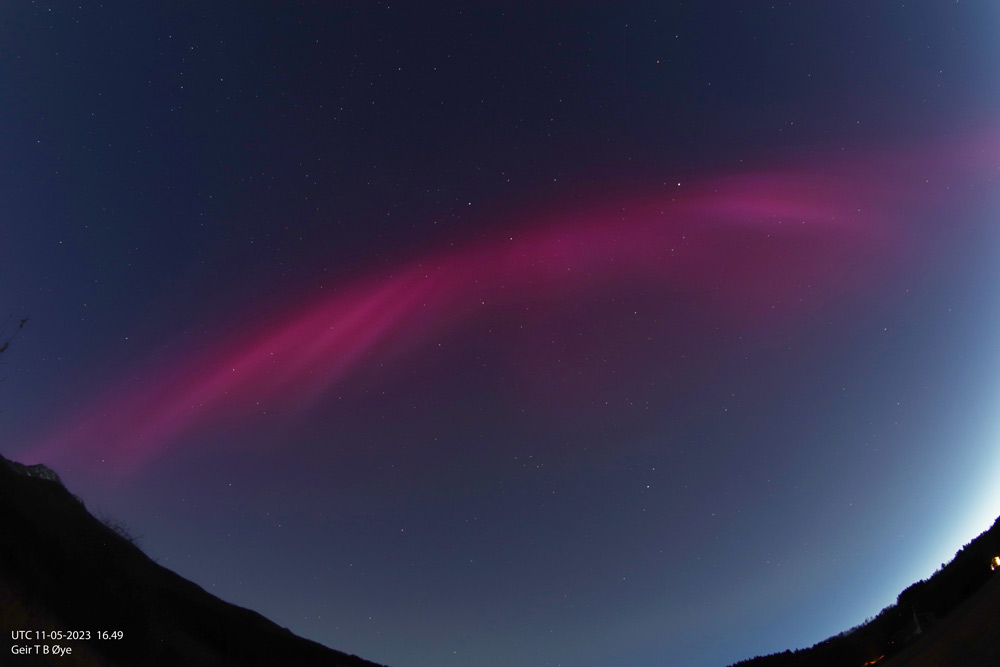
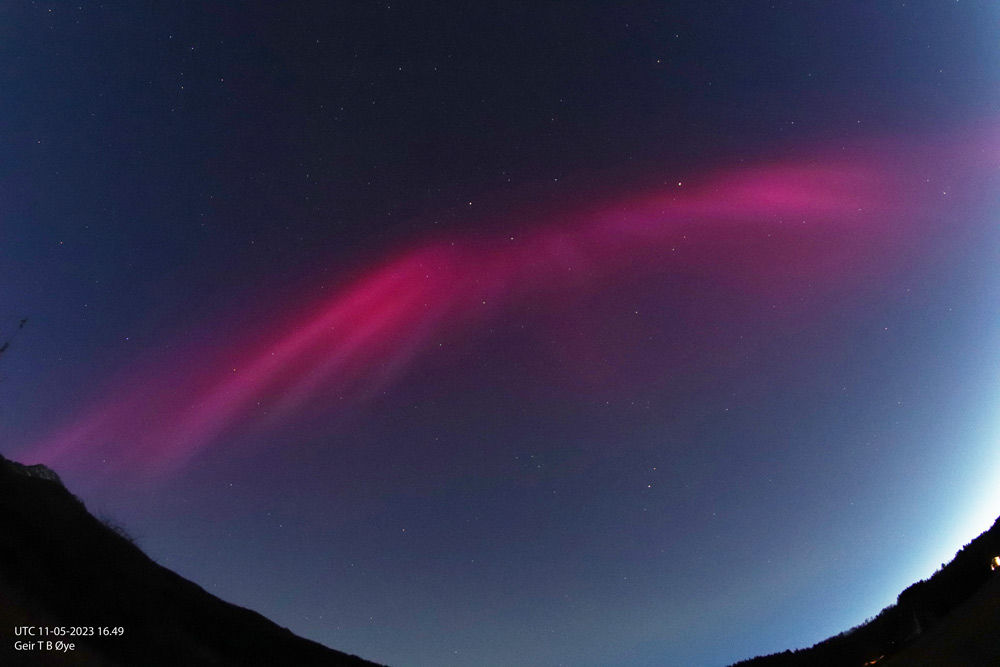
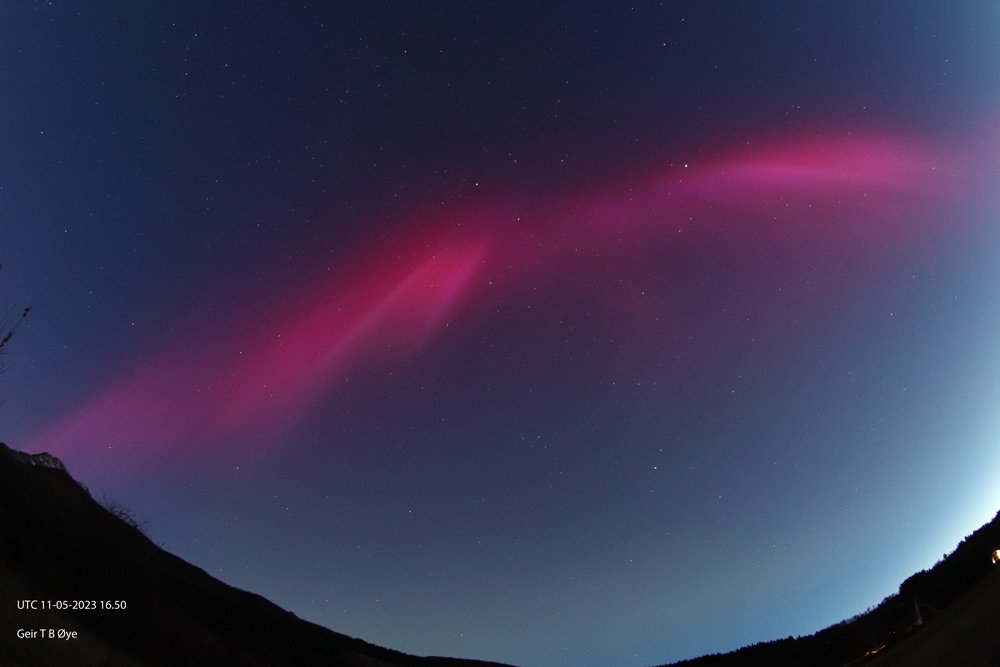
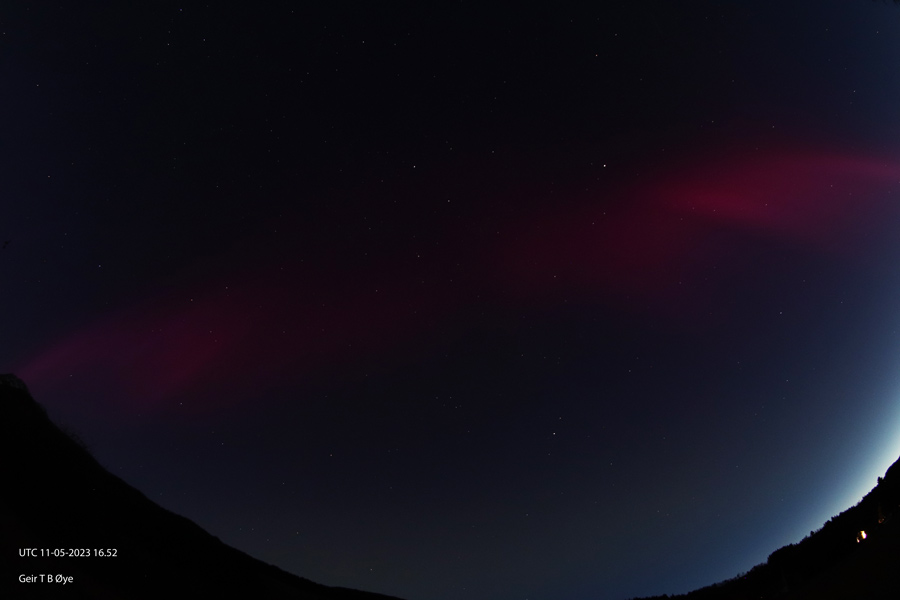
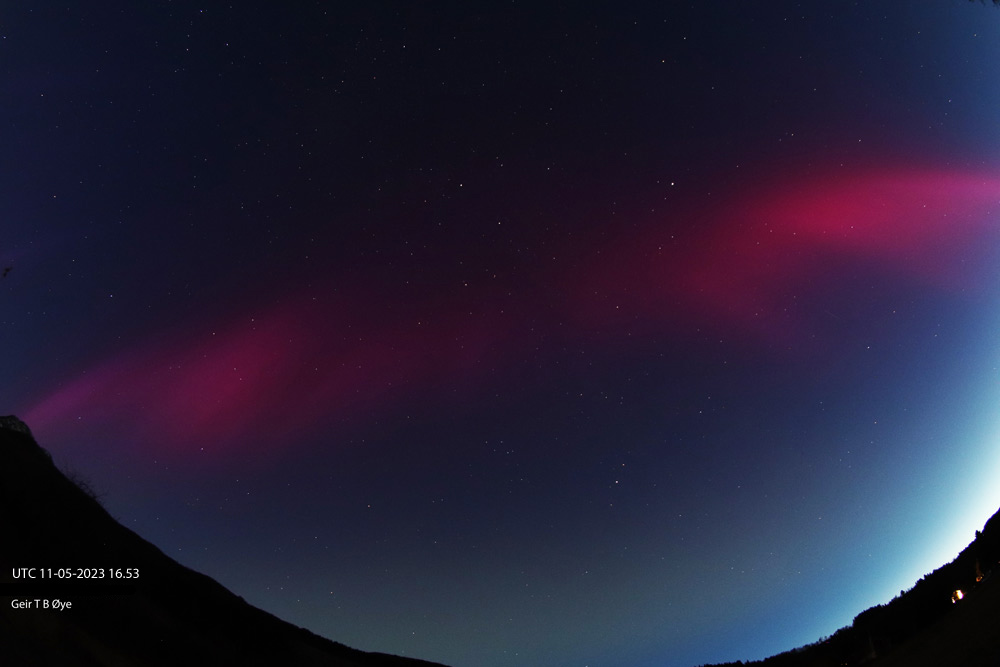
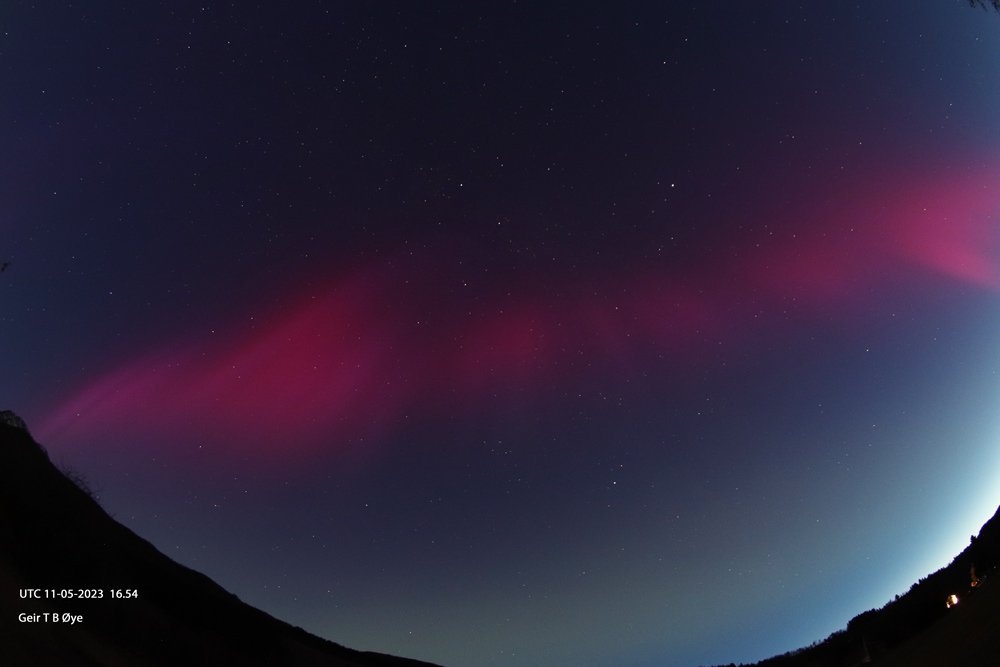
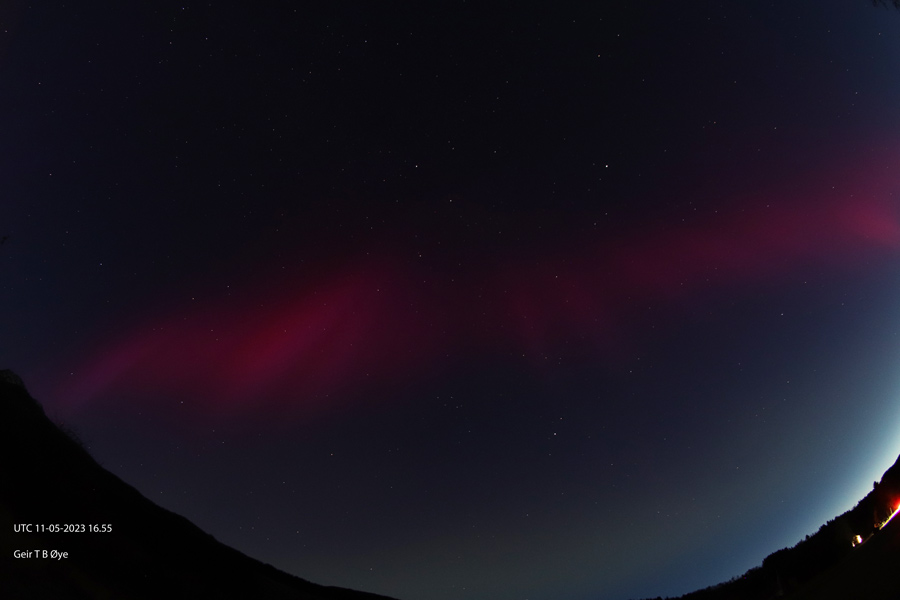
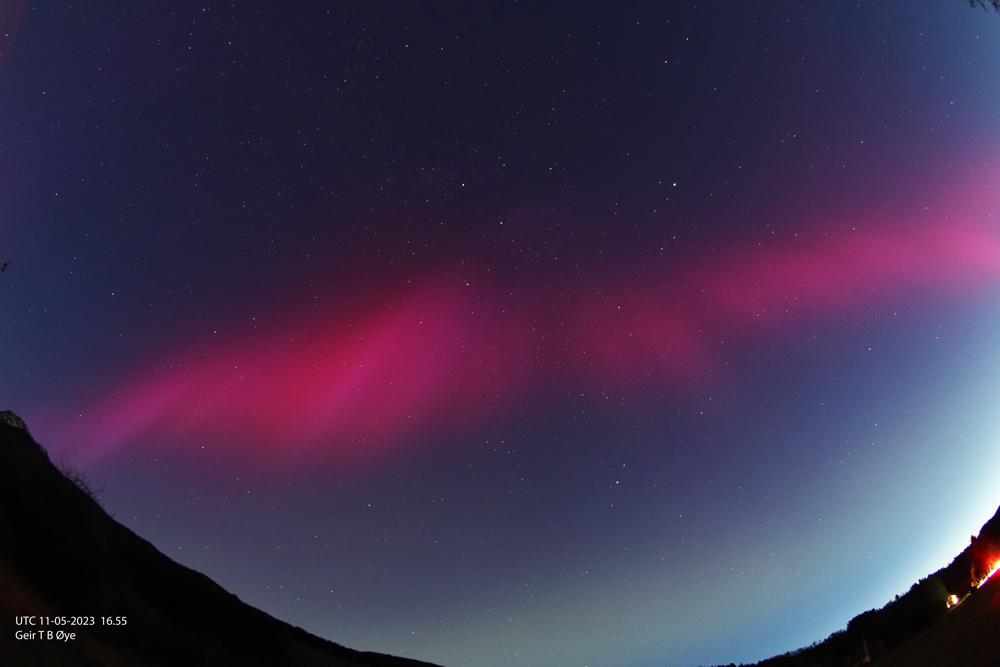
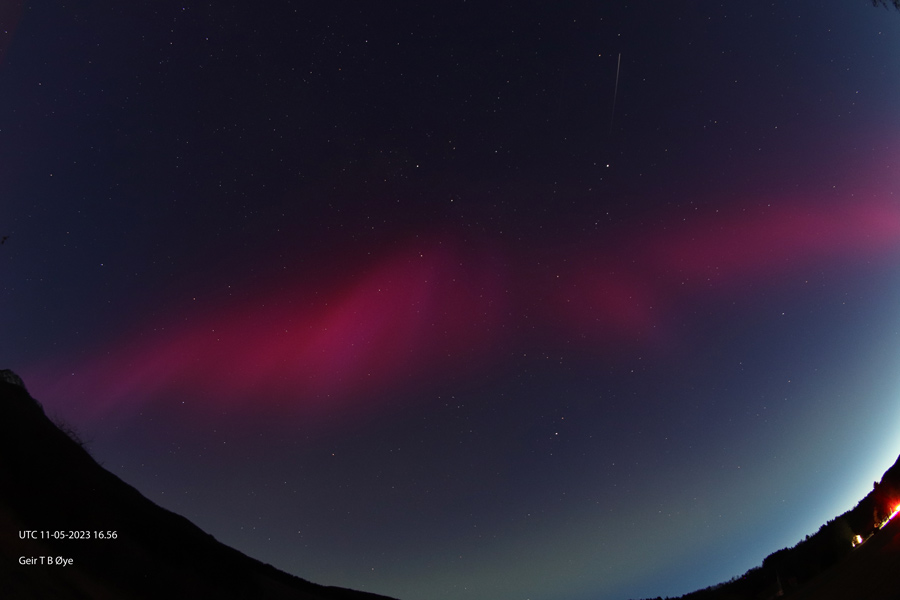
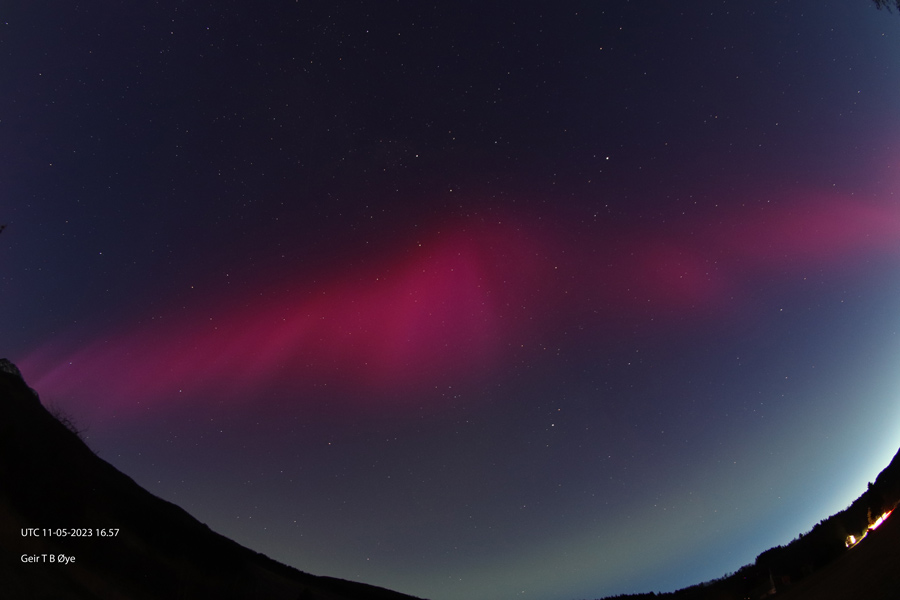
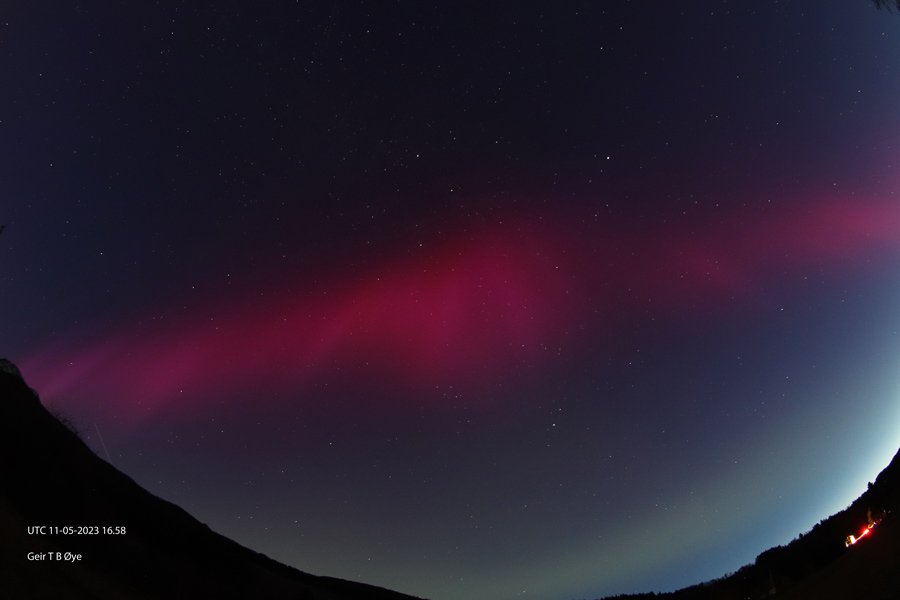
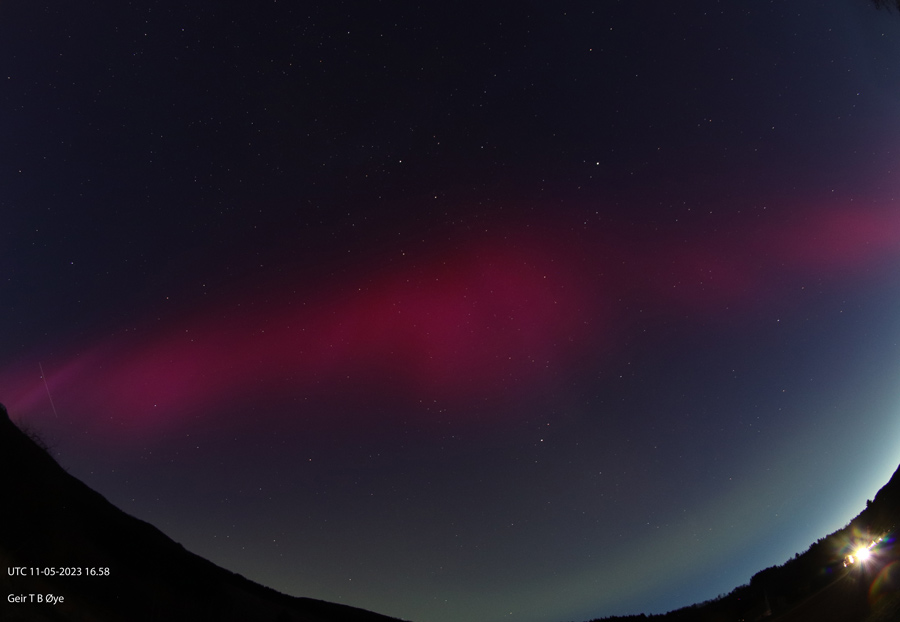
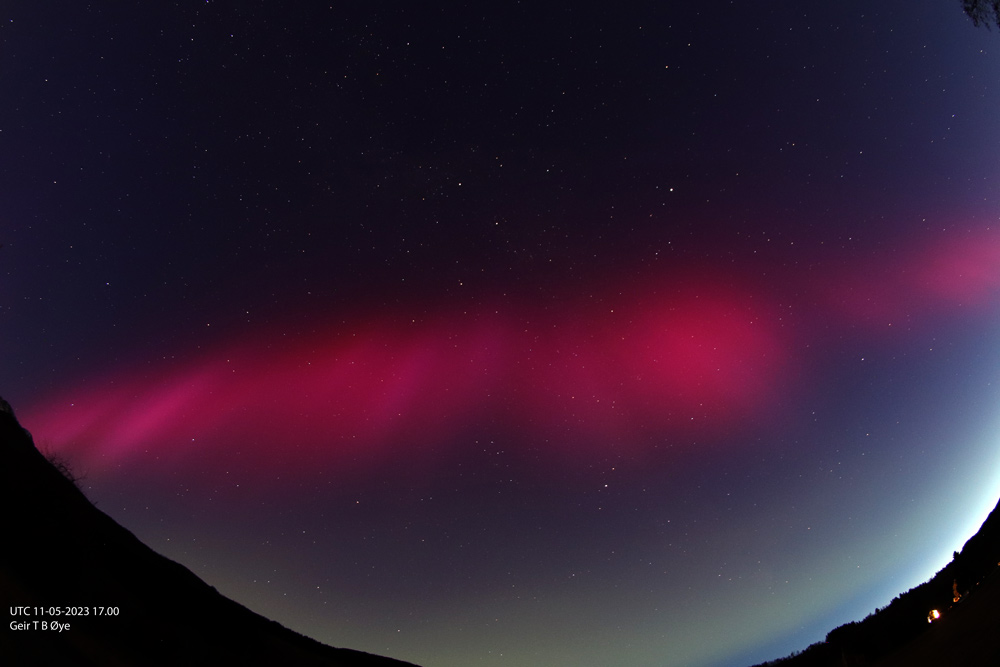
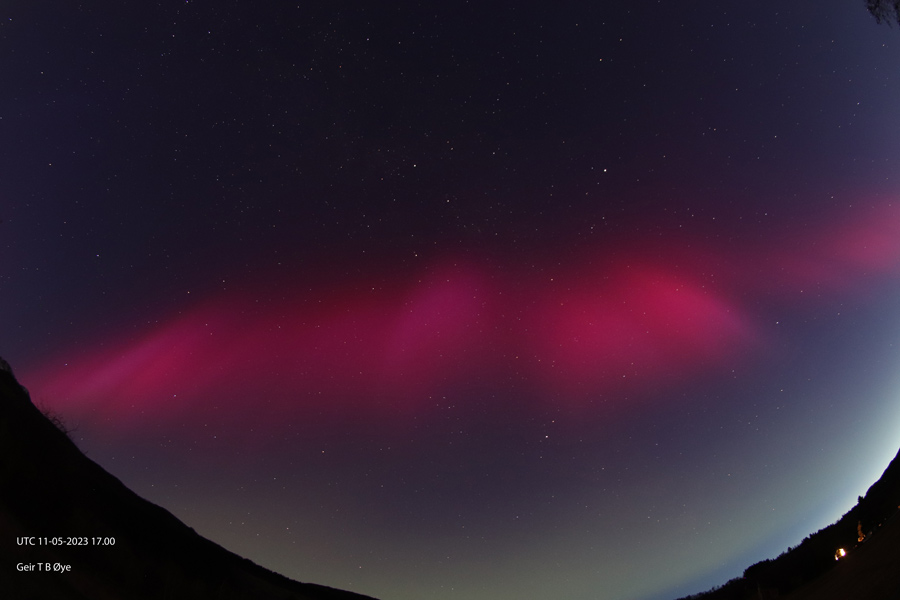
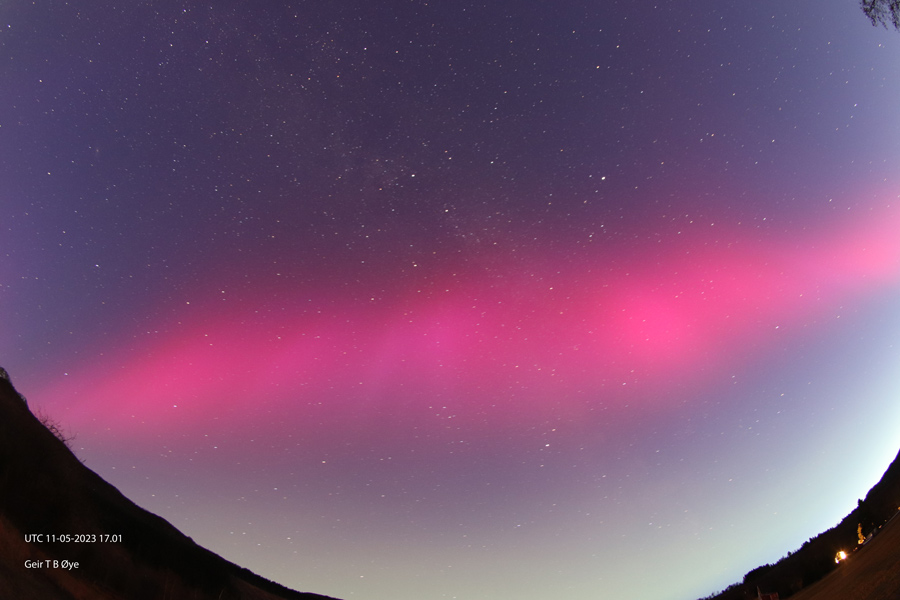
On November 5, 2023, a rare, structured deep red arc was documented overhead in Ørsta, Norway. The arc appeared poleward of the main auroral oval, lacked a green auroral base, and remained stable shortly before a significant substorm began. A simultaneous observation by Michael Theusner near the Svartisen Glacier confirmed the phenomenon from a separate location, supporting its spatial extent and rarity.
Geophysical Environment
Timeline of Geophysical Parameters — November 5, 2023
Time (UTC) Kp Index Bz (nT) Solar Wind Speed (km/s) Notes
16:40-17:08 — ~-12 ~510 — Structured red arc oberved overhead
18:00 4 –10 ~515 Calm conditions before storm onset
20:00 5 –18 ~525 Bz increasingly southward
21:00 6 –24 ~535 Substorm conditions intensifying
22:00 7+ –27 ~540 Full storm development
23:00 6 –15 ~525 Geomagnetic activity subsiding
Sources: NOAA SWPC, SpaceWeatherLive, The Watchers storm reports
NOTE: Although global indices suggested calm geomagnetic conditions around 18:00 UTC (Kp = 4), strong auroral activity was already observed from Ørsta at 17:09 UTC. This highlights how local observations often precede broader geophysical indicators, especially during dynamic storm transitions.
Phenomenon Description
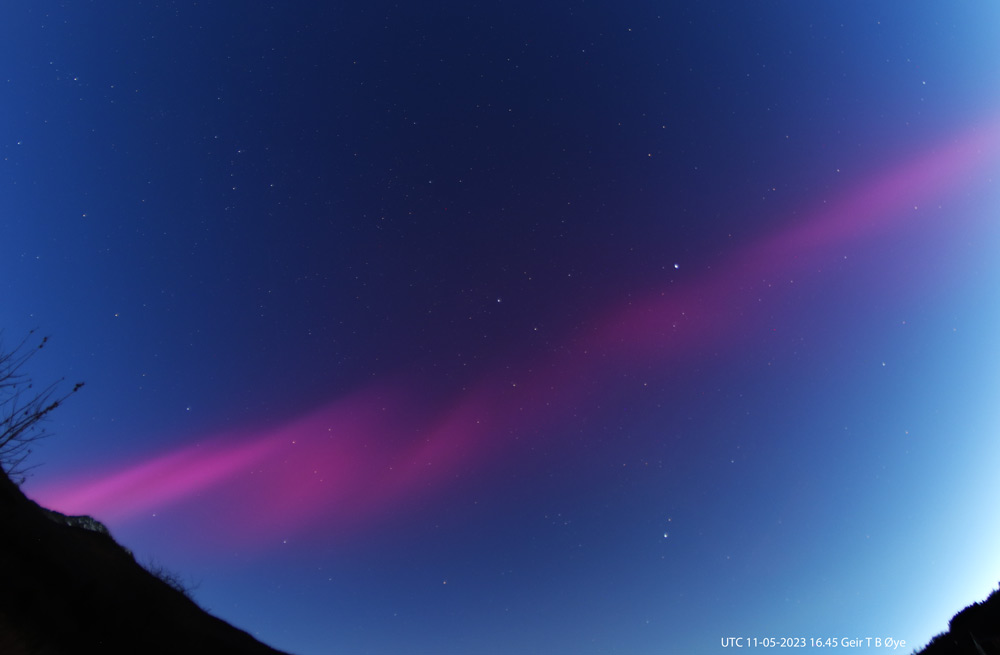
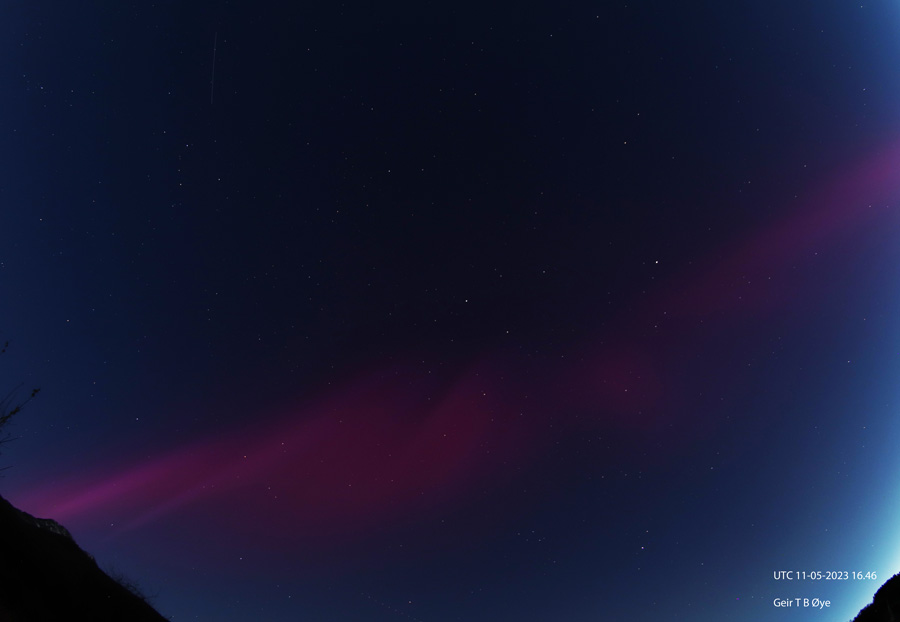
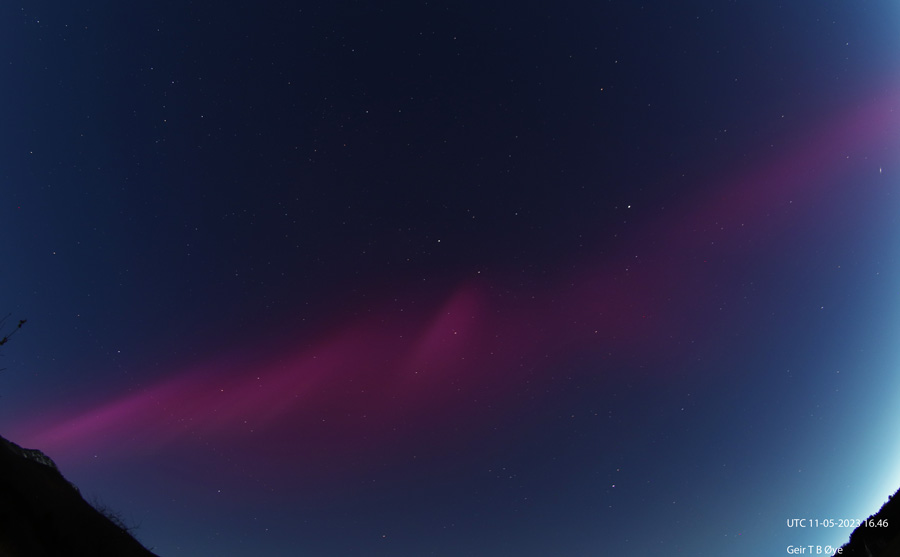
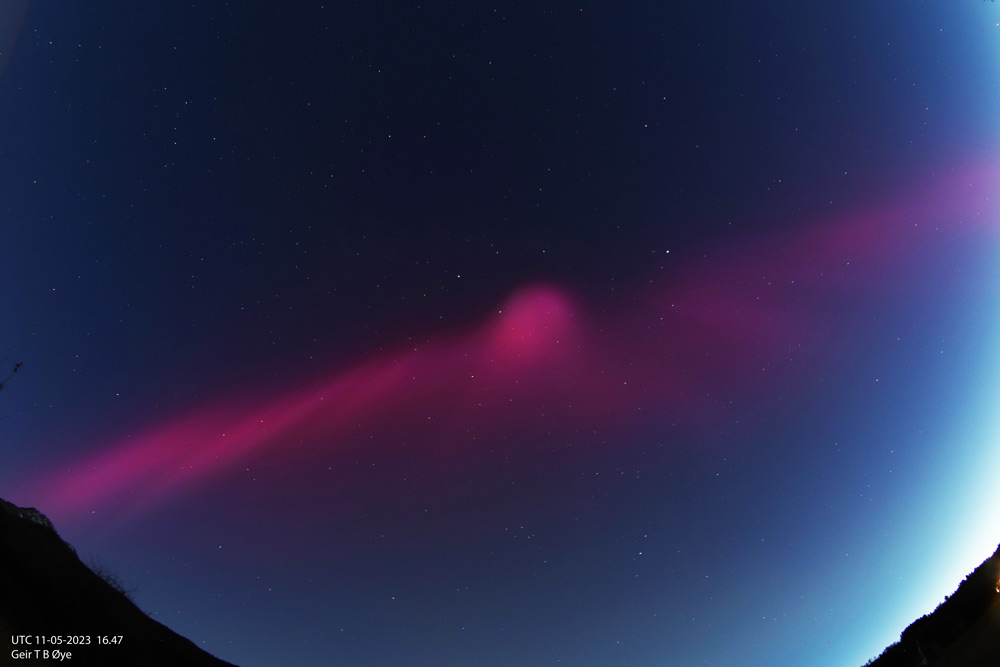
– Structure: Deep red arc, stable and smooth, faint vertical textures
— Color 630 nm + 636.4 nm. (emission like SAR arcs)
– Altitude Estimate: Presumably high, based on lack of green emission
– Duration: Several minutes before dynamic auroral onset
– Comparison: Matches Carl Størmer’s “feeble homogeneous arcs of great altitude”
Historical Reference
Carl Størmer documented rare red arcs appearing poleward and without green aurora, often at altitudes over 200 km. This observation may represent a modern analogue and support his early hypotheses about detached high-altitude auroral structures.
Interpretive Possibilities
– STEVE-like phenomenon: Visual similarity with unusual placement
– Detached high-altitude arc: Outside typical auroral oval models
– Not SAR: SAR arcs typically occur equatorward, inconsistent with this arc’s location
Acknowledgments
Thanks to Michael Hunnekuhl for insightful interpretation of arc orientation and structure, and to Michael Theusner for independent observation near Svartisen Glacier, which confirmed the arc’s regional appearance.
Collaboration Invitation
I welcome discussion and collaboration with scientists and aurora observers interested in high-altitude auroral structures. All images and metadata are available upon request.
Contact: gtboye@outlook.com
Image Documentation
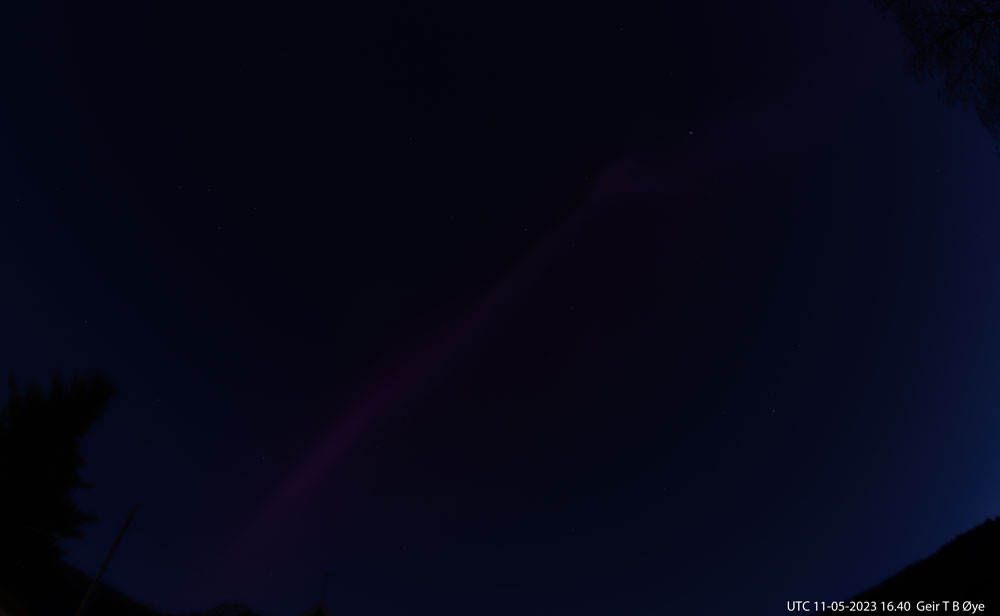
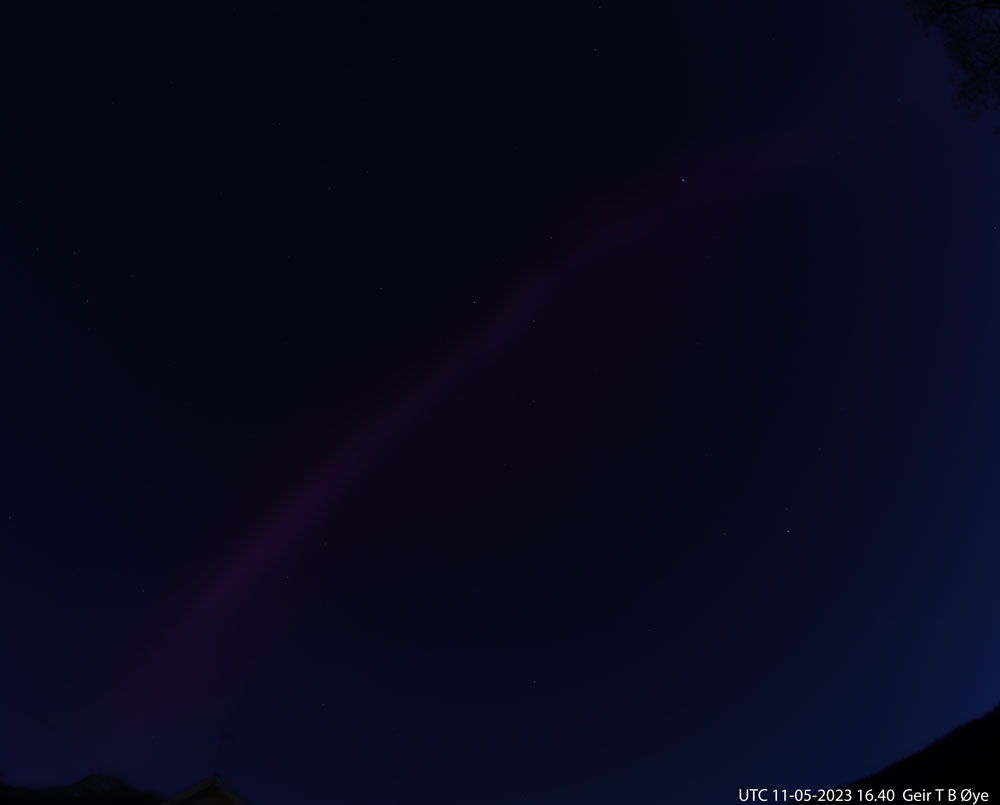
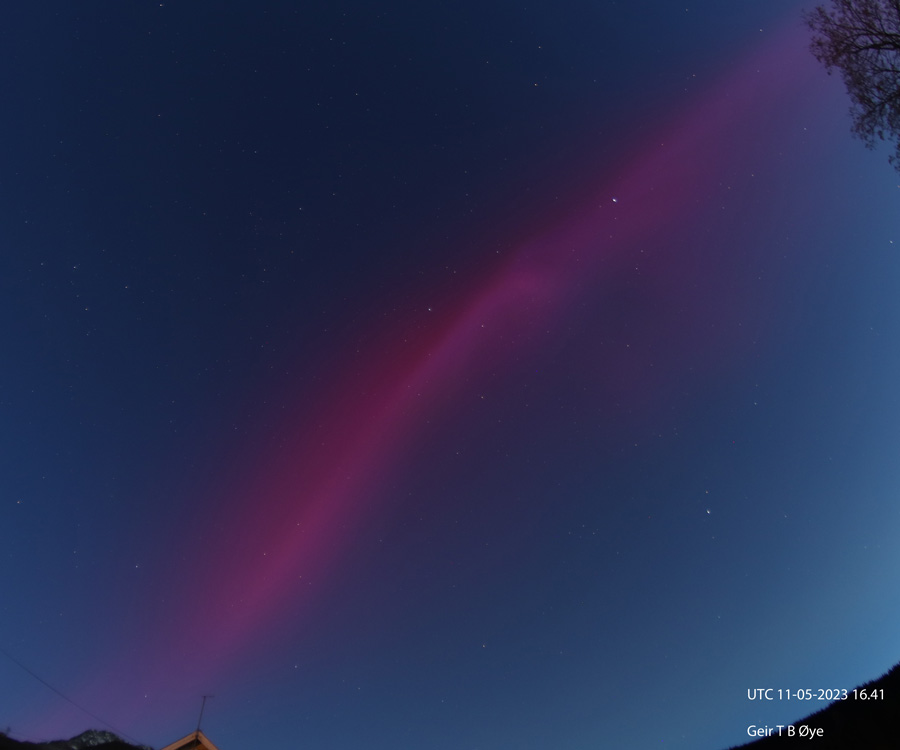
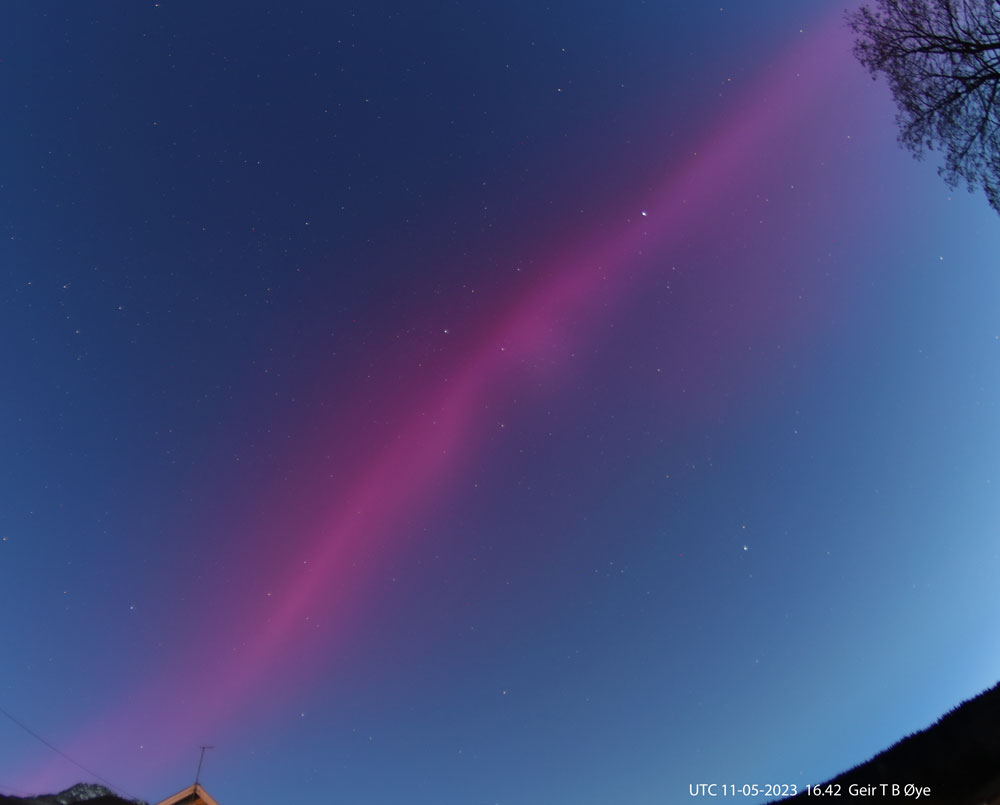
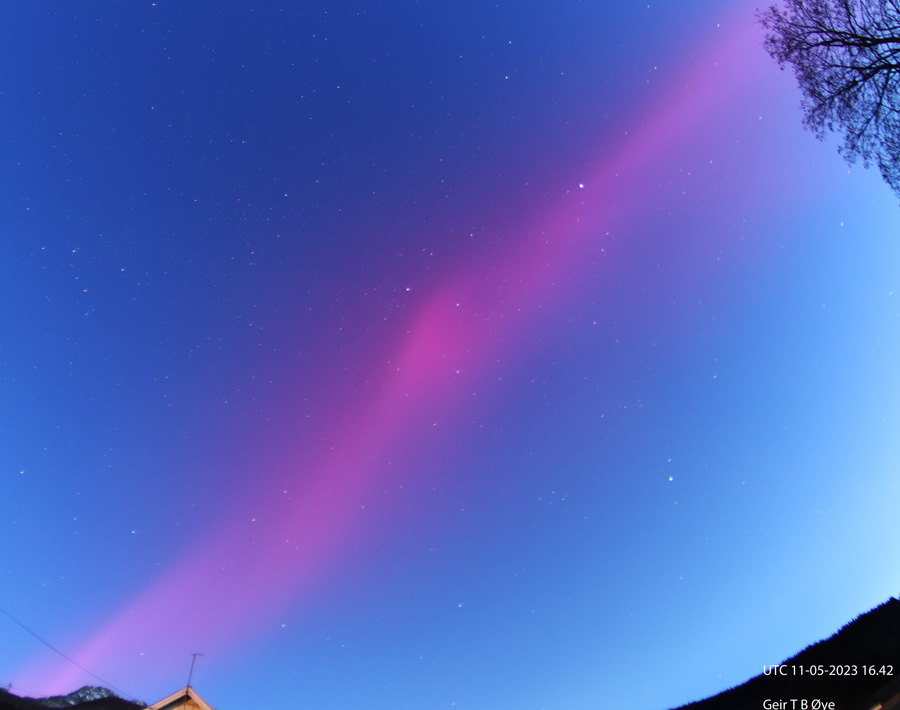
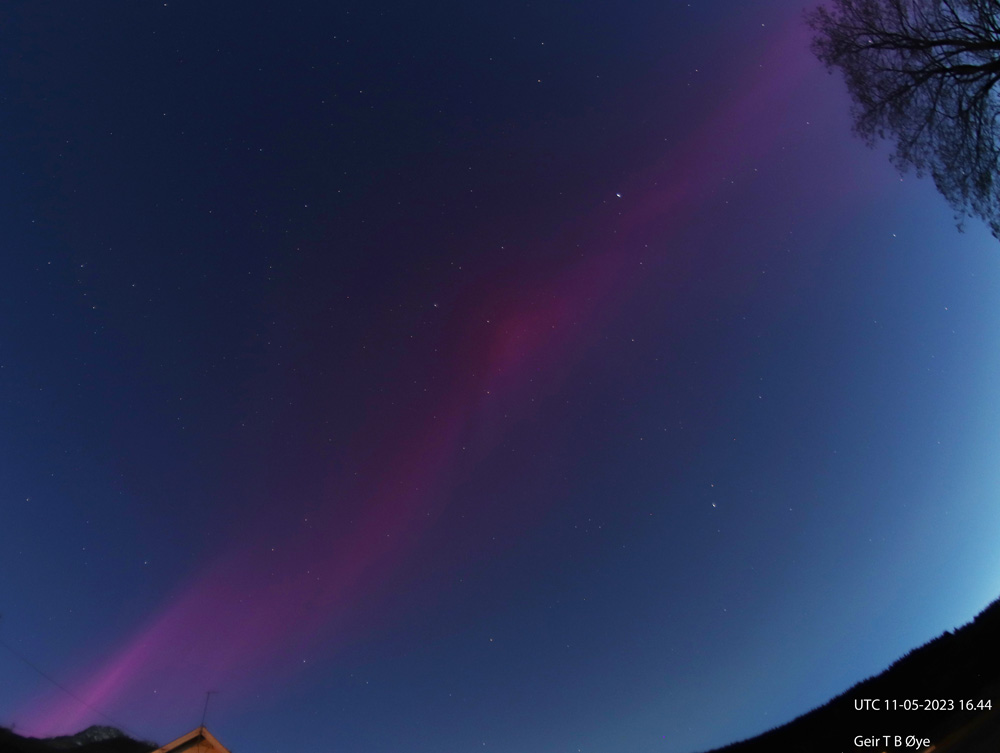
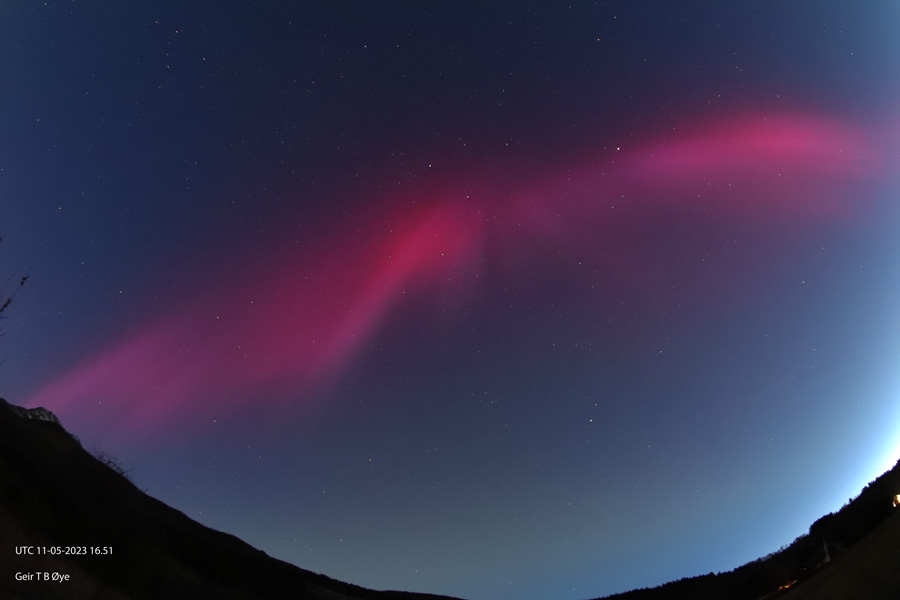
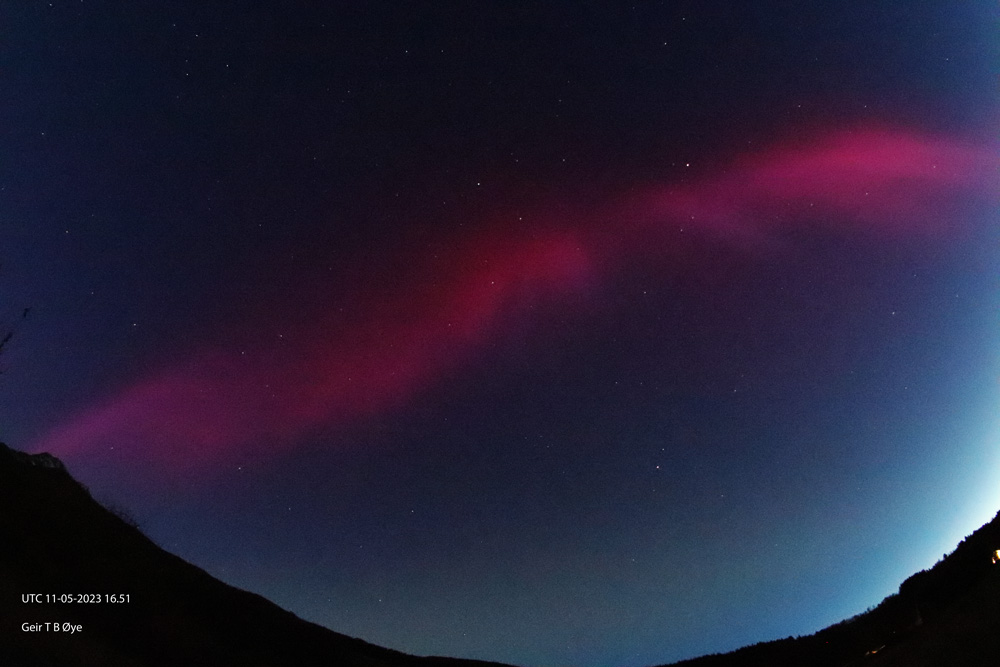
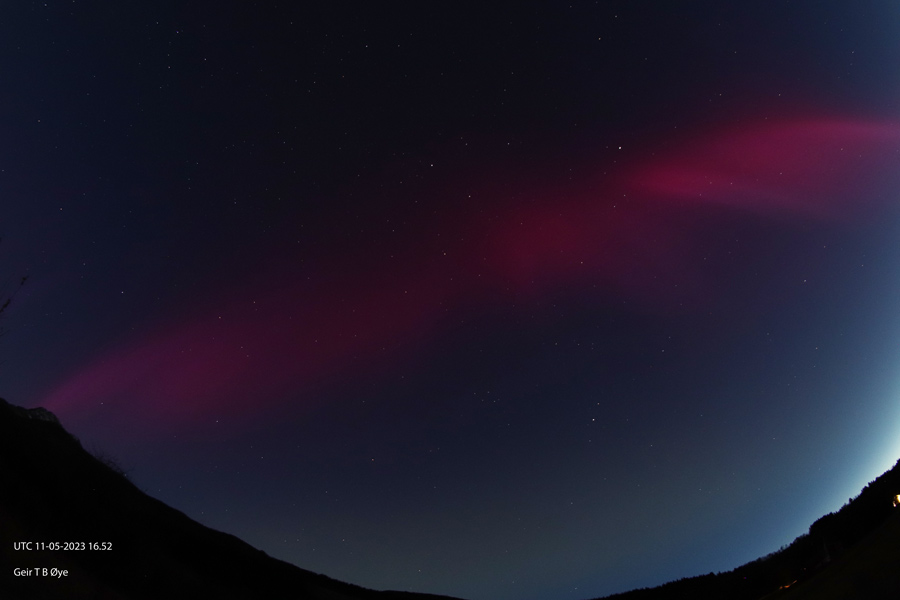
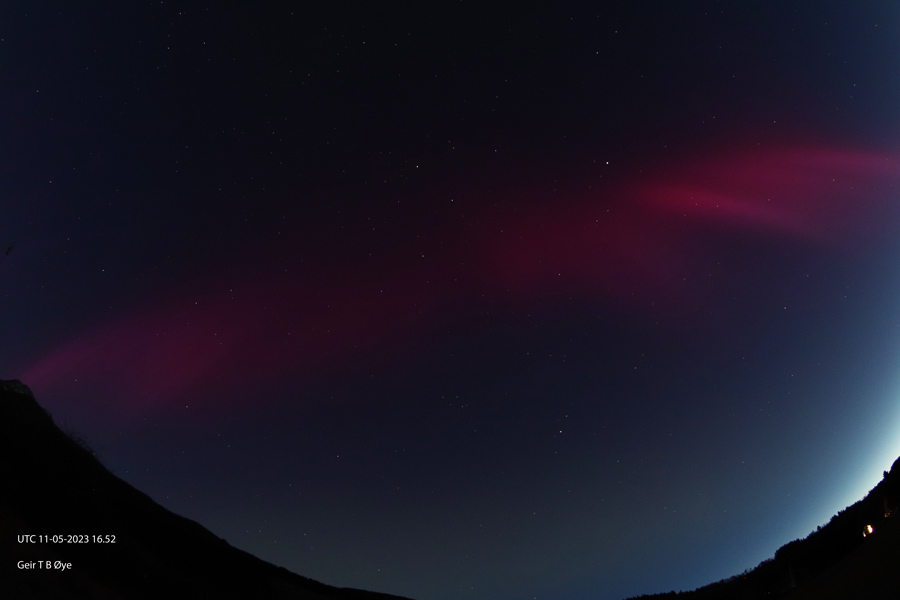
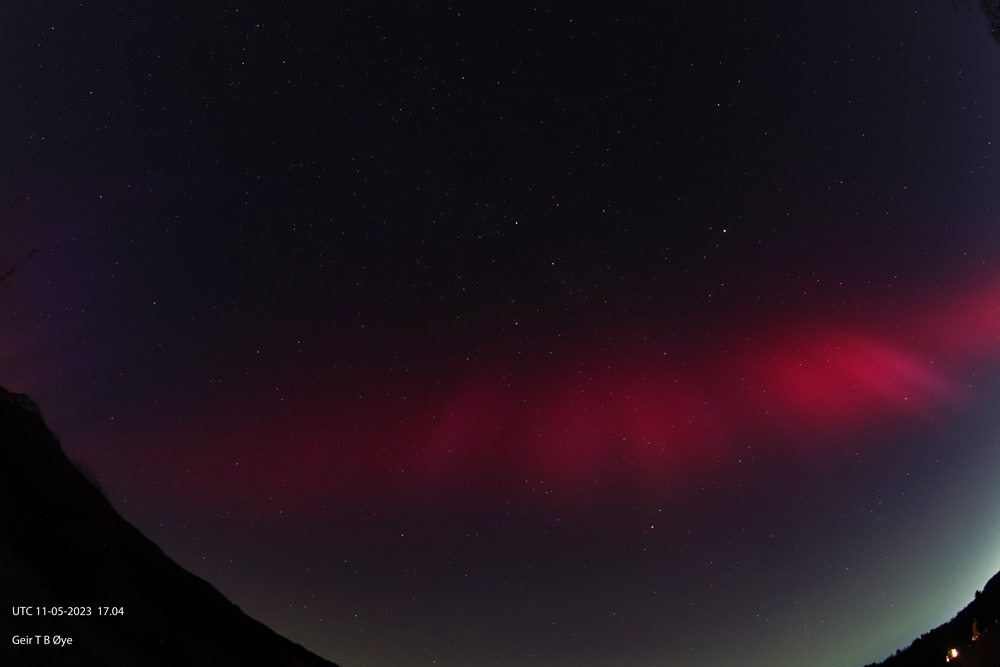
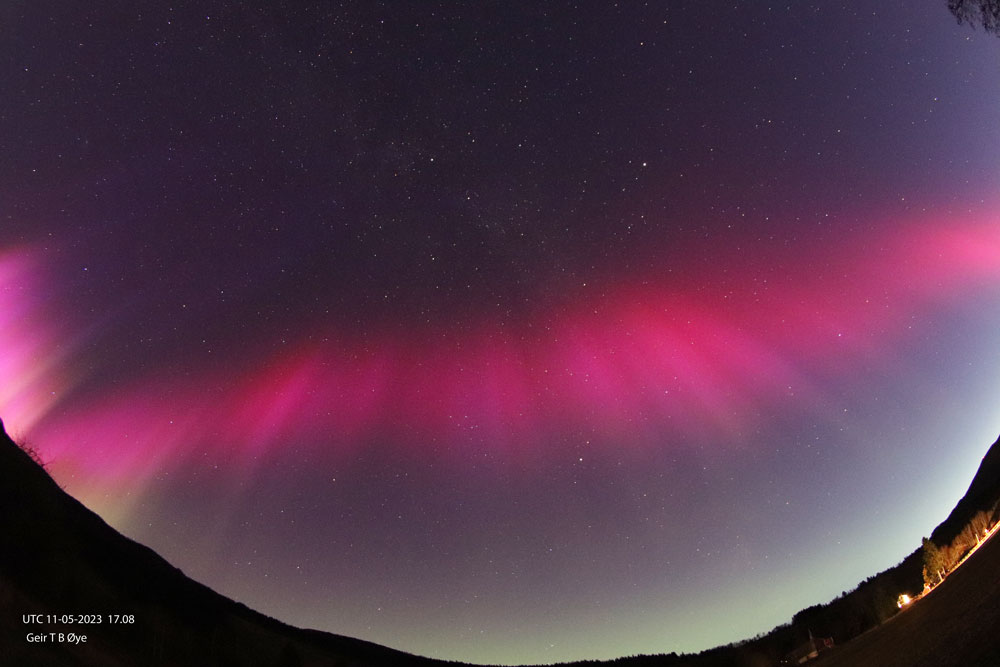
The pictures below are taken from UTC 16.40 to 17.08 on November 5, 2023. I noticed an east-west oriented band stretching over the sky. The following pictures were taken using a fisheye-lens from Ørsta, Norway. Photo details: Meke fisheye-lens, Canon 800D.
– Images captured by the author (Geir T. Birkeland Øye)
– UTC timestamps embedded for scientific verification
– Camera specs: ISO 1600, various exposure times (depending on the brightness of the sky).
– Orientation: Facing south (fisheye-lens view).
– Visuals show a detached, homogeneous red arc without green auroral emission below









Scientific Outreach Summary
This structured red arc was observed from Ørsta, Norway between 16:40 and 17:08 UTC on November 5, 2023 — roughly 90 minutes before global geomagnetic indicators reached storm levels.
The arc appeared smooth, horizontally aligned, and visually detached from dynamic auroral curtains later in the evening. These traits point toward a subauroral optical phenomenon, potentially linked to STEVE or SAR arcs, often driven by ionospheric friction or ring current particle interactions.
Notably, strong auroral activity was already underway locally from 17:09 UTC, despite Kp remaining at moderate levels (~4) and global indices still suggesting calm conditions. This highlights how ground-based observations often precede global model recognition, reinforcing the value of high-resolution visual documentation.
Full geophysical context and time-stamped images are provided above. External collaboration and feedback are welcome
 Color and Light On And Beyond The Earth