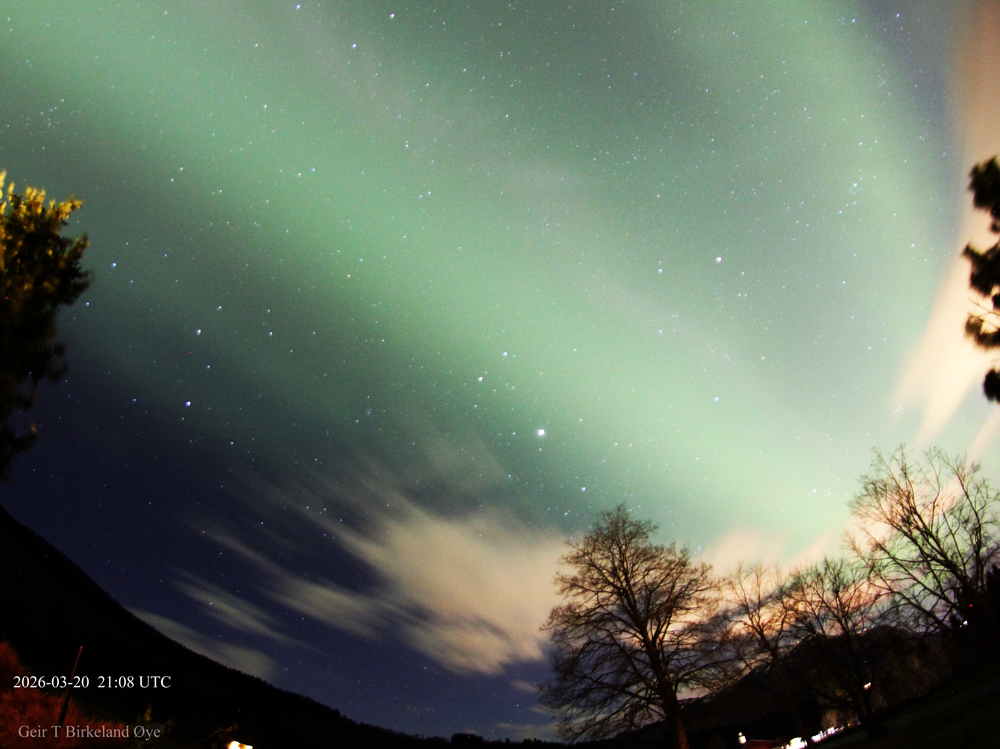
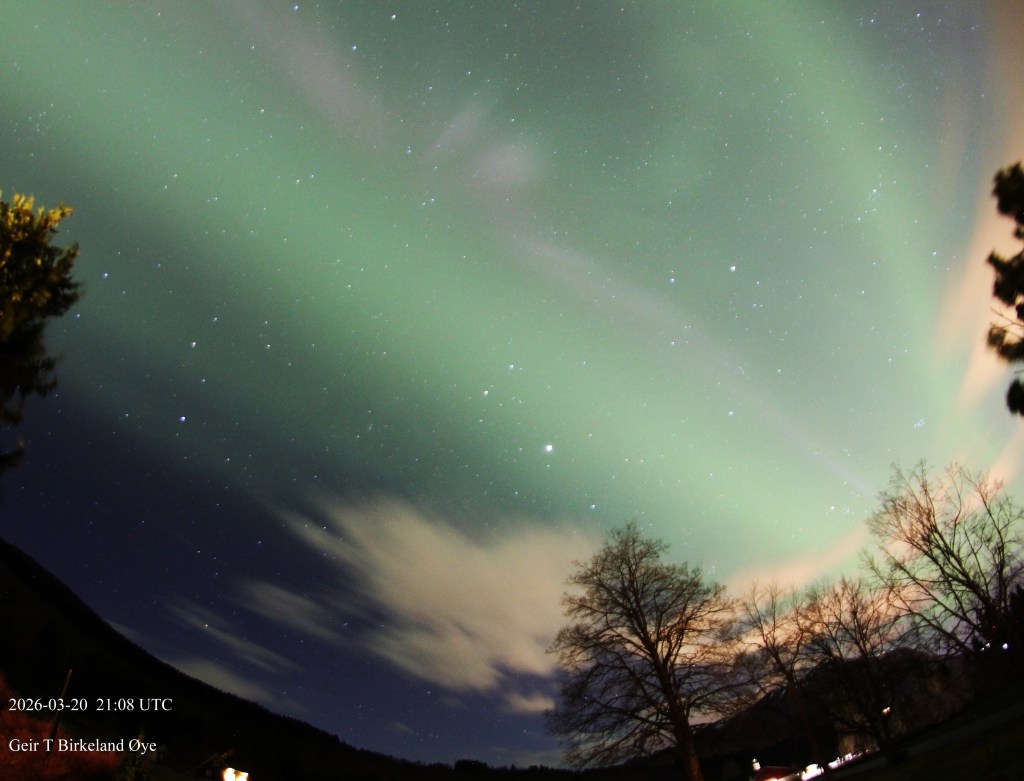
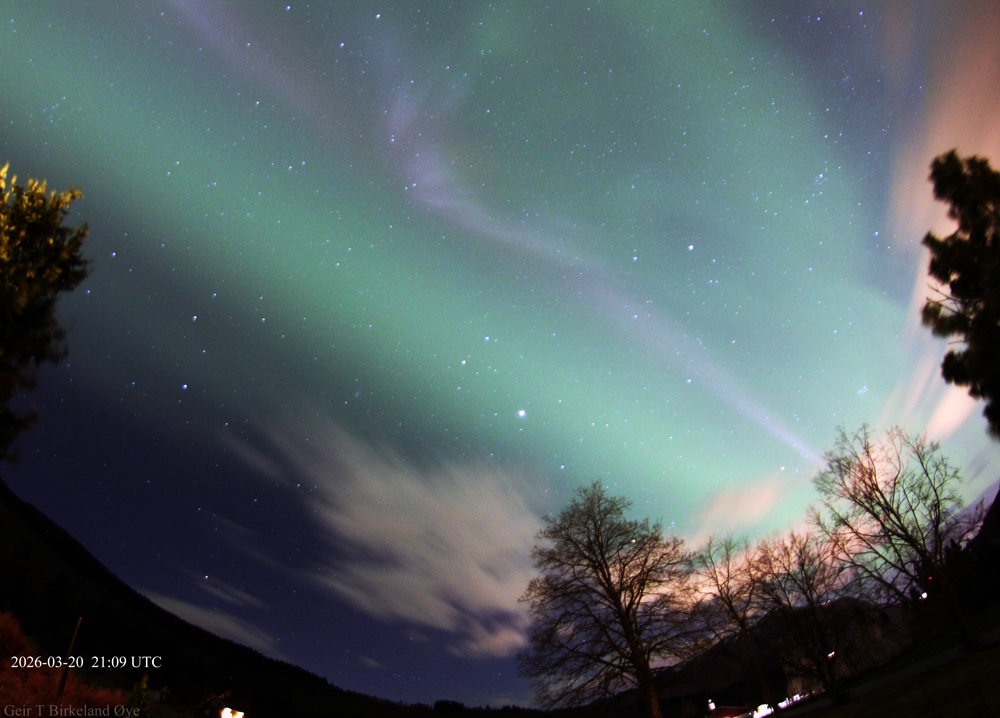
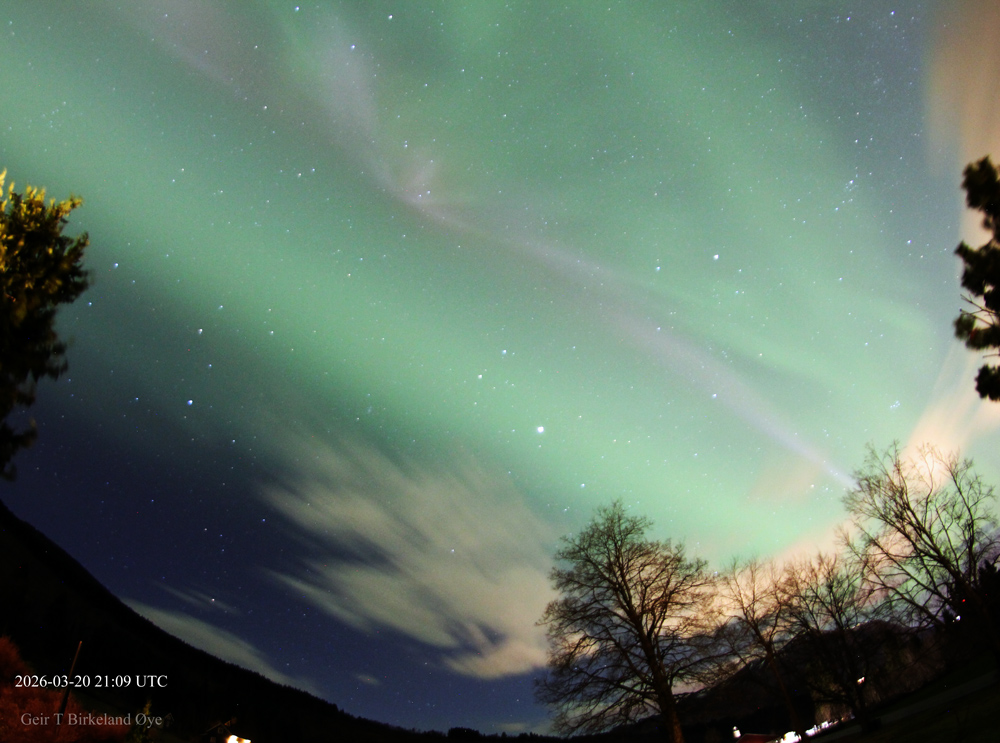
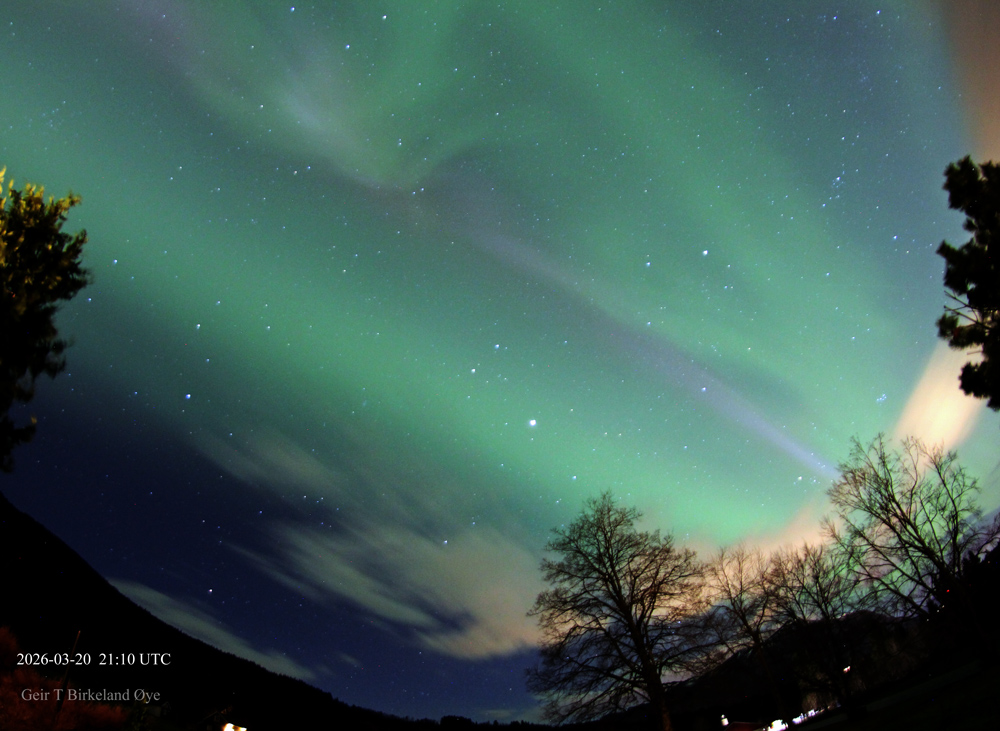
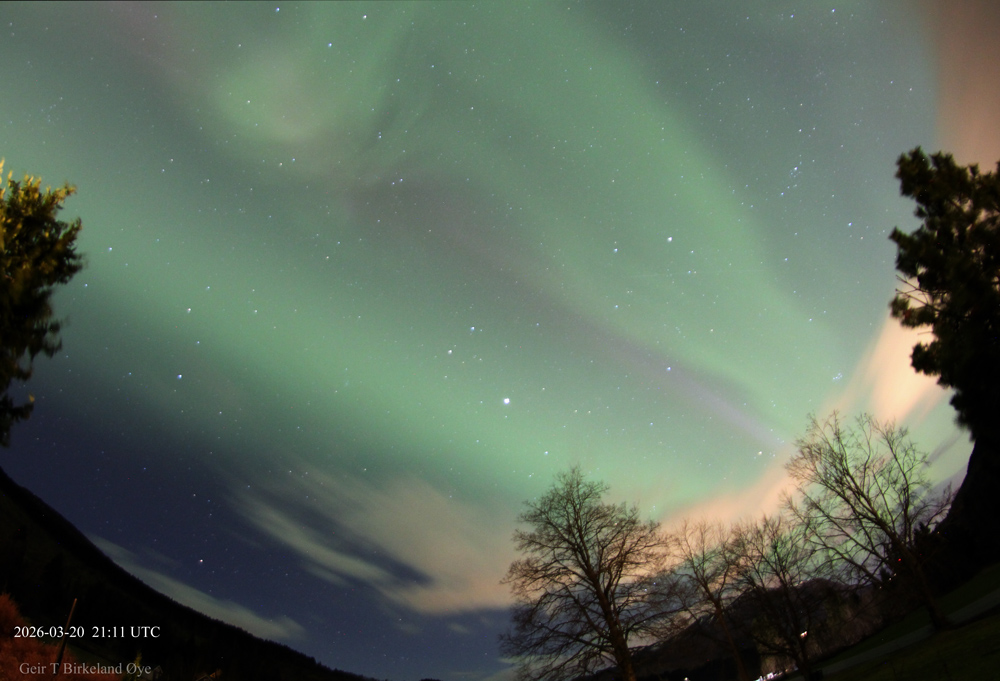
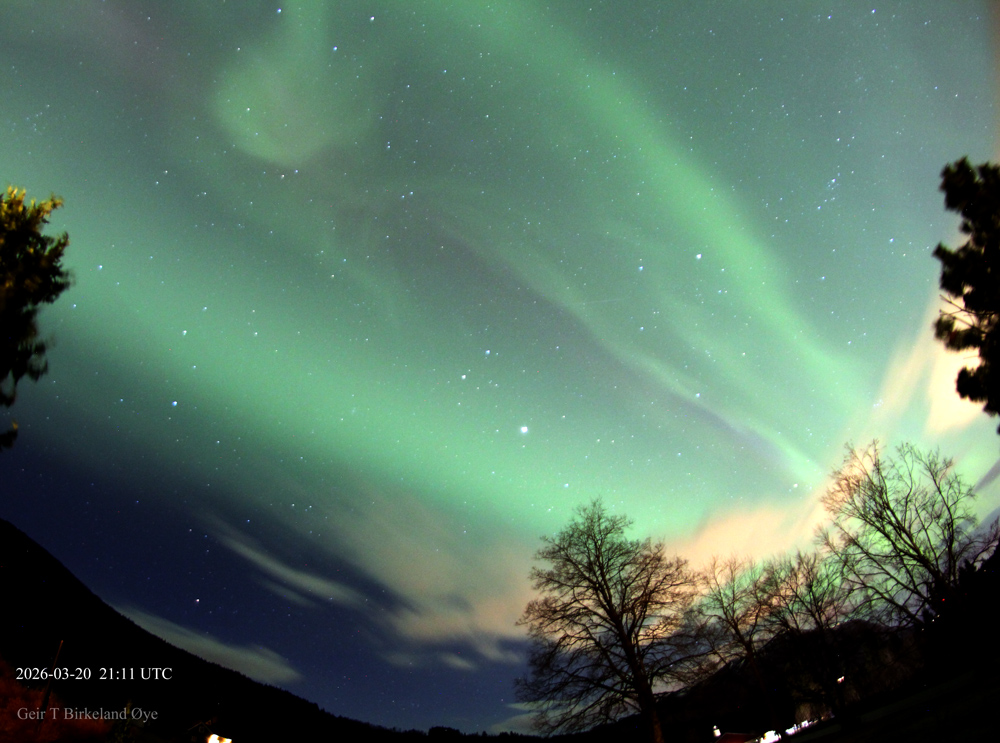
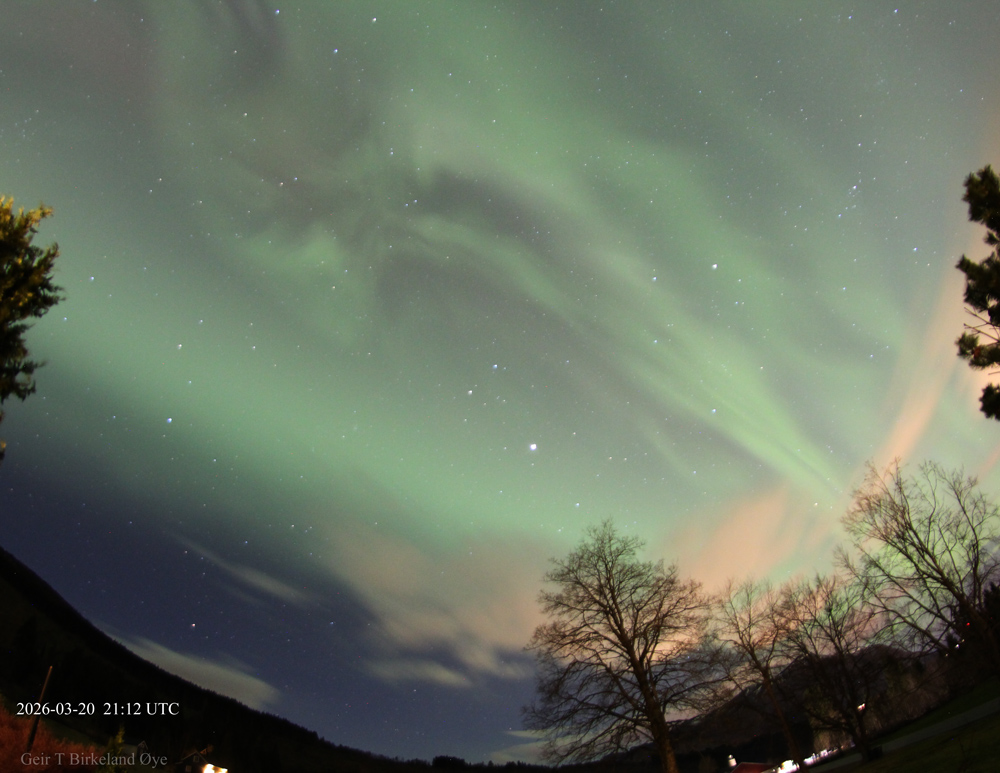
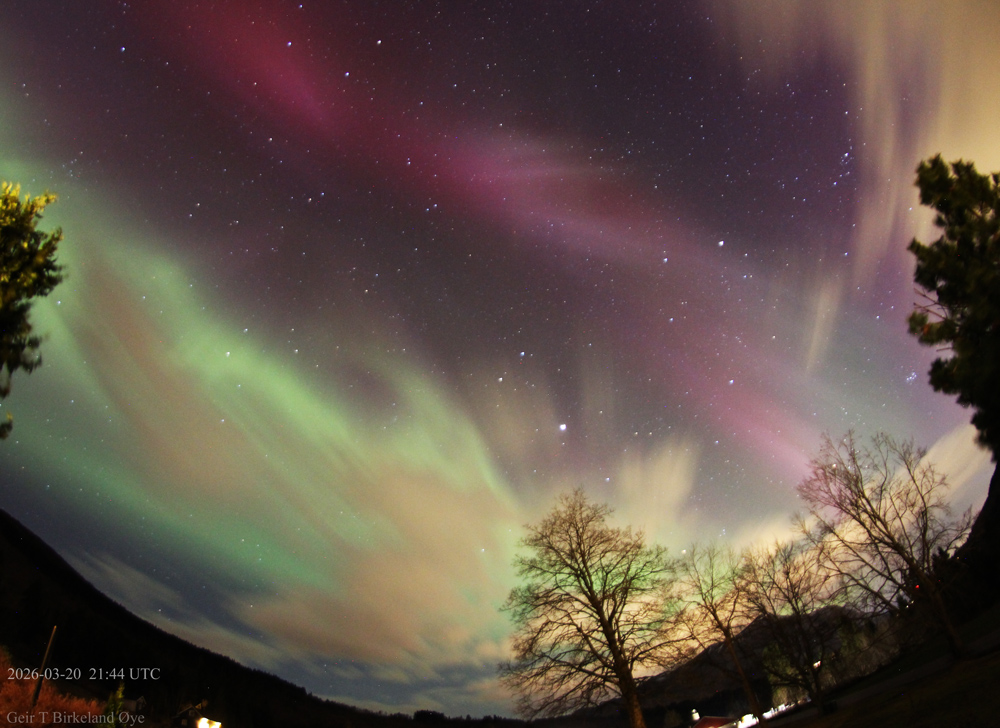
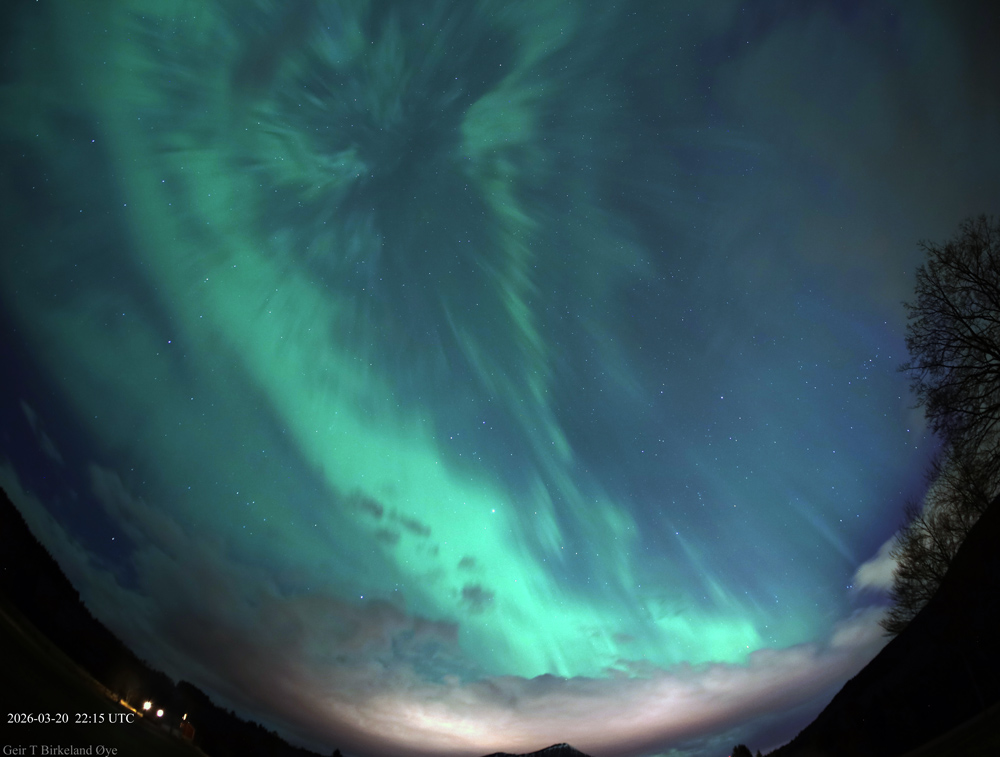
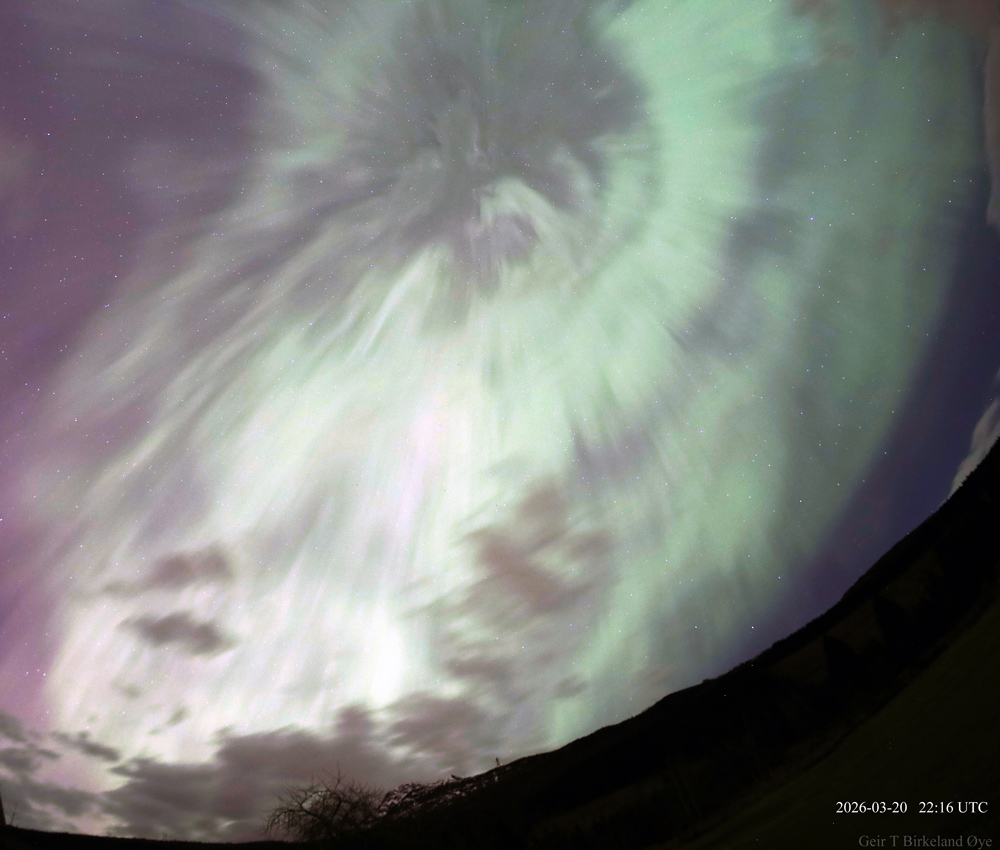
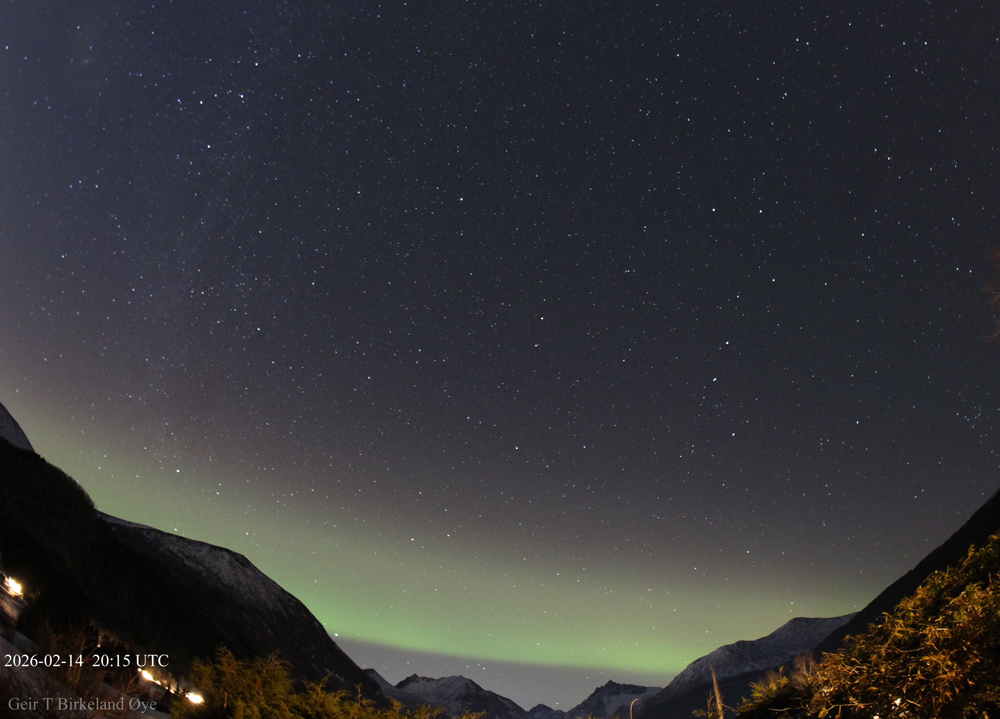
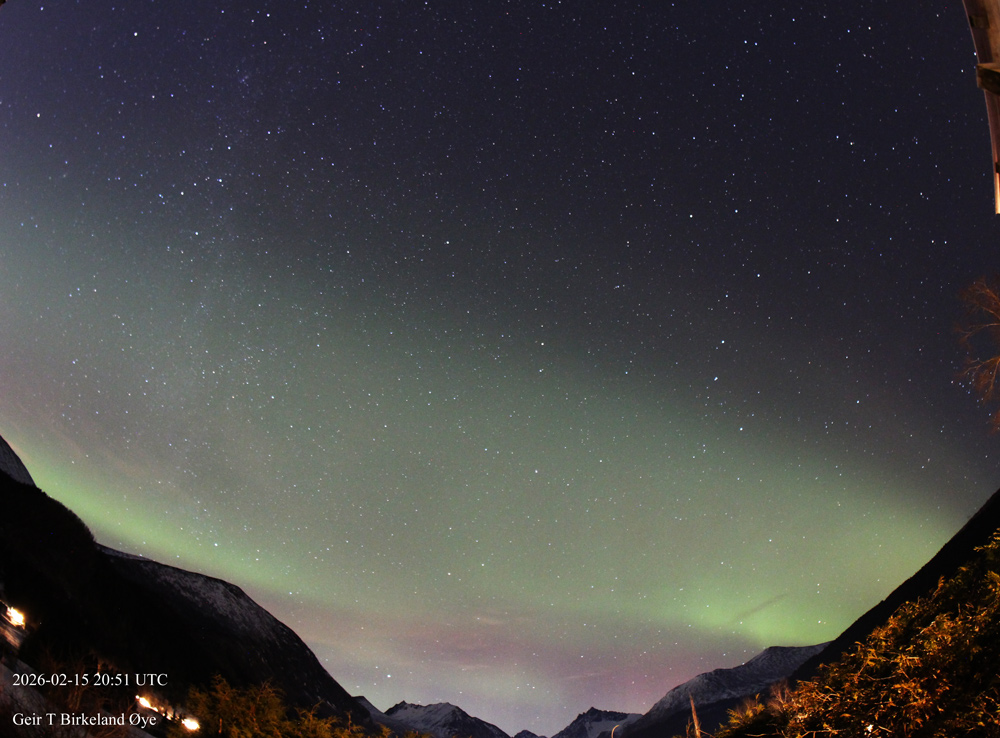
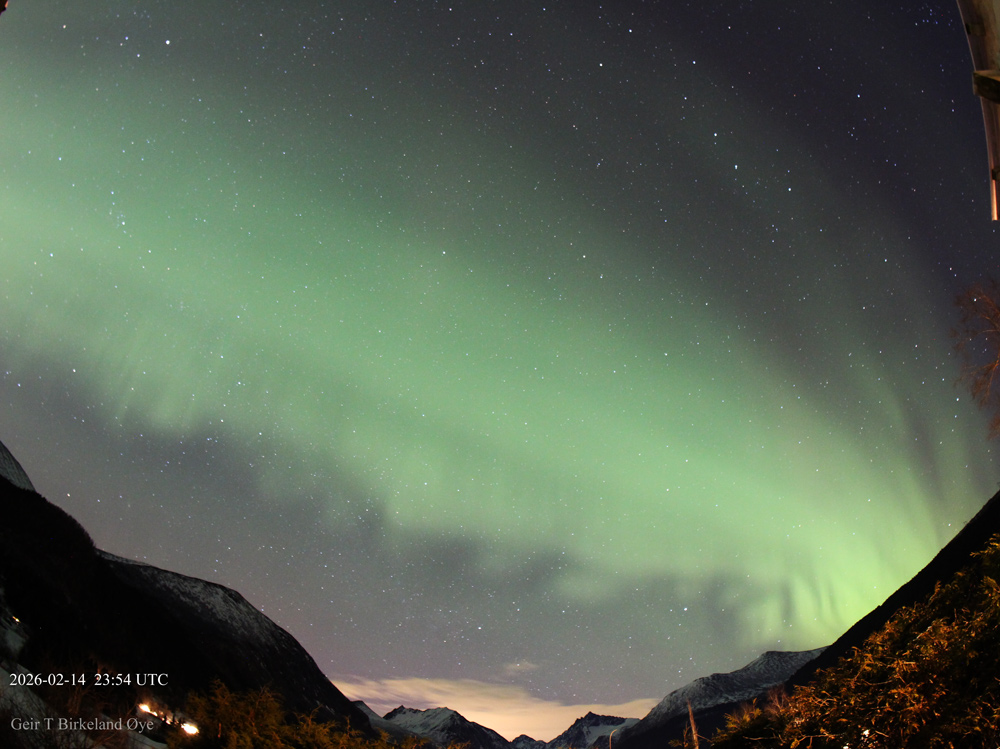
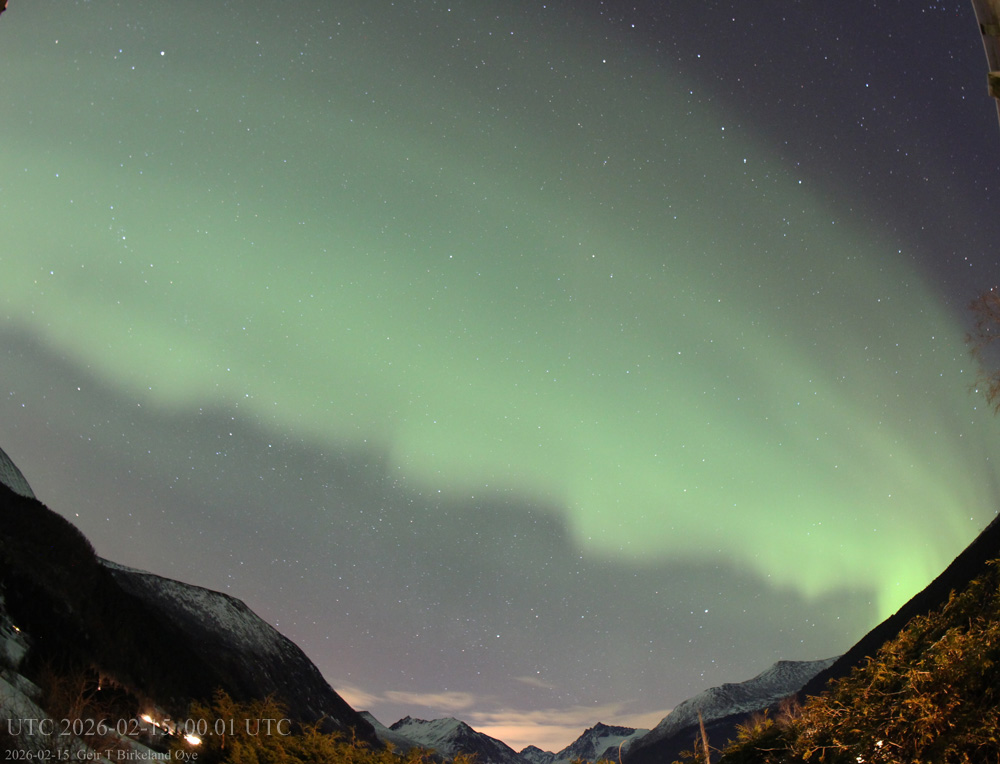
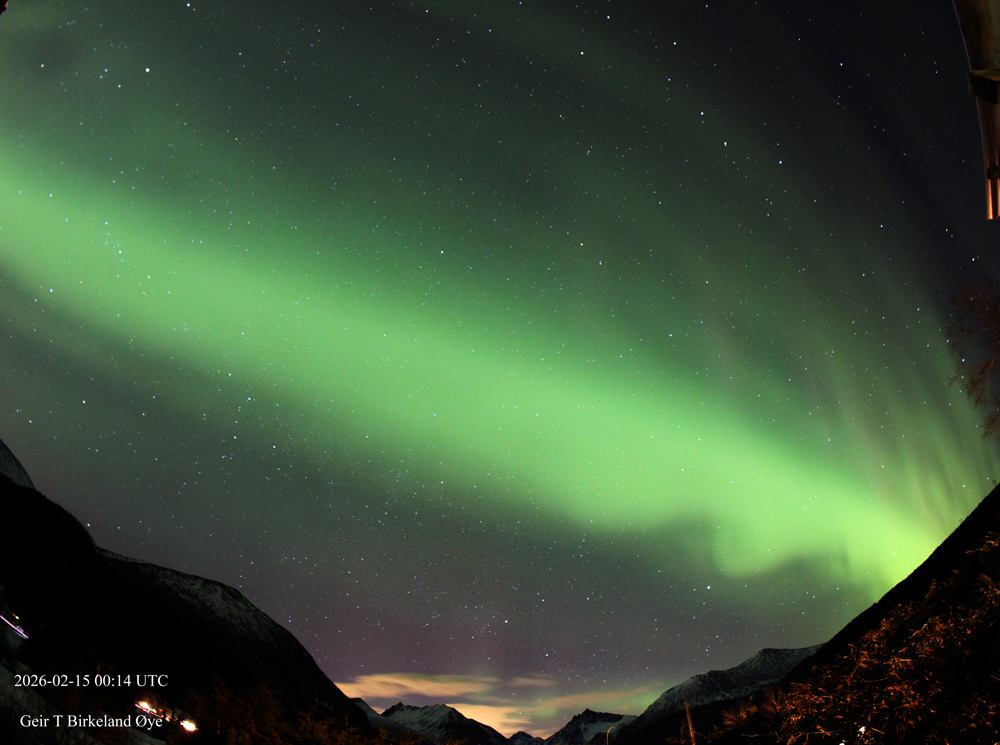
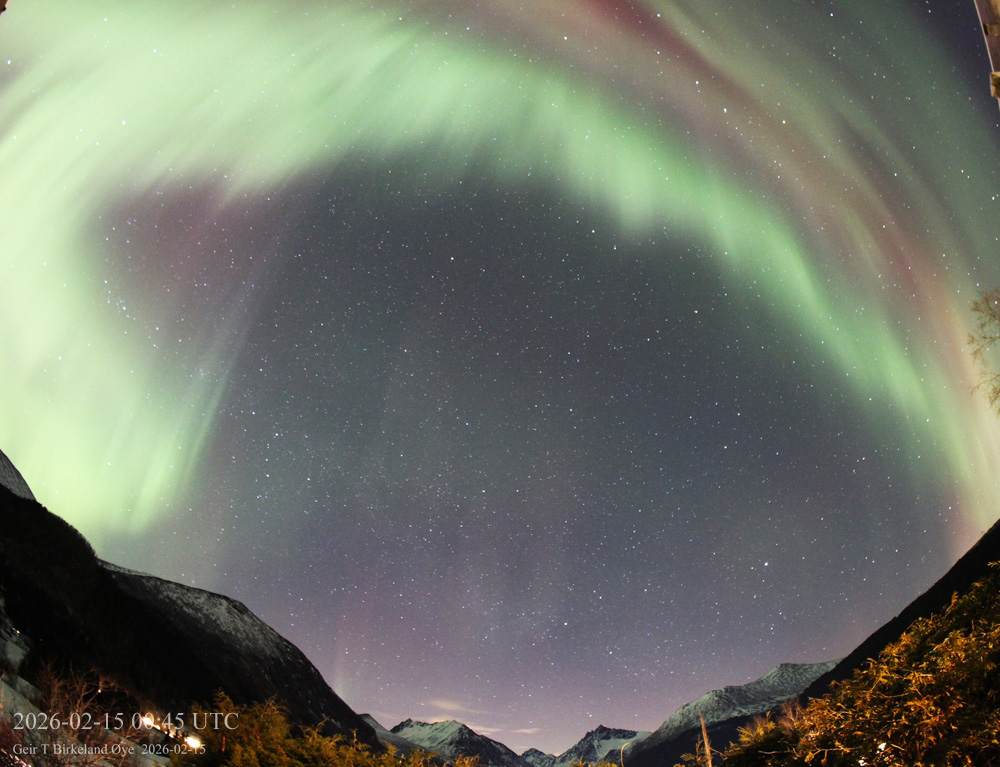
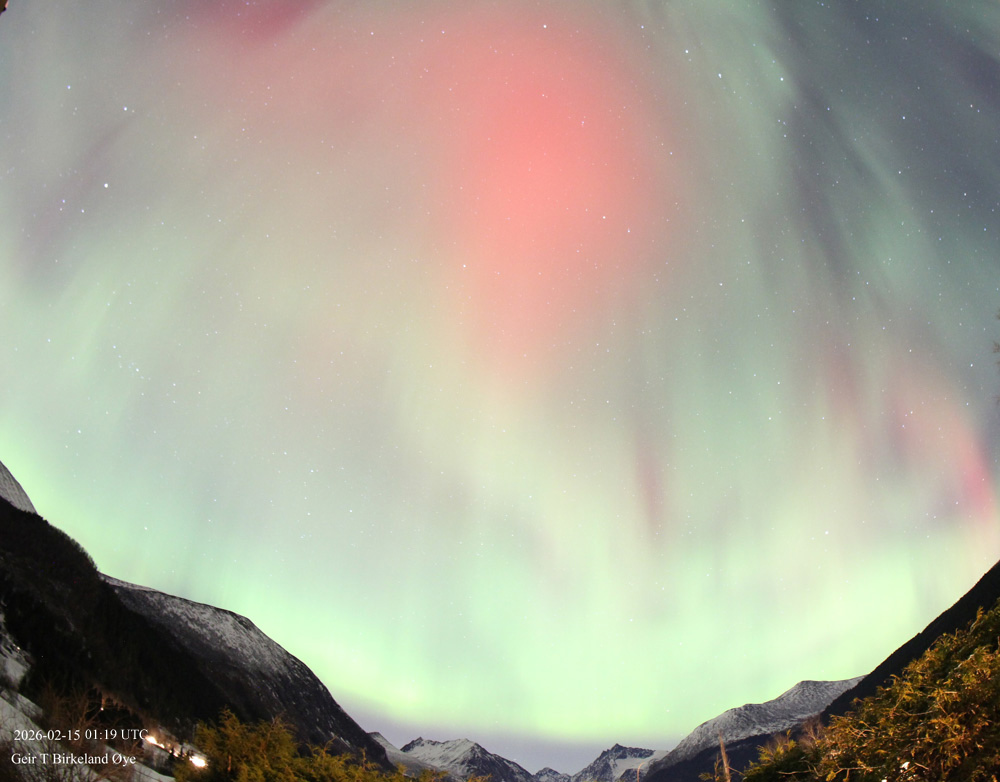
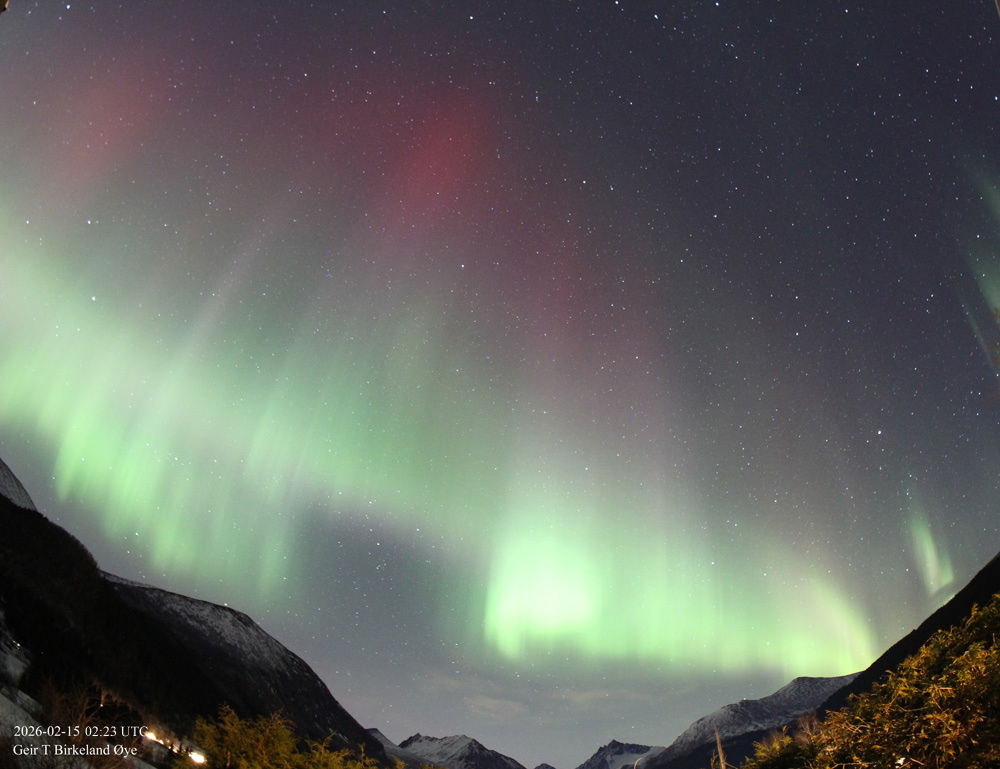
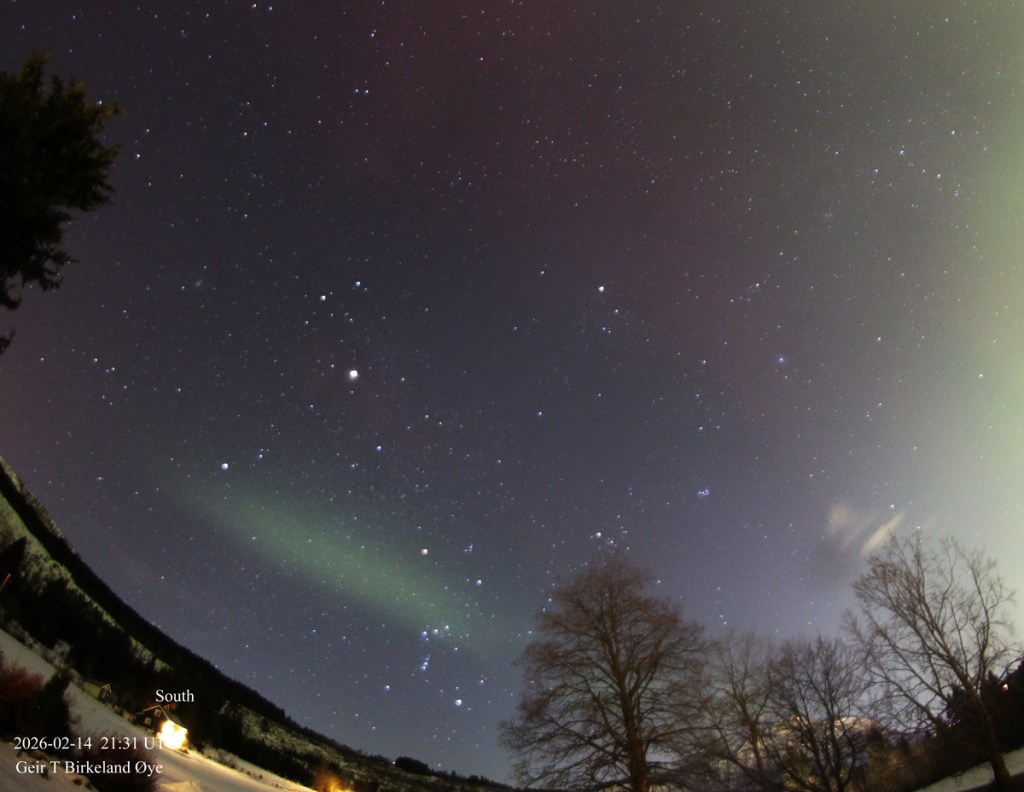
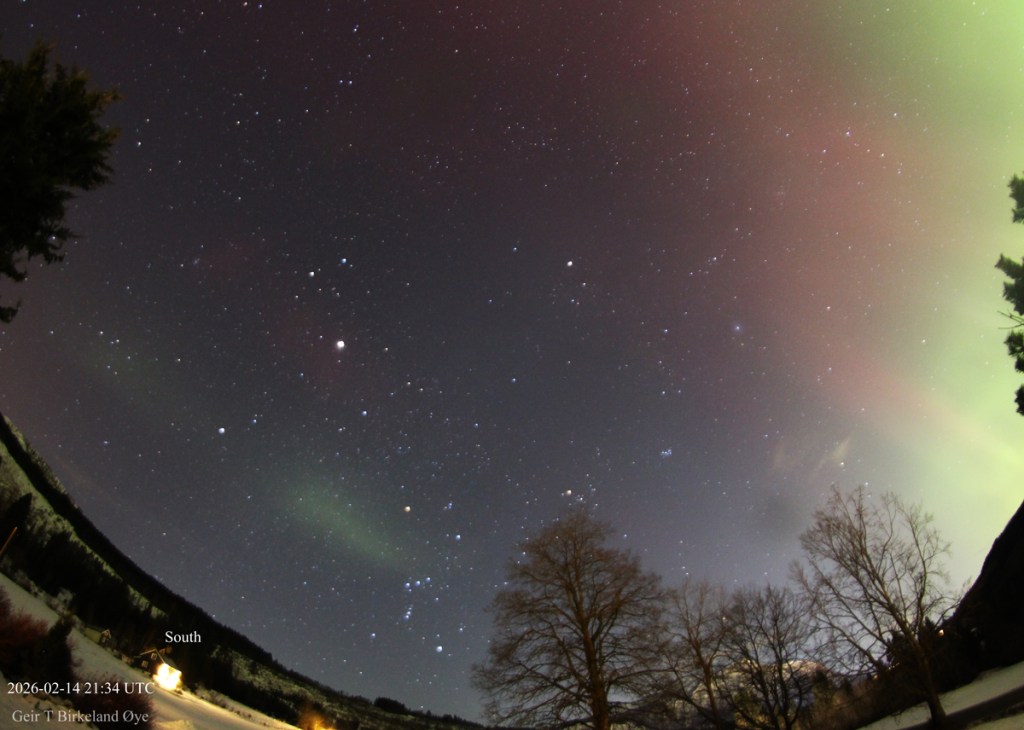
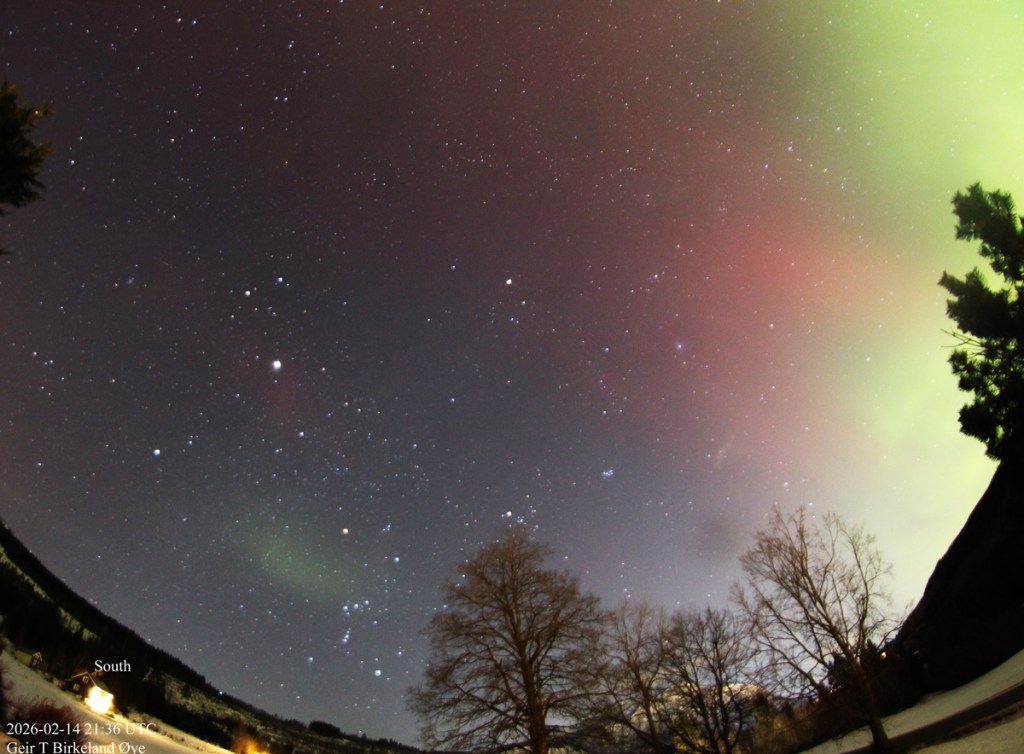
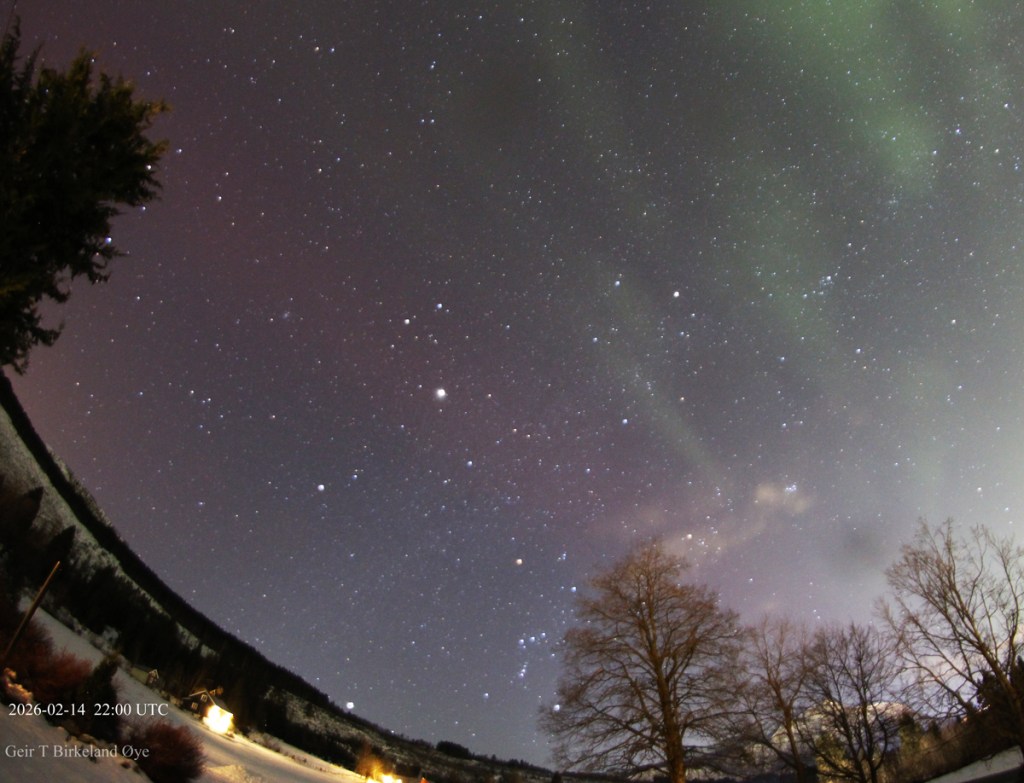
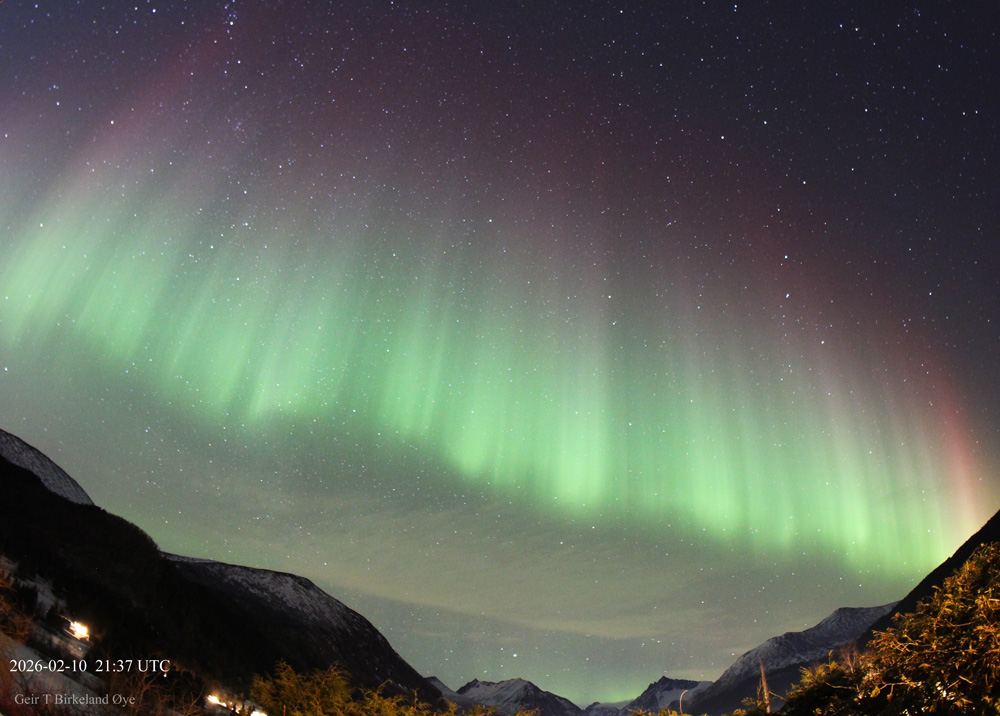
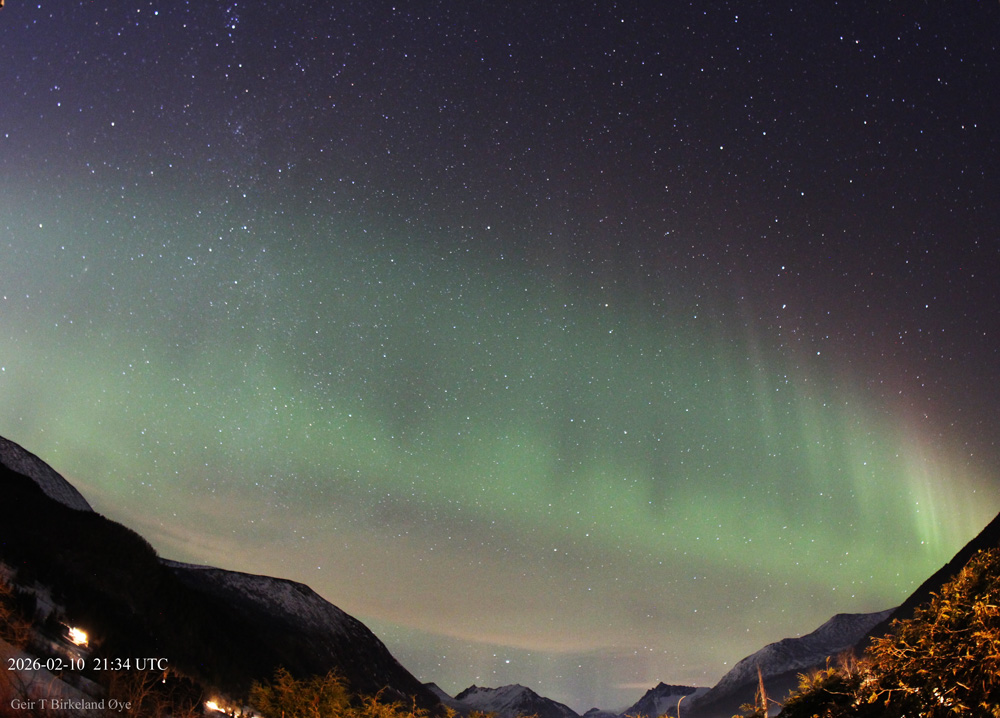
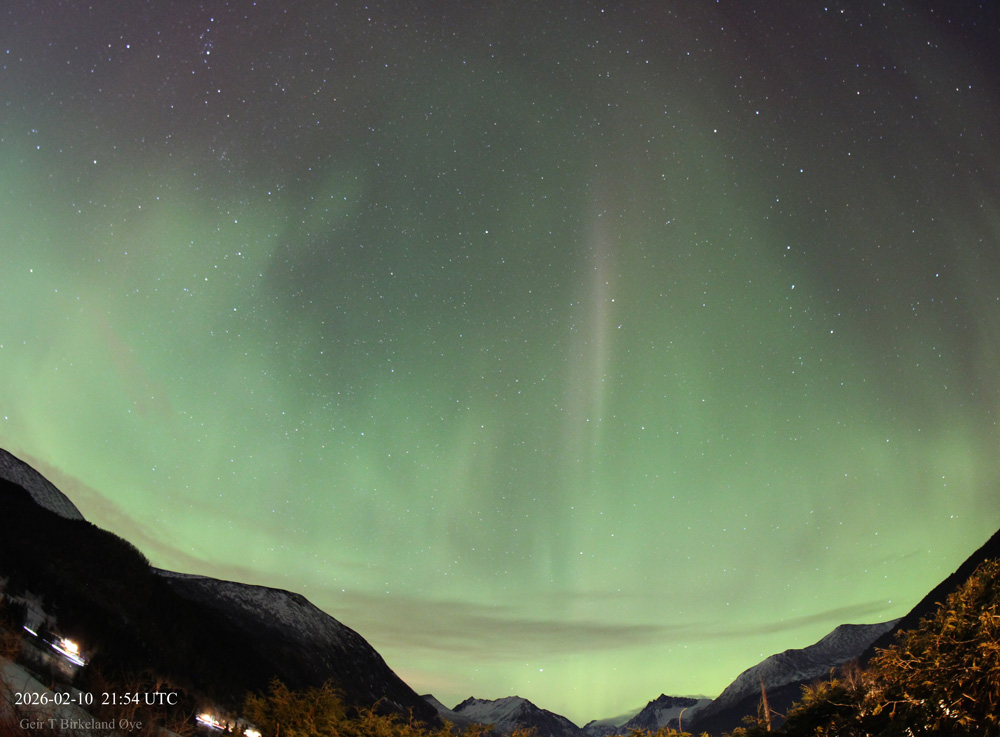
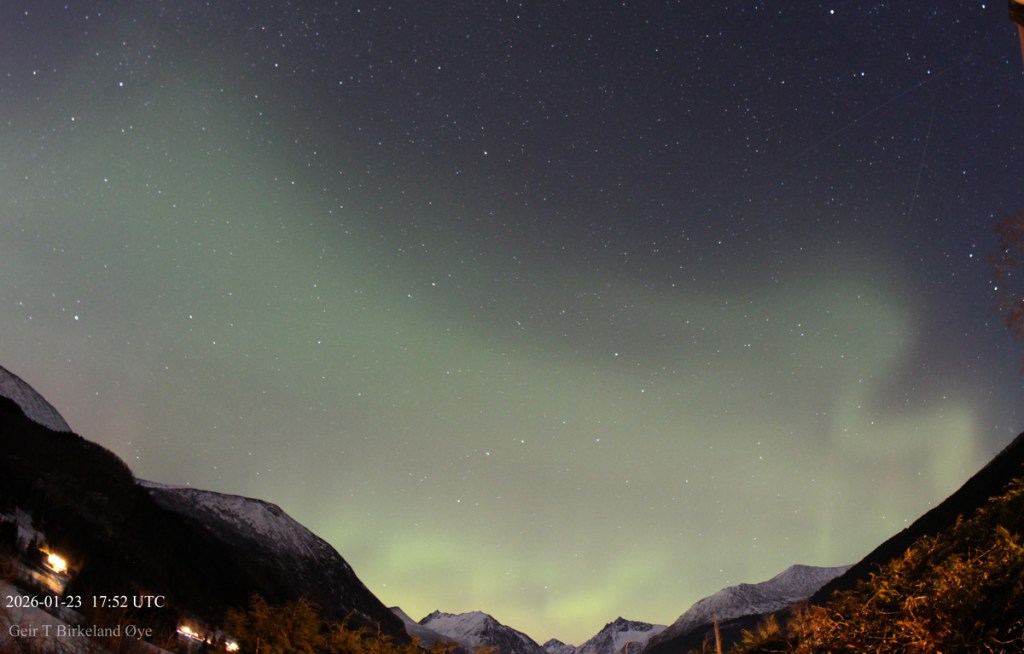
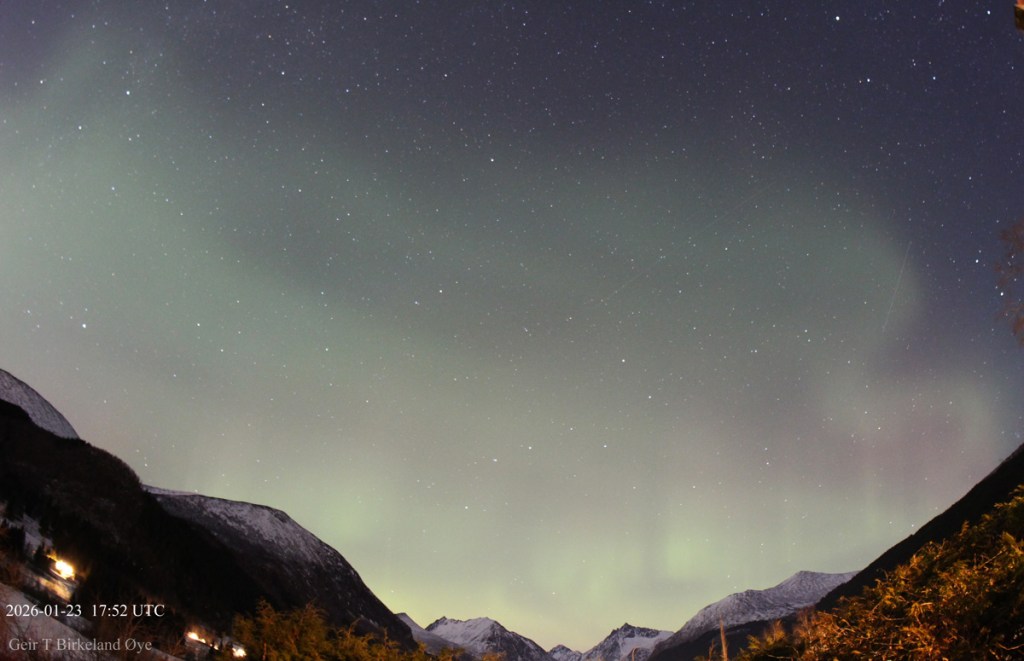
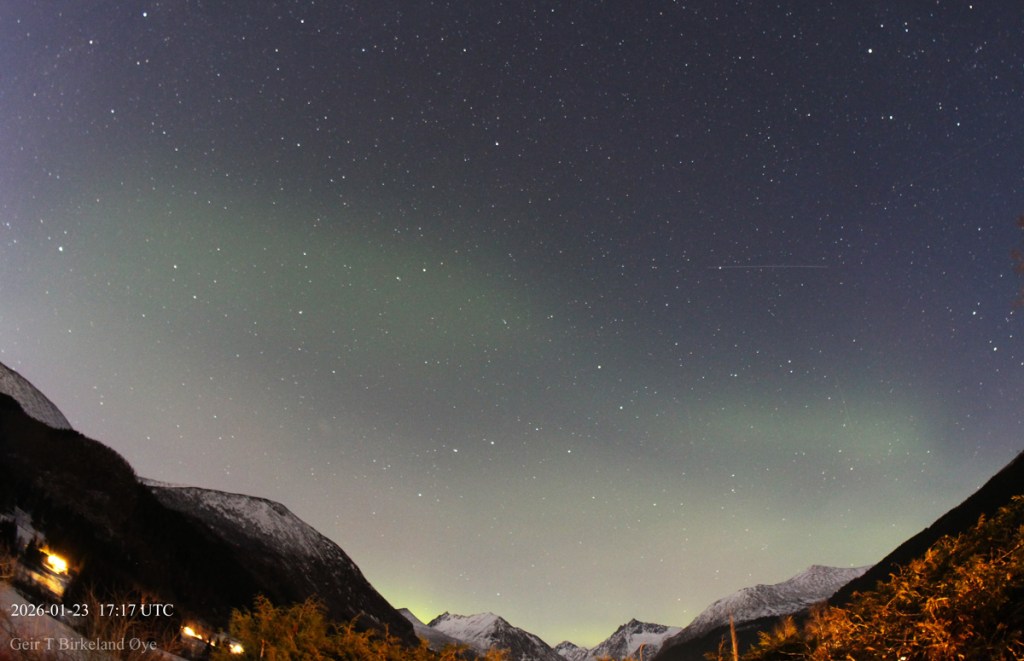
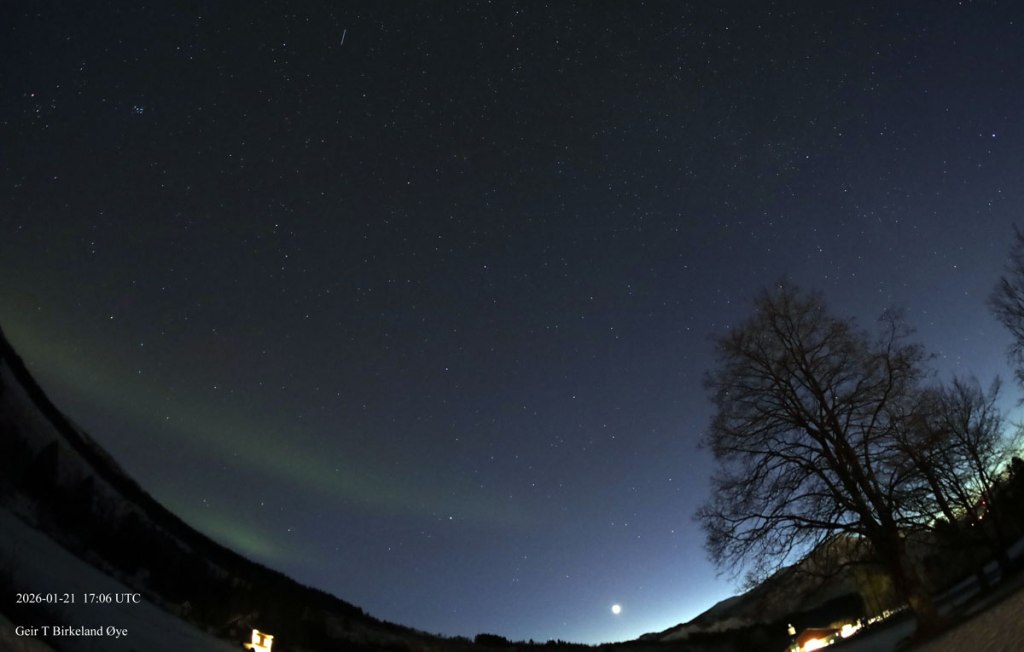
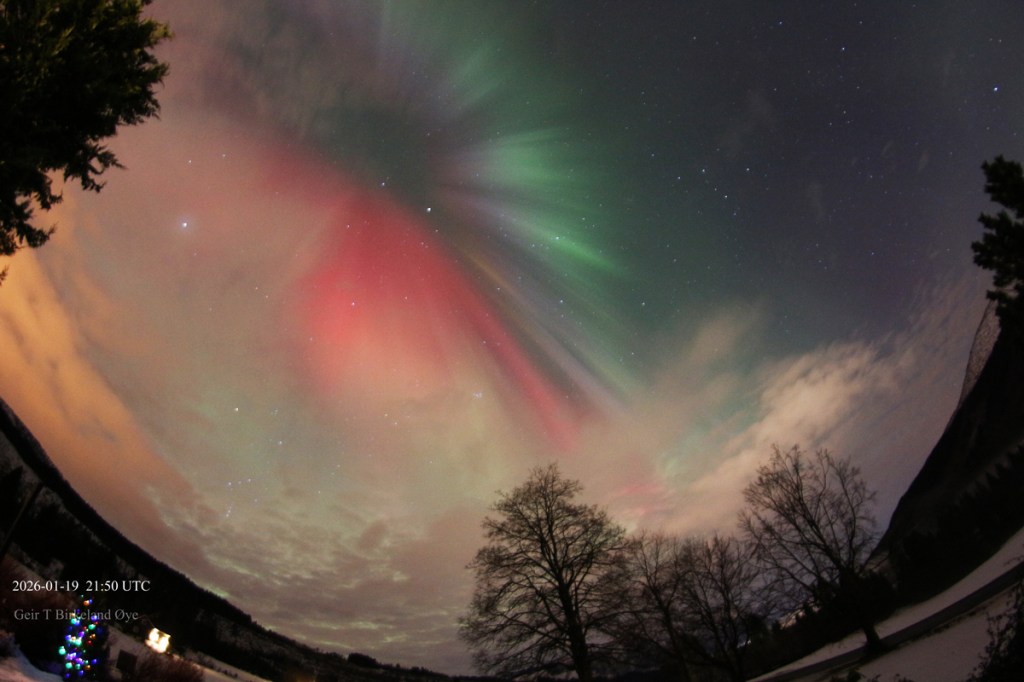
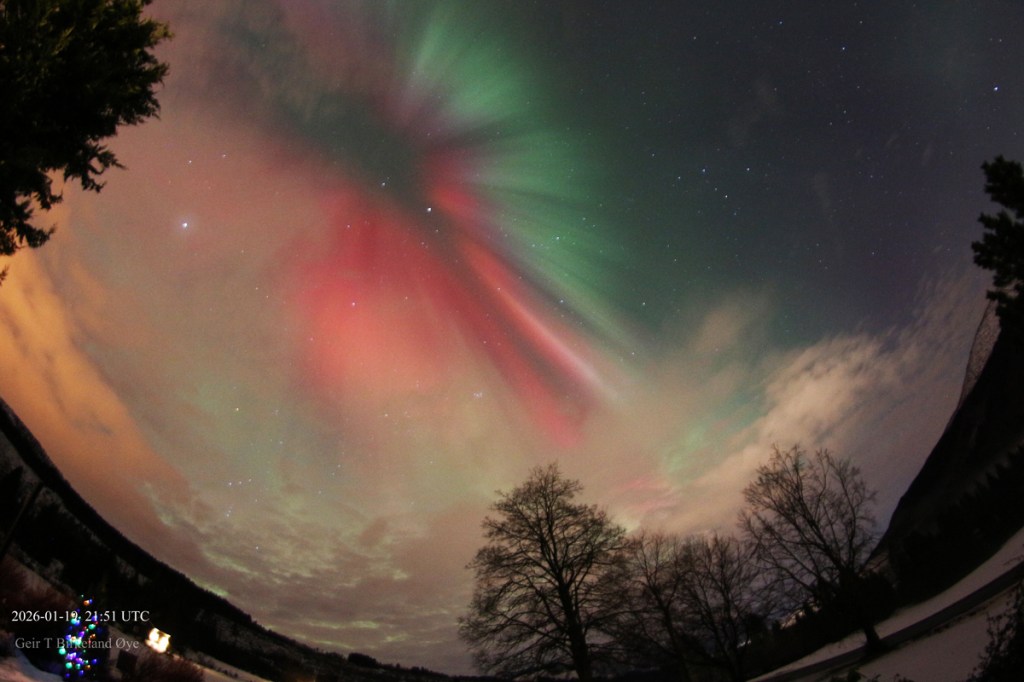
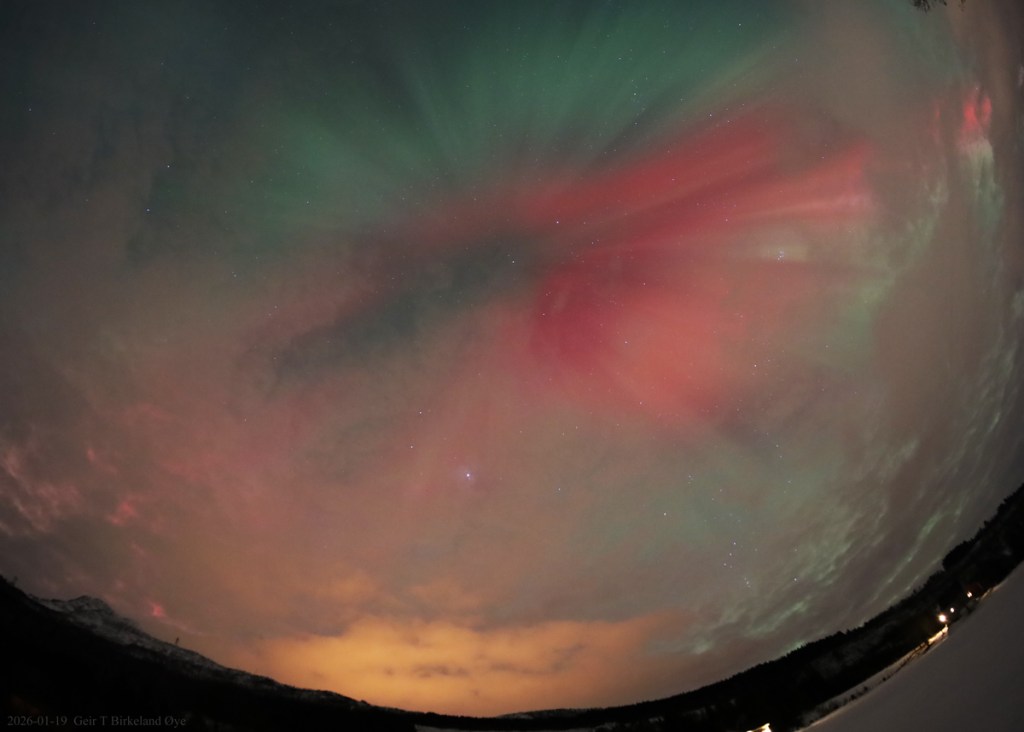
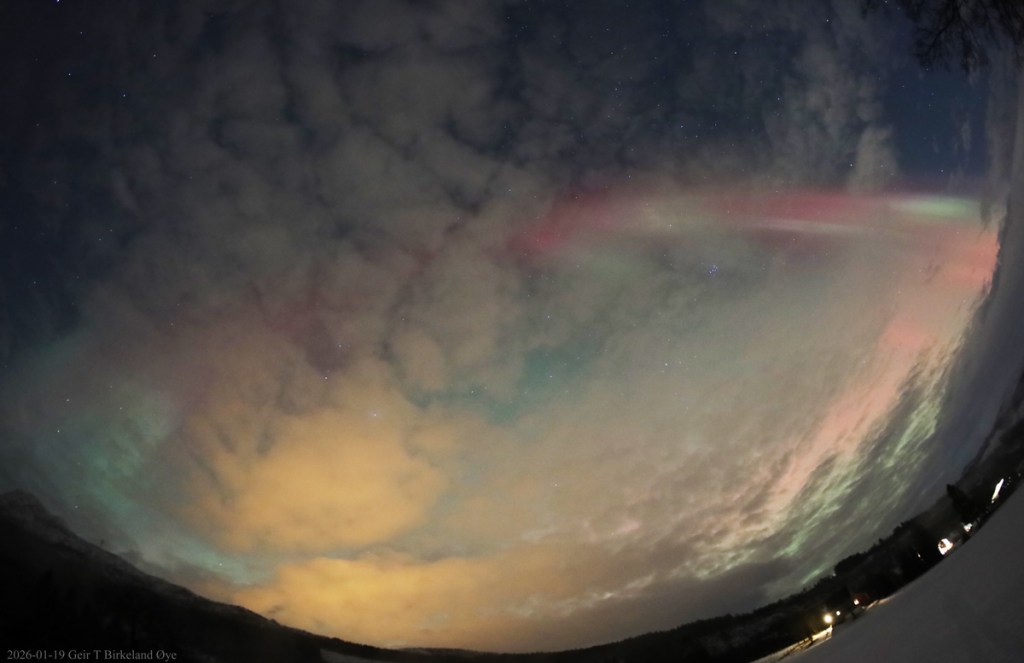
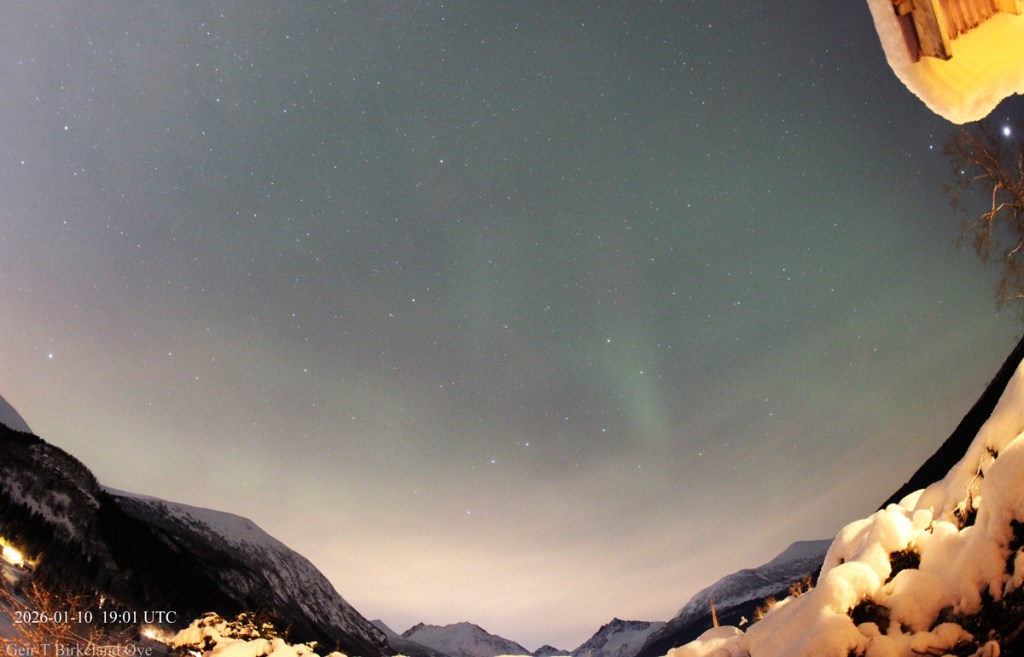
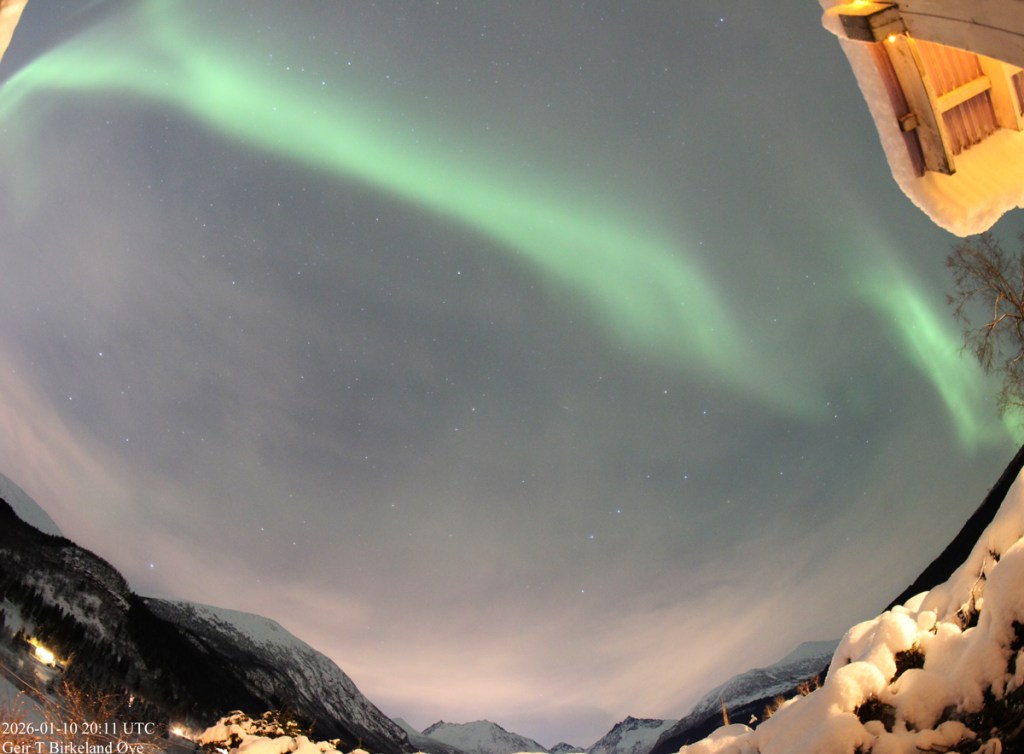
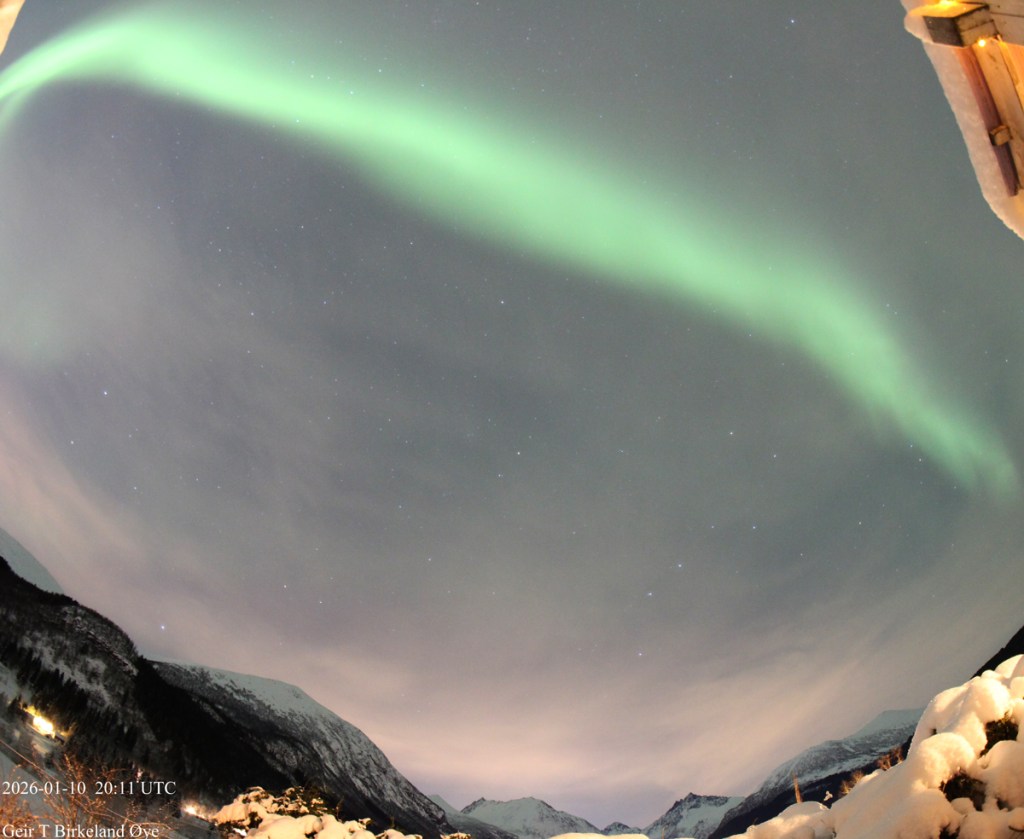
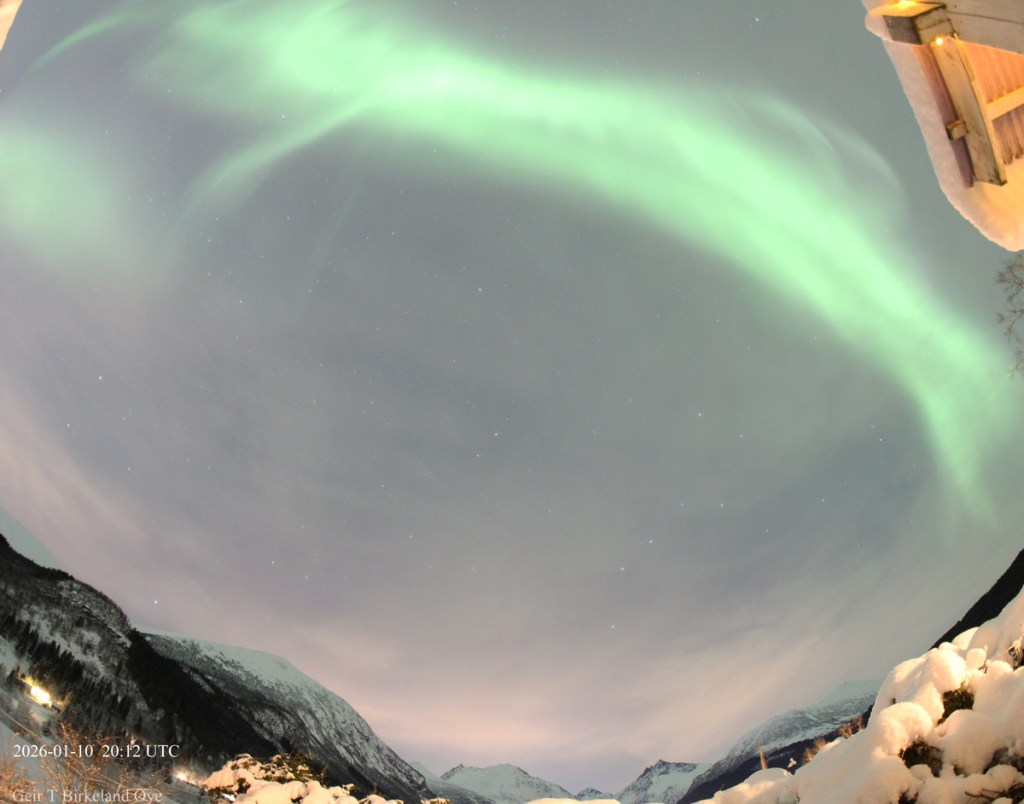
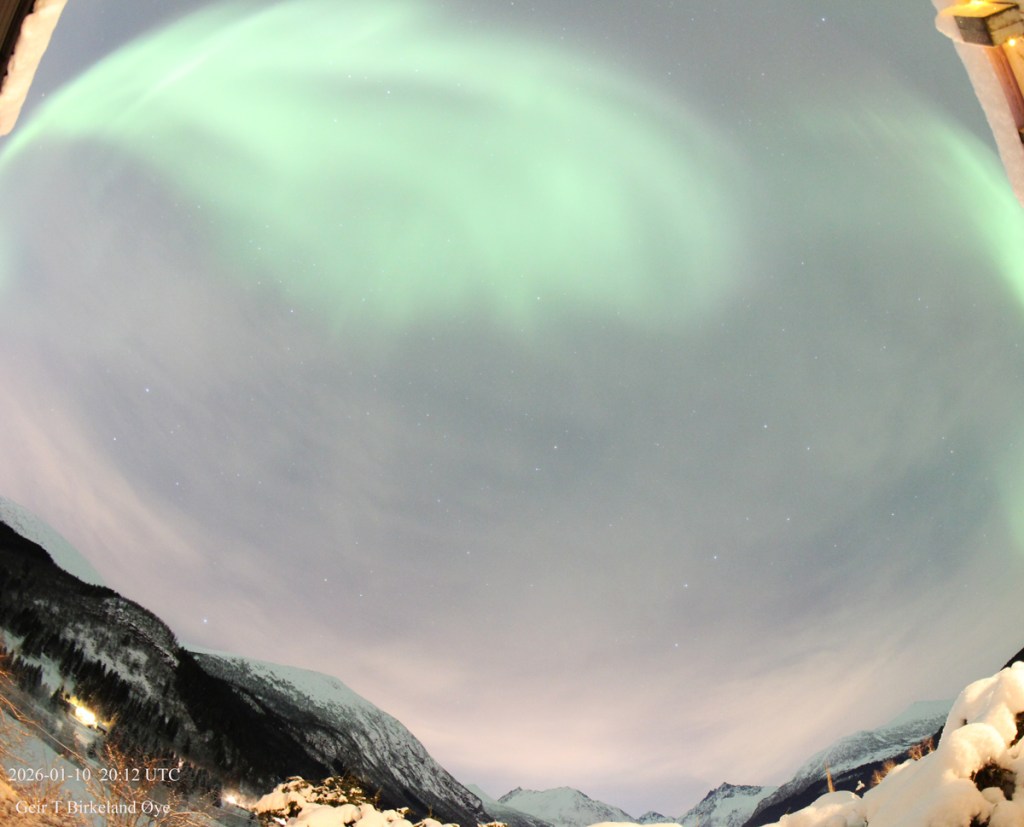
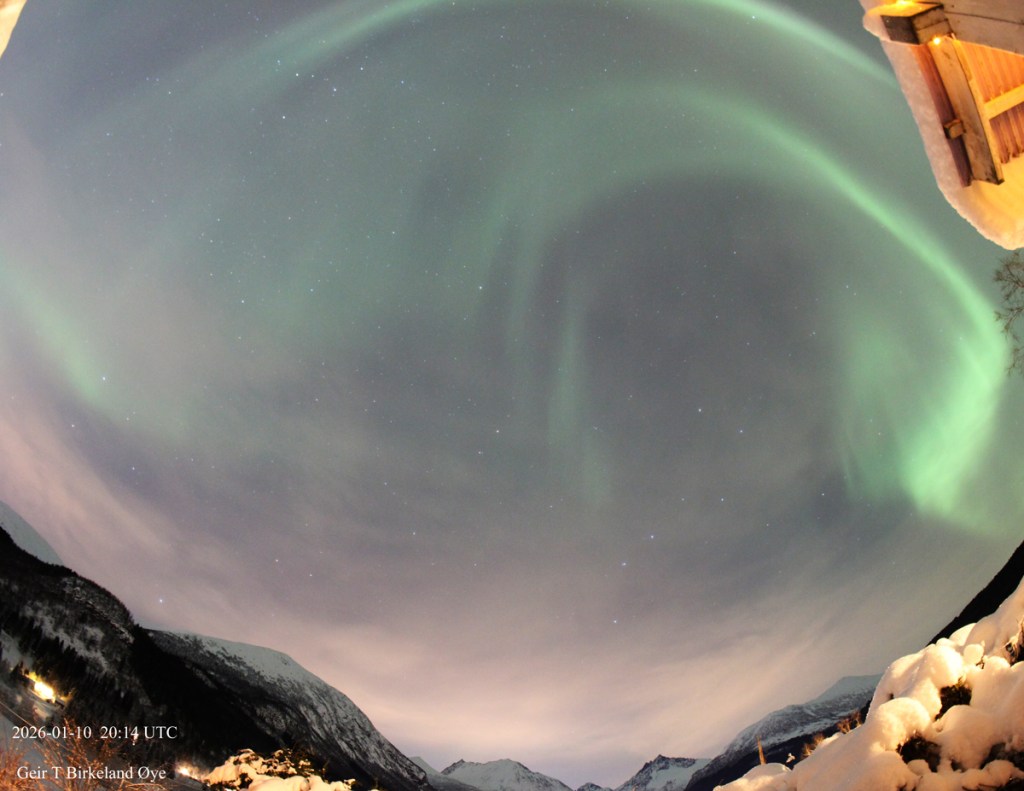
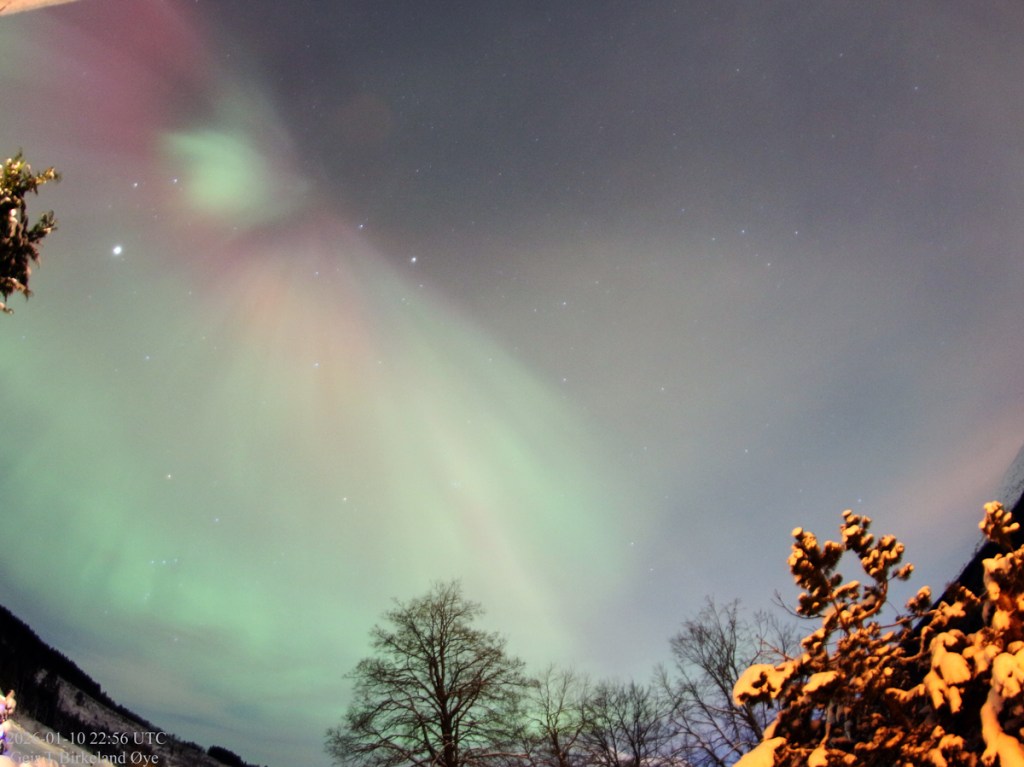
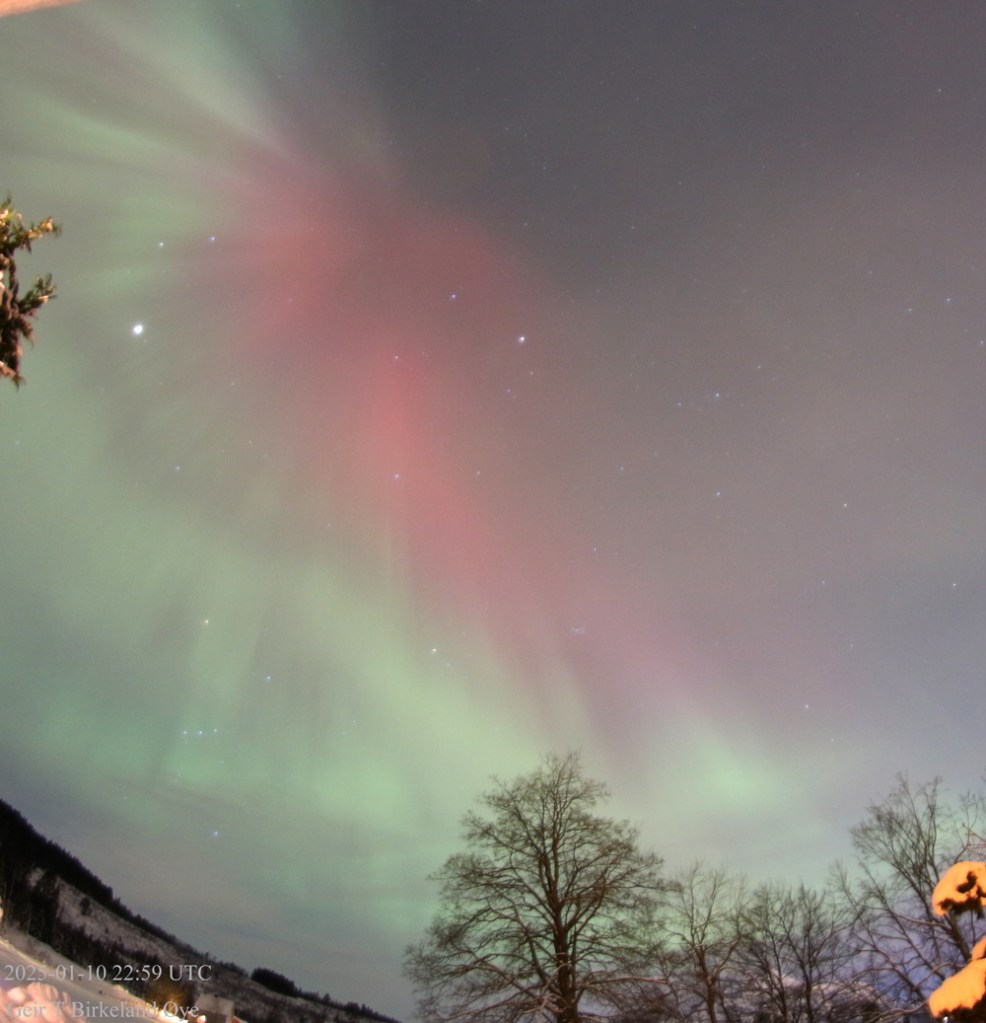
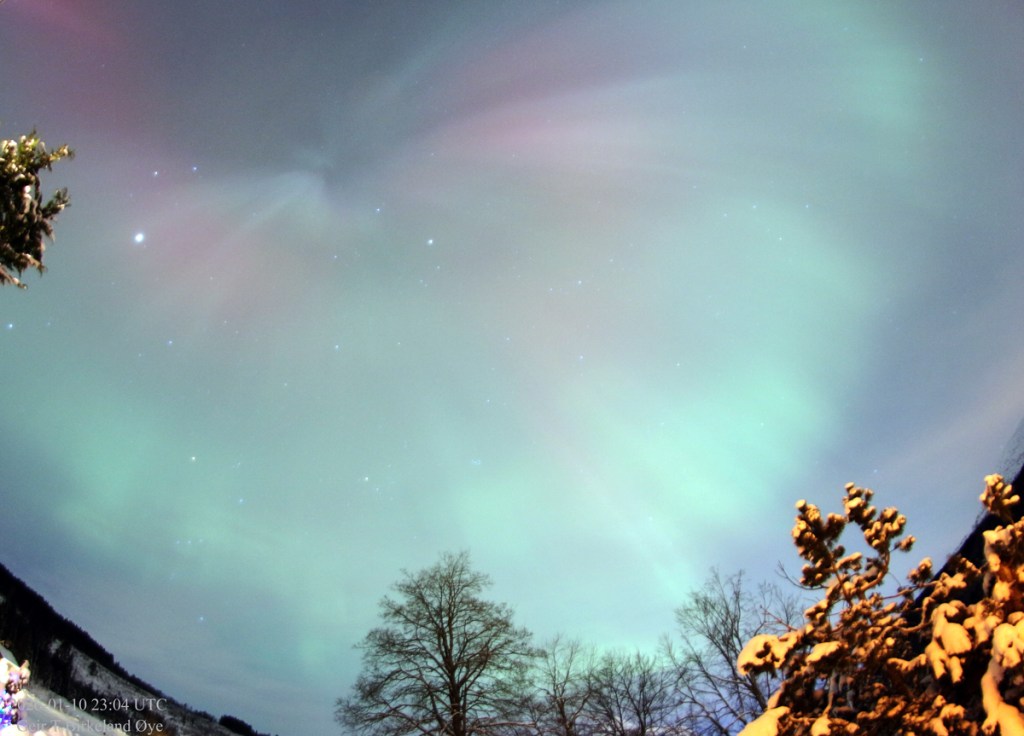
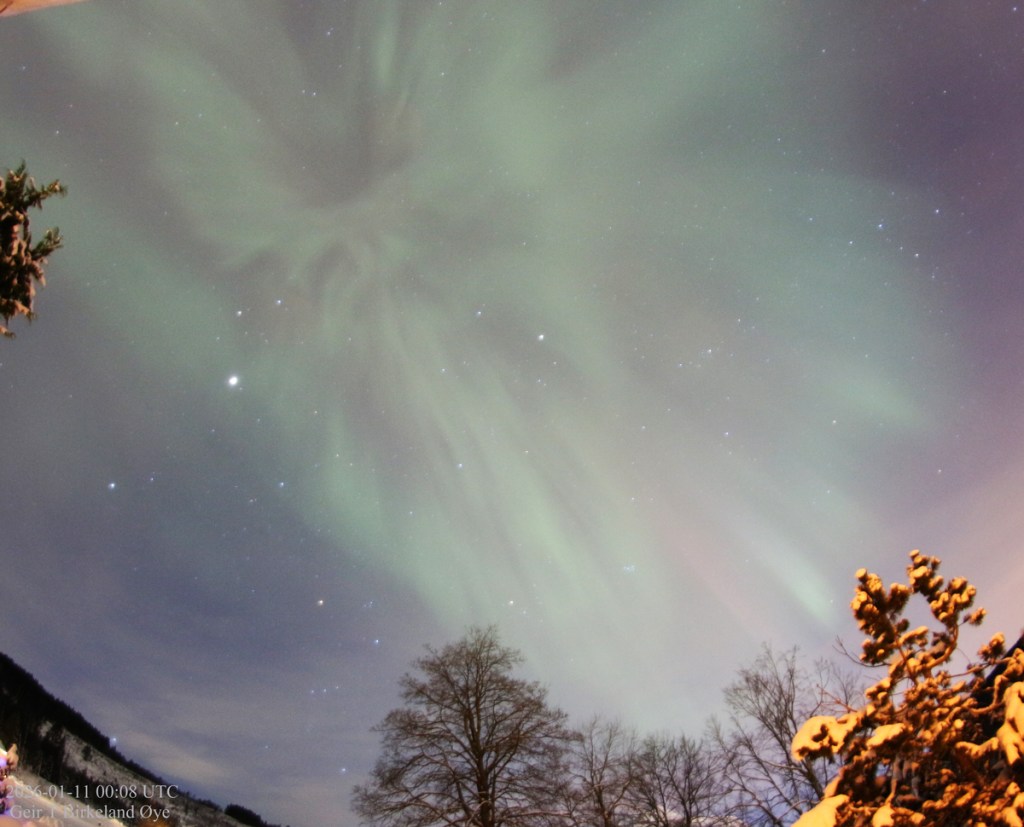
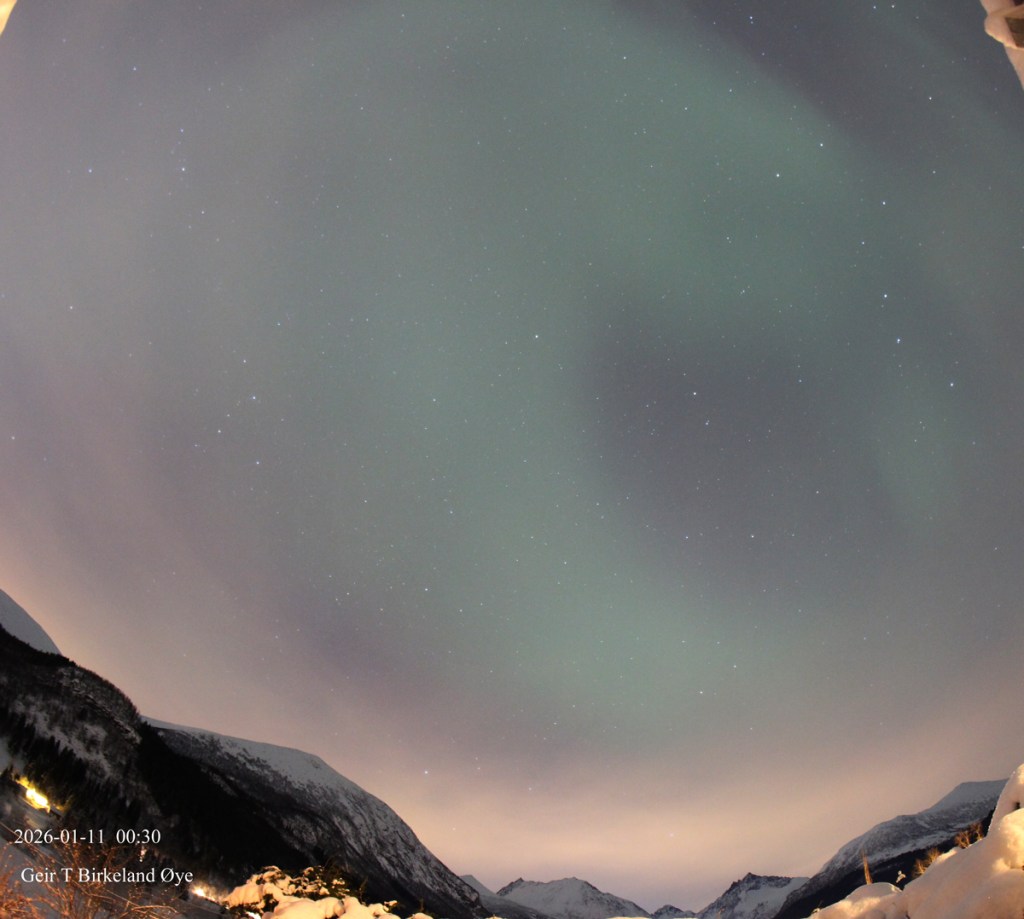
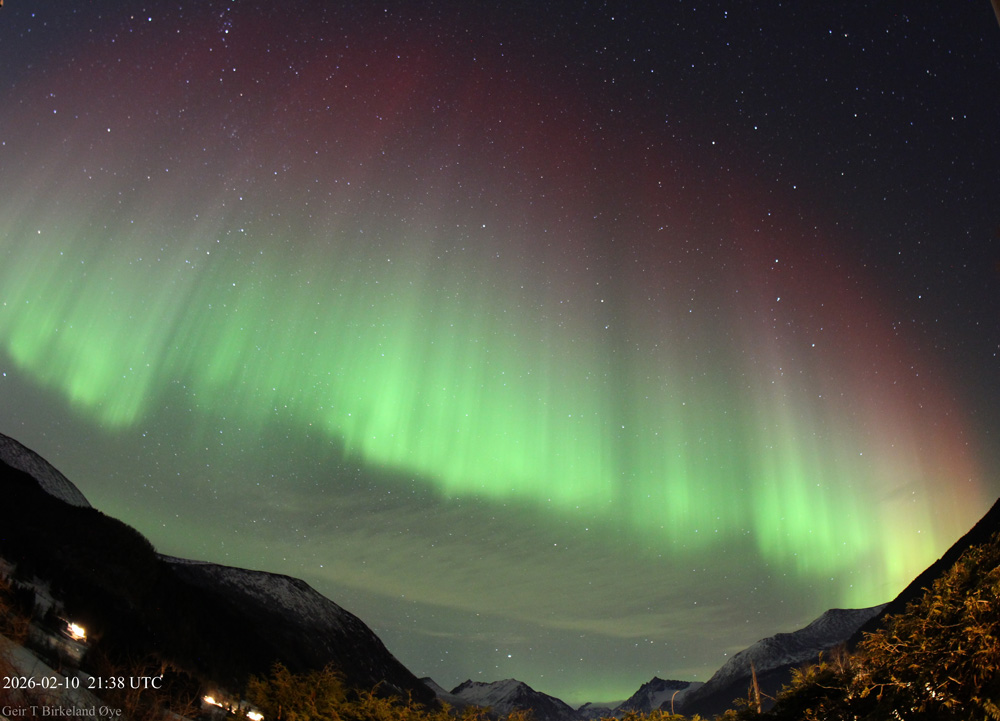
Nice colorful auroral curtains over the valley on February 10, 2026. Here are a few images with timestamps in UTC. Details: Canon 650D, 8mm fisheye lens. Iso: 1600


Nice colorful auroral curtains over the valley on February 10, 2026. Here are a few images with timestamps in UTC. Details: Canon 650D, 8mm fisheye lens. Iso: 1600


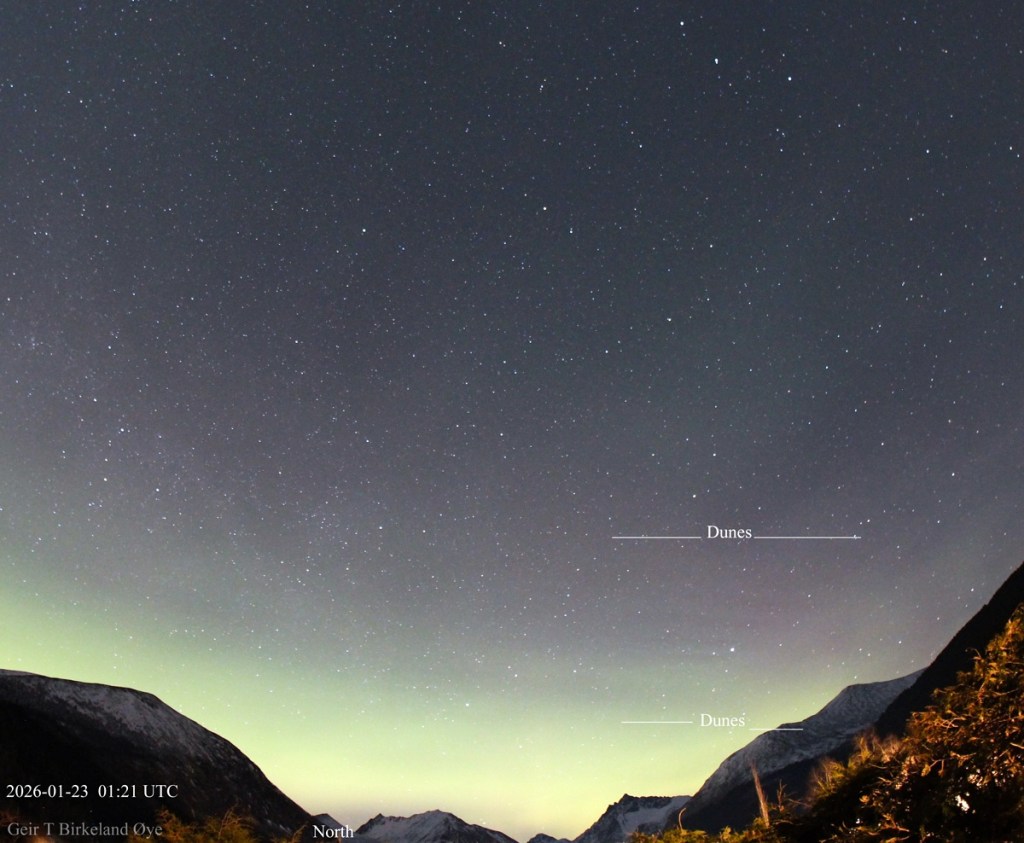
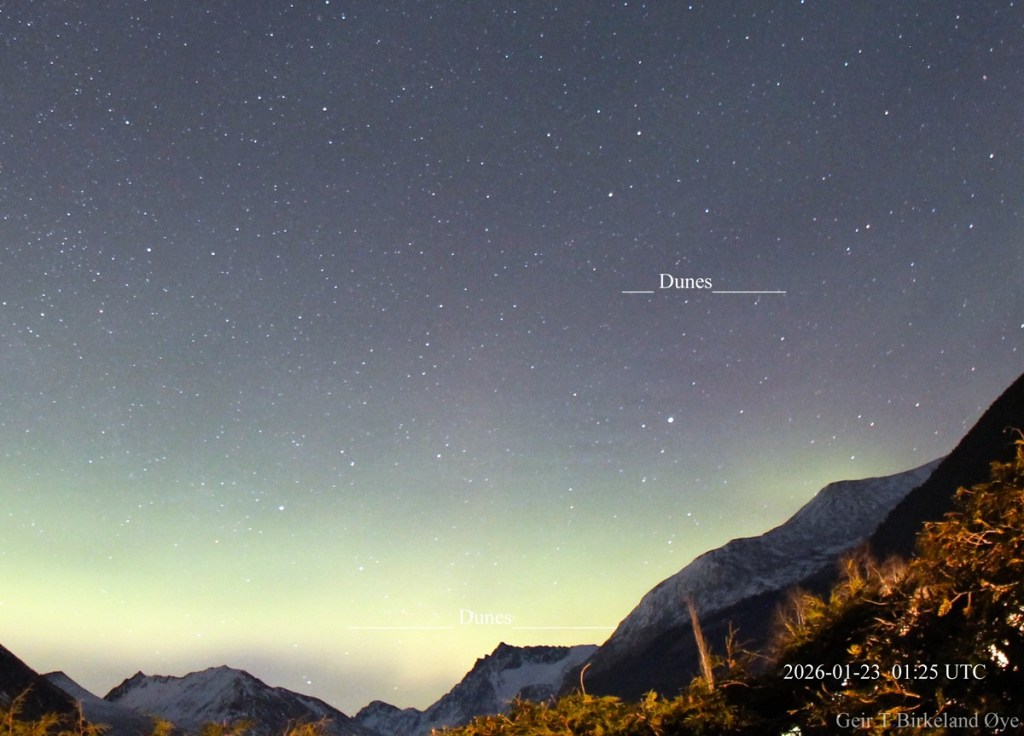
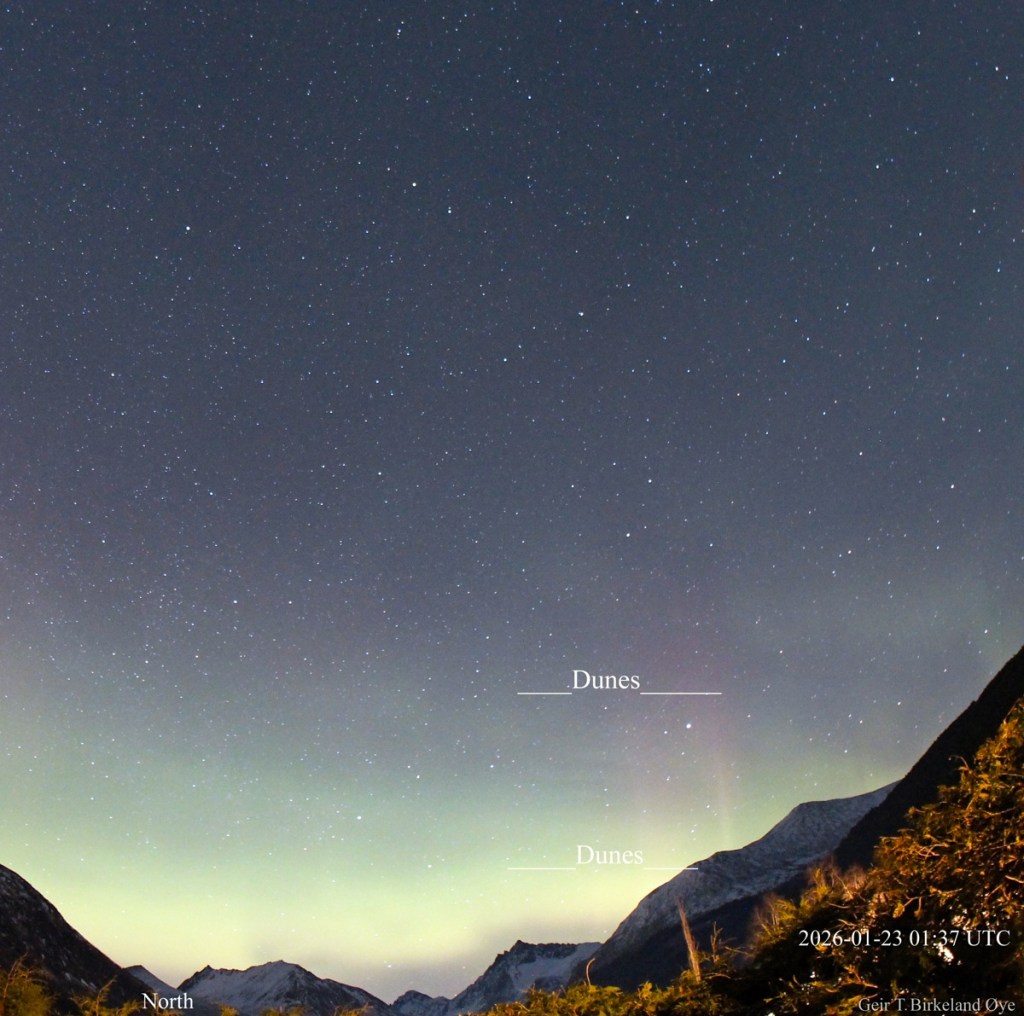
On 23 January 2026, around 02:08 local time (01:08 UTC) to 02:41 (01:41 UTC) I observed horizontally aligned wave‑like structures in the green aurora, near
the north-eastern horizon.The visibility of the Dunes / Auroral Dunes, varied due to pillars and diffuse aurora present during the interval.


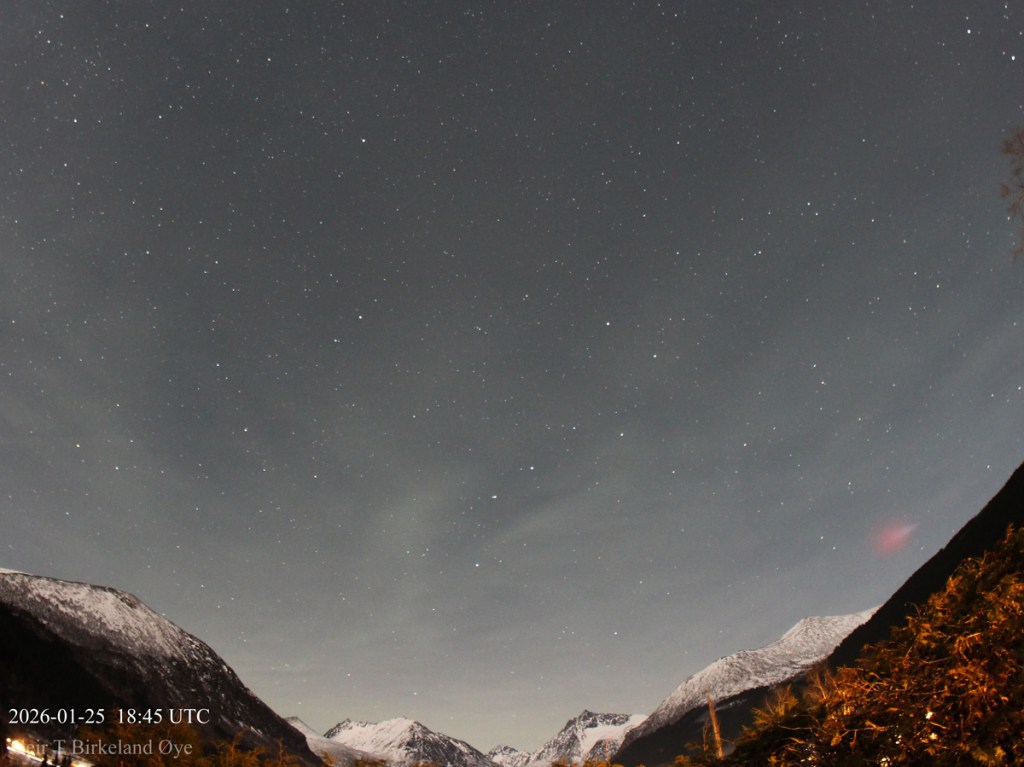
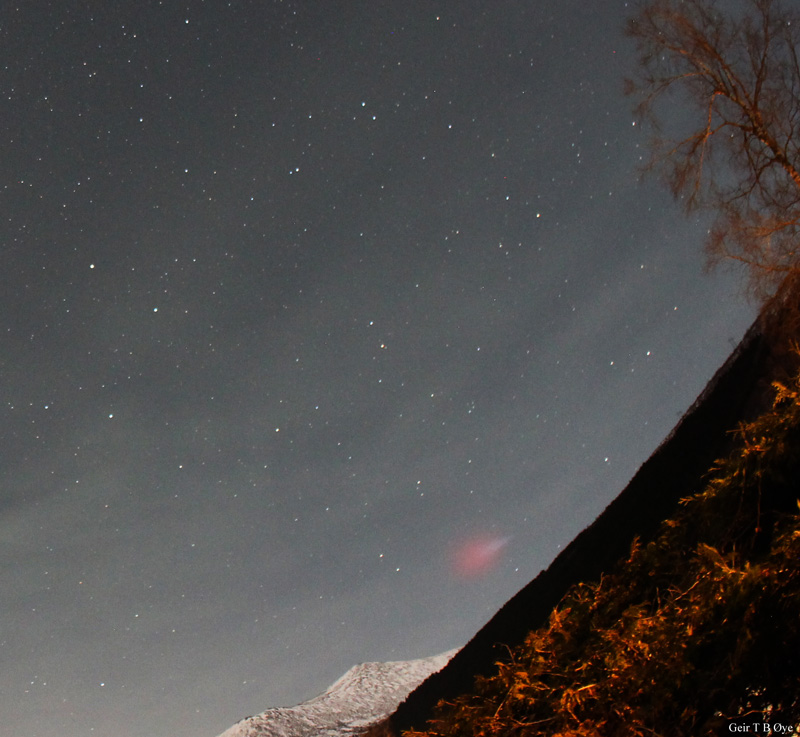
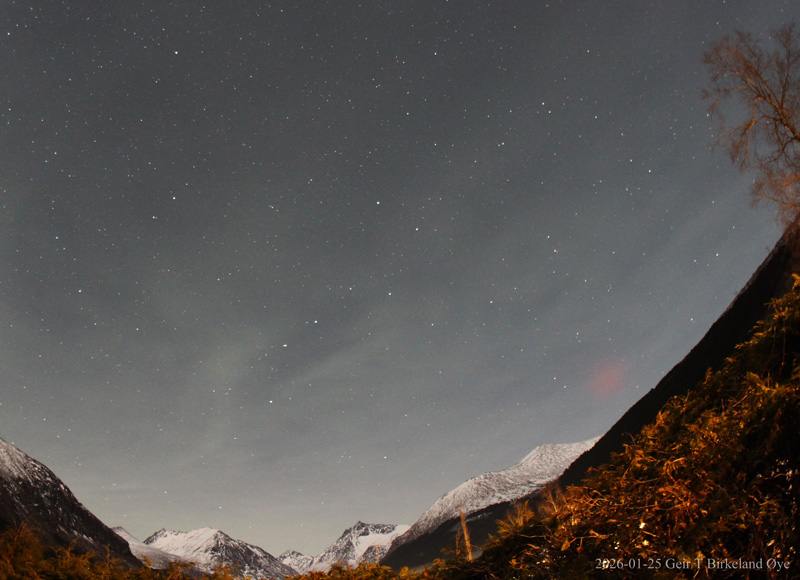
The reddish glow is caused by sunlight scattering in the rapidly expanding
exhaust plume at orbital altitude. At this moment, the rocket stage
was in Earth’s shadow while the plume remained sunlit, creating a high-altitude
optical display visible across much of Northern Europe.

A red spot over the valley (at about 19:45 local time), it was caused by a Falcon 9 rocket from SpaceX. Location: Ørsta, Norway. Details: Canon 650D, fisheye lens (8mm).
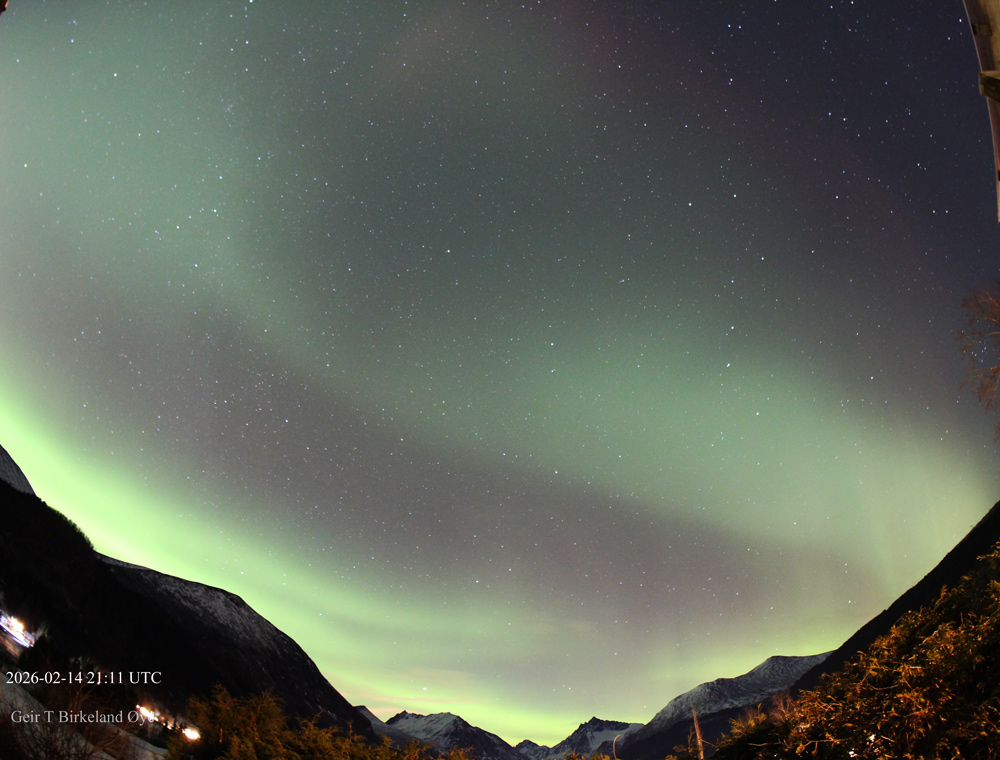


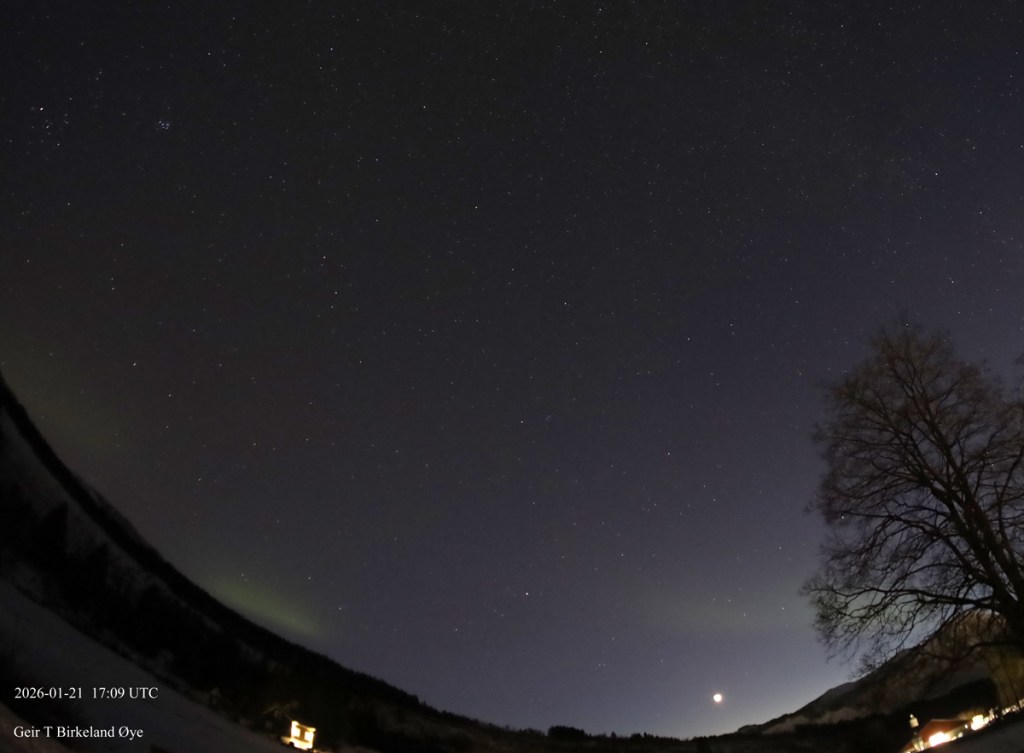
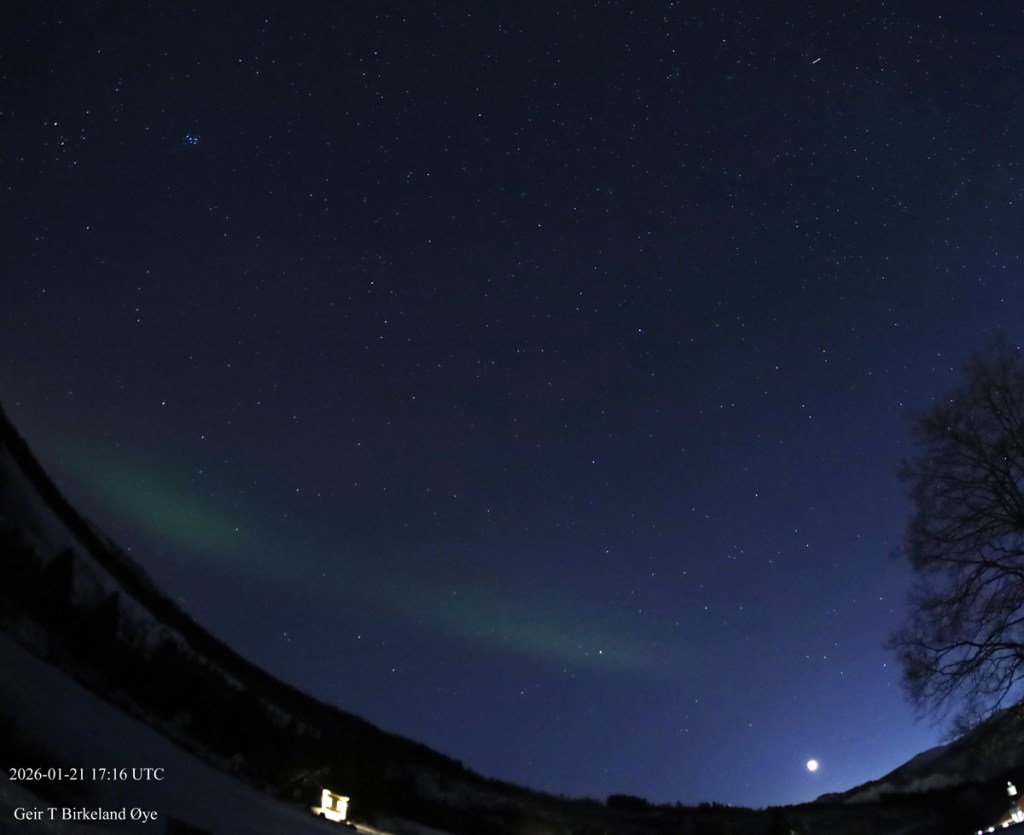
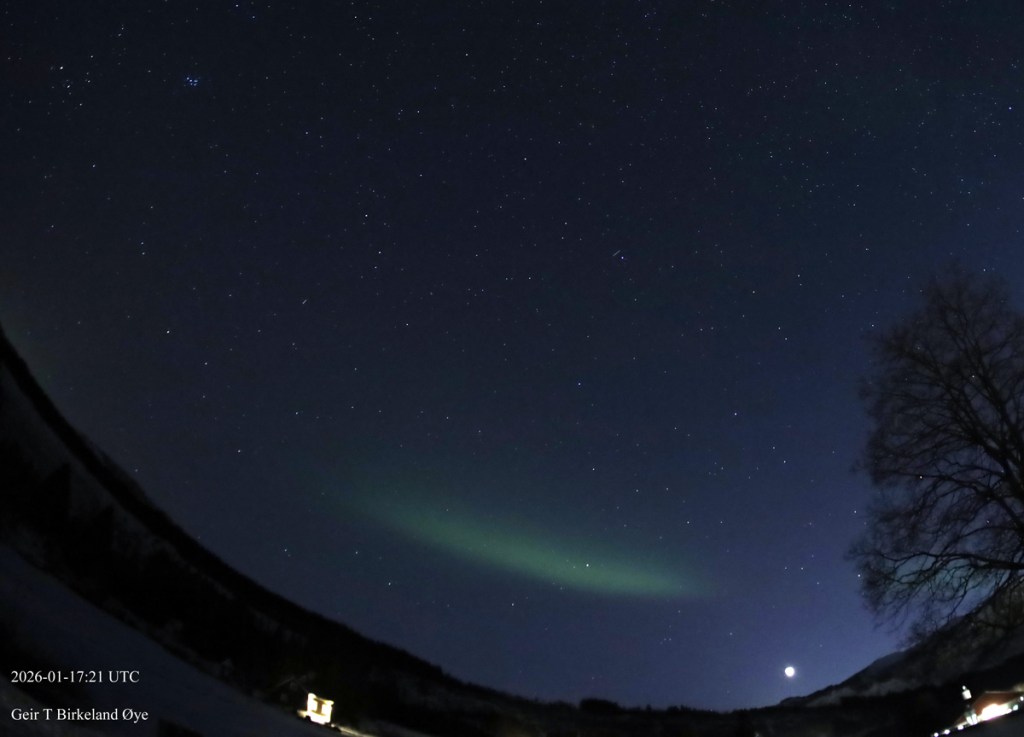
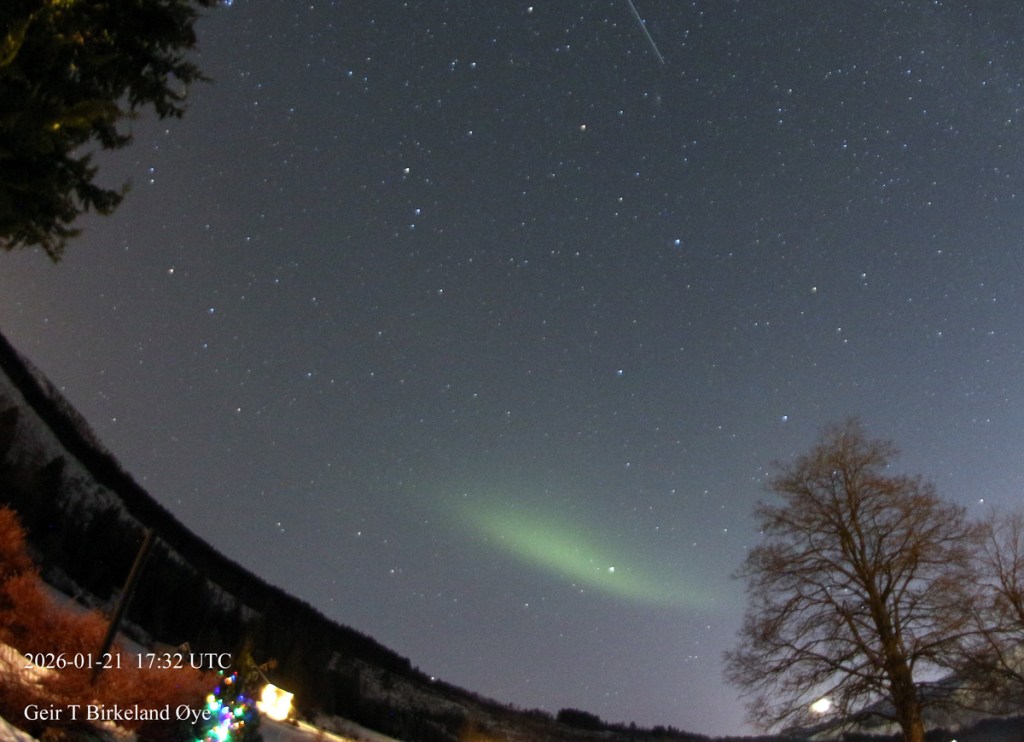
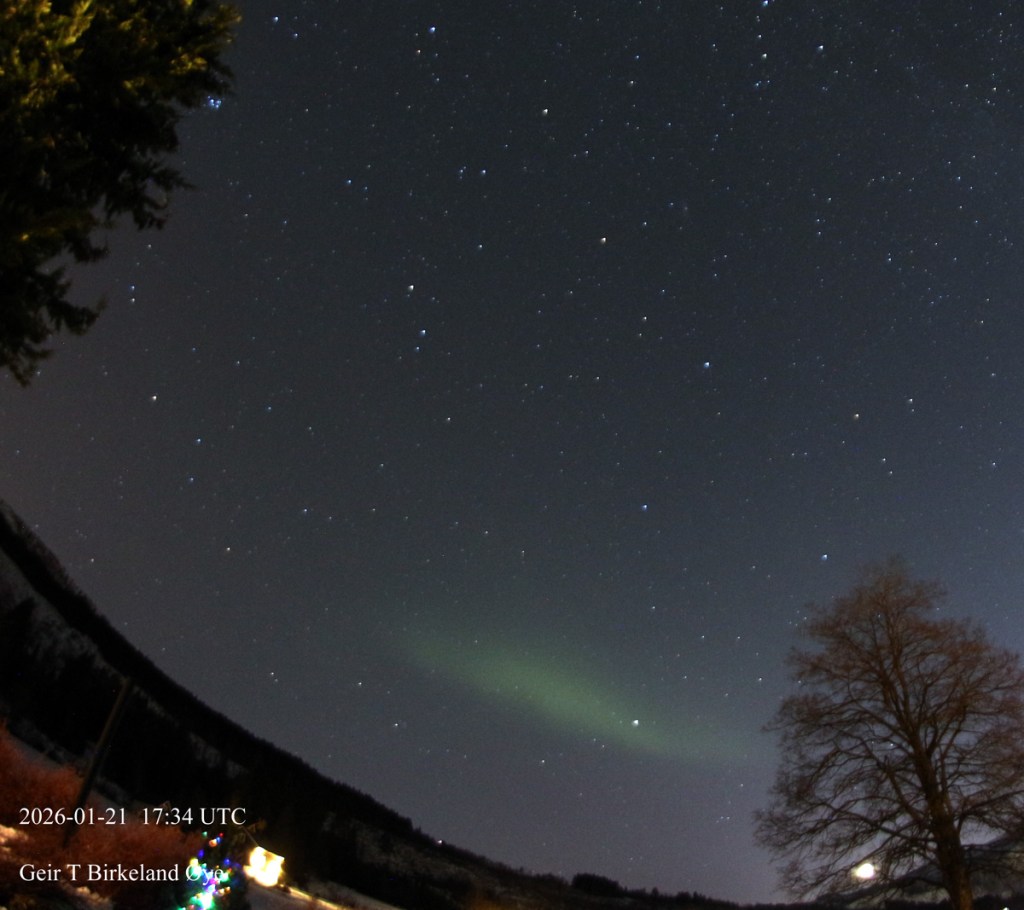
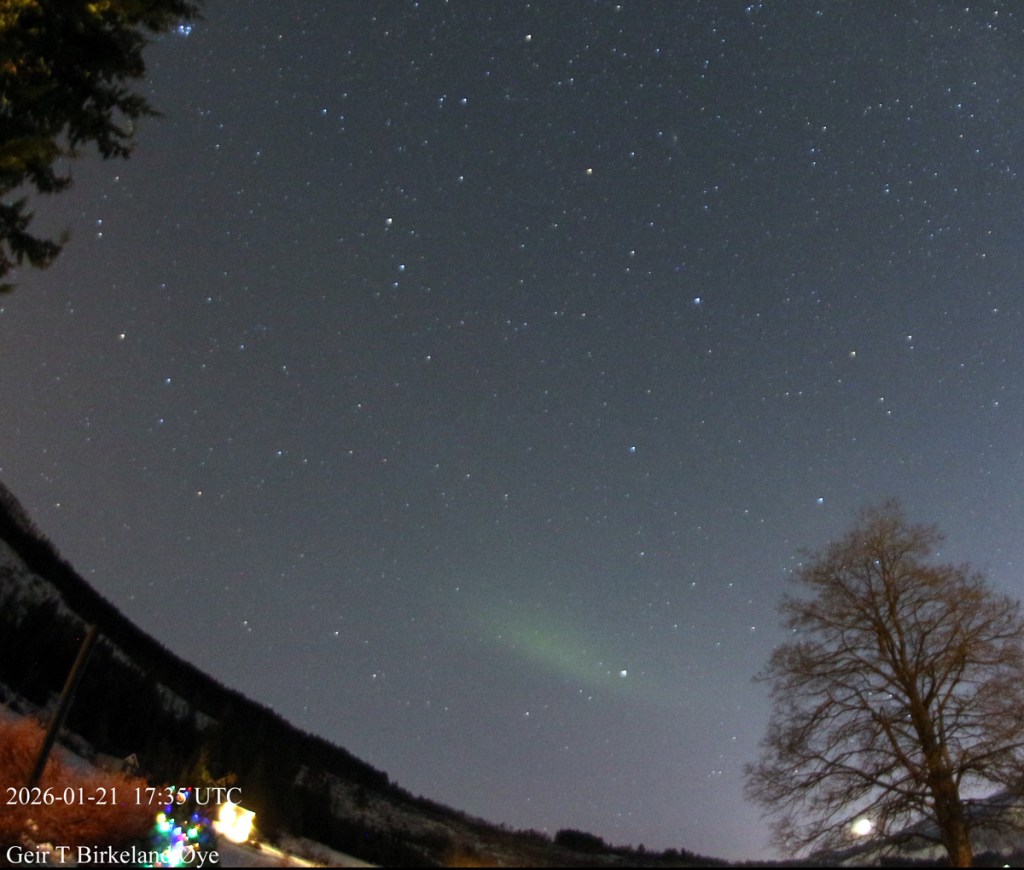
From about 17:04 UTC (18:04 local time) to 17:35 (18:35 local time) I photographed faint, diffuse green patches low on the southern horizon from Ørsta, Norway.
There were no other form of aurora present. They pulsed/appeared and disappeared continuously.
Initially there was a double banded structure, that later formed into a more elongated and diffuse structure. Most likely as a consequense
as the EMIC-driven precipitation diminished. The double-stucture phase lasted for about for about 7 minutes (17:04 to 17:11 UTC).
Please, find timestamp on images to show their development.
Details: Canon RP, 7.5mm fisheye-lens. Iso: 5000. Exposure: 2. seconds. Canon 650D, 8mm fisheye lens (three lowermost images).


This was the last pulsation of the IPA.
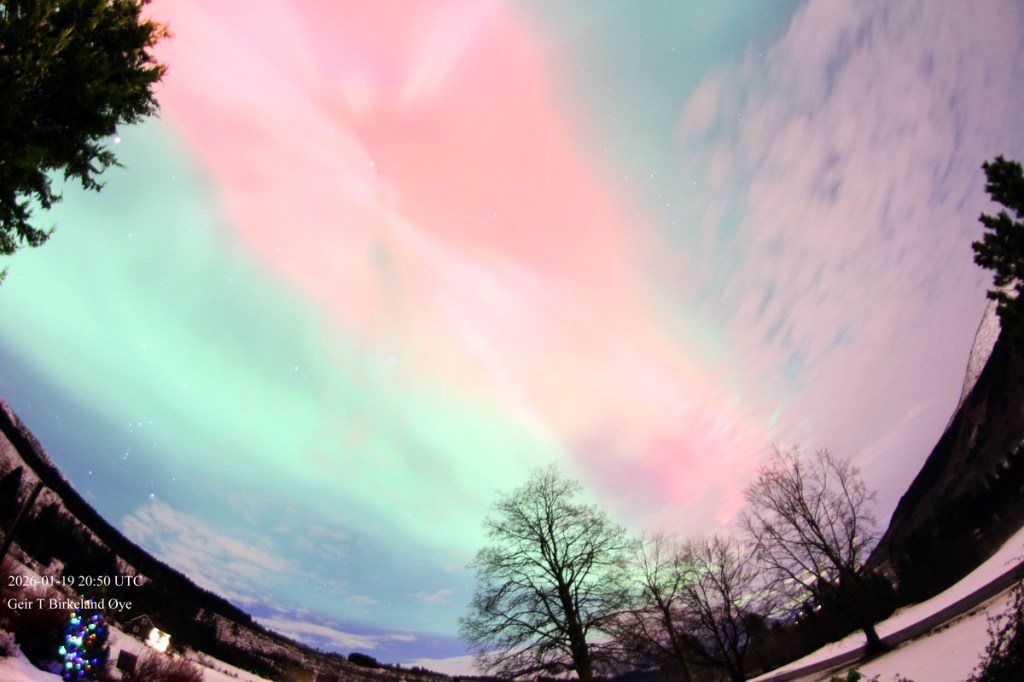
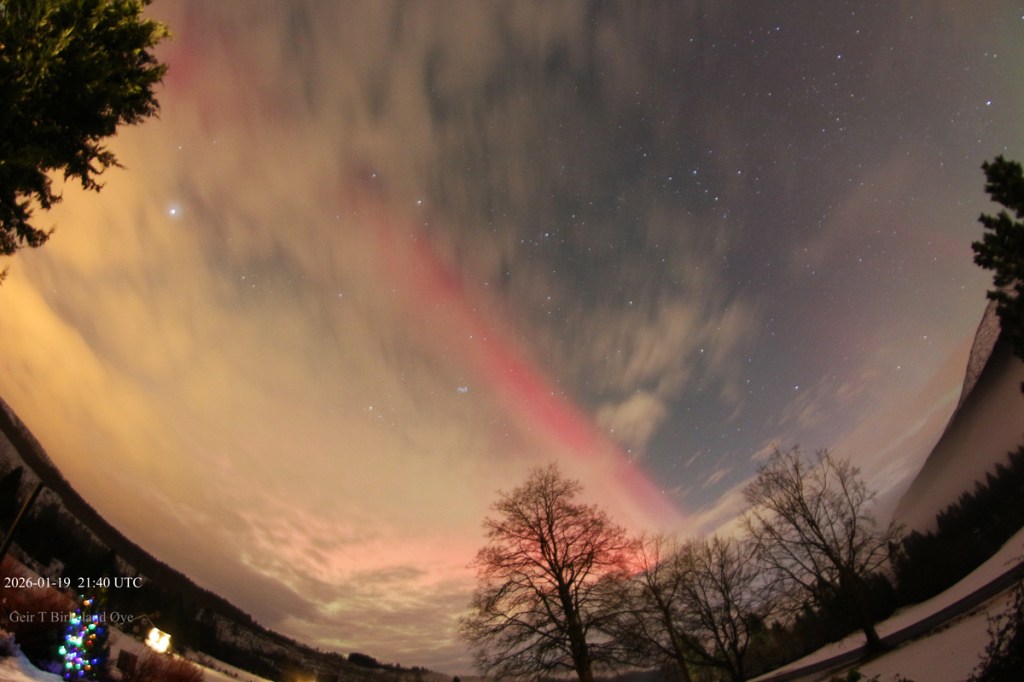
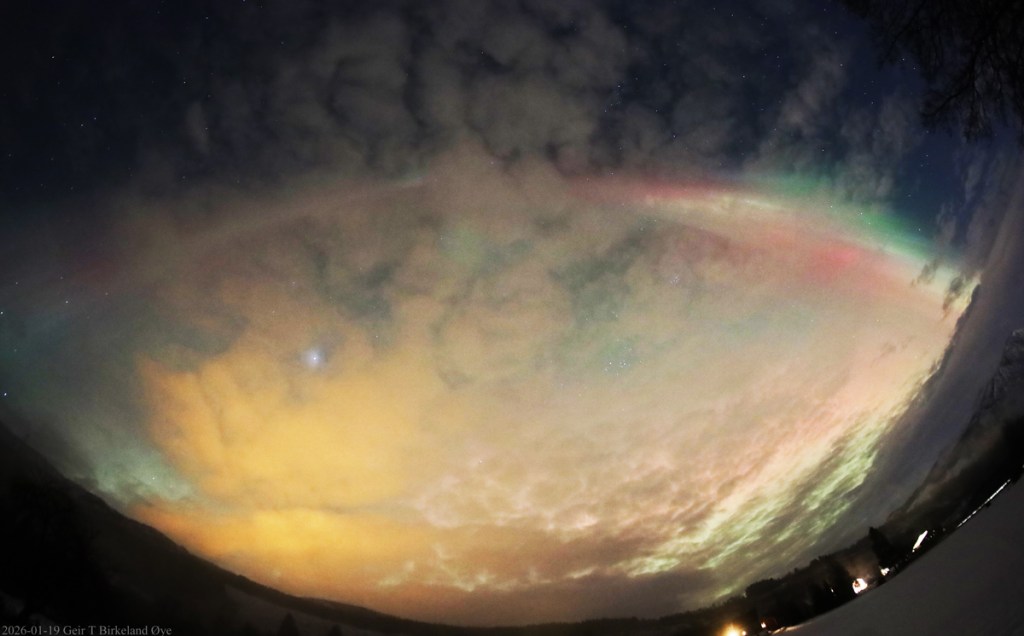
An intense auroral storm. Unfortunately, as seen from this location (Ørsta, Norway) interfered by clouds. Details: Canon 650D/RP and fisheye lenses. Please, find time on images.


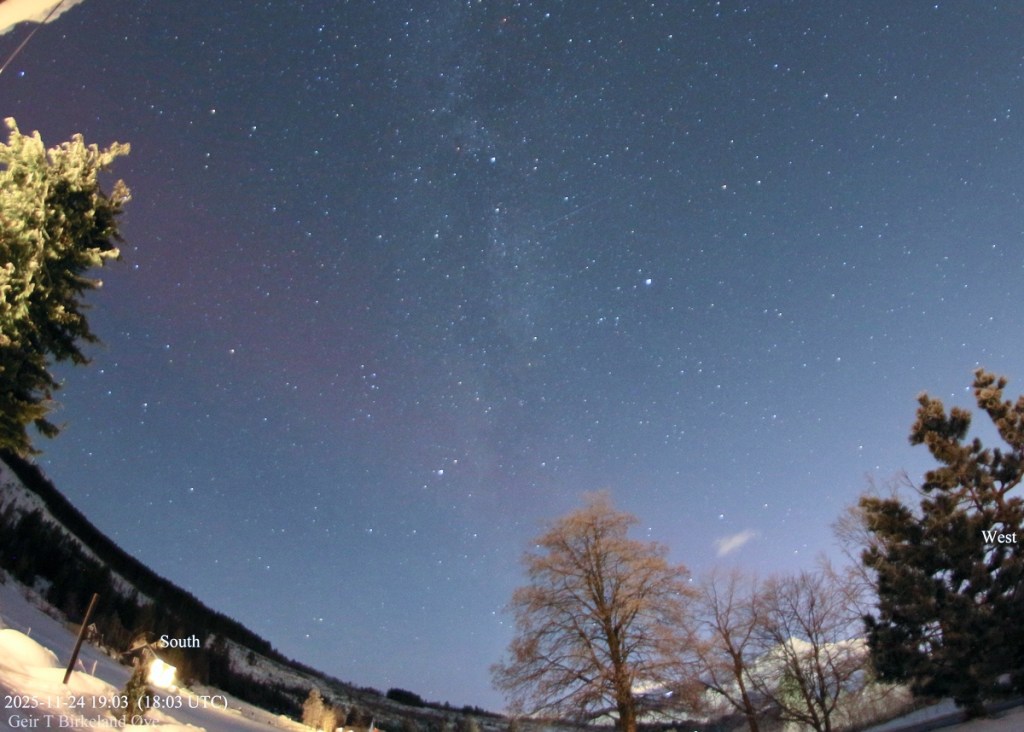
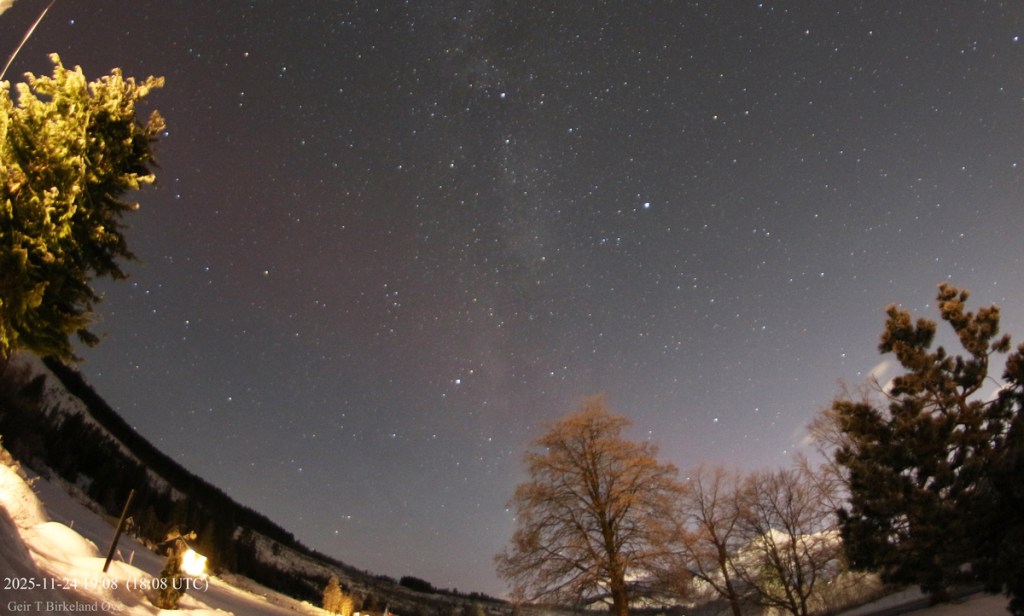
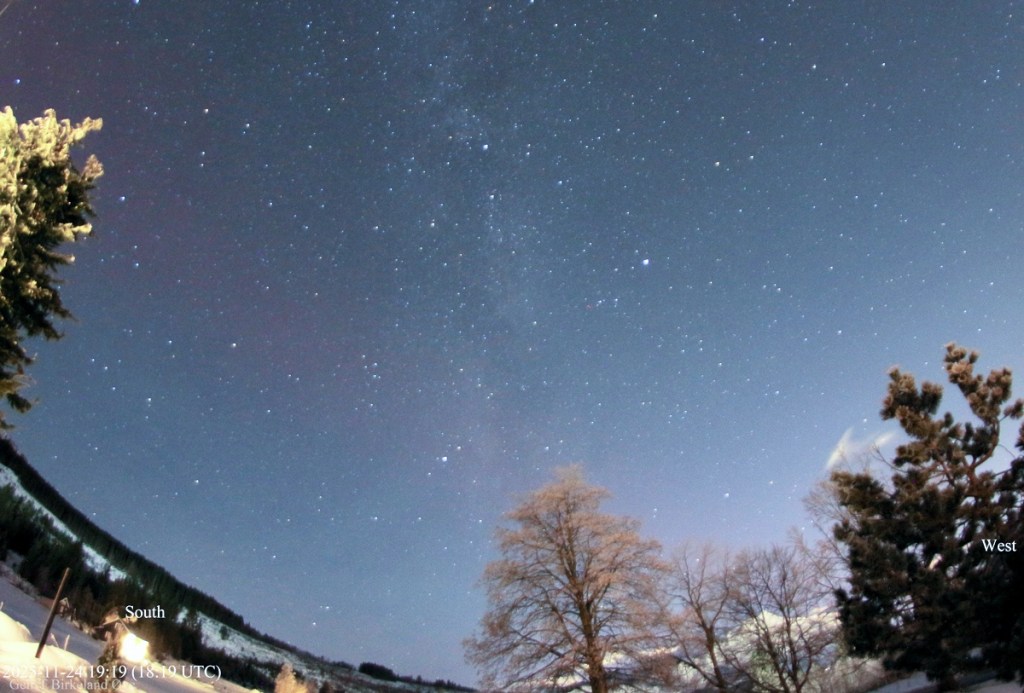
A stable red arc was visible low in the southern sky from about 19:00 to 20:05. The arc showed no noticeable motion or auroral dynamics and remained uniform throughout the observation period. Its pure red emission, consistent with the 630.0 nm O I line, and its long‑lasting, featureless structure are characteristic of a Subauroral Red (SAR) arc. No green aurora or substorm activity was present in the same region at the time


Auroral Dunes. On 10 January 2026, around 19:55 local time (18:55 UTC) and for approximately 16 minutes, I observed a thin, diffuse green aurora showing clear horizontal ripple‑like structures. Thin clouds were present in the foreground and interfered at times, making interpretation more challenging both visually and photographically. Despite the cloud interference, the structures remained stable across several exposures — 20:01, 20:04, and 20:07 local time (19:01, 19:04, 19:07 UTC) — and the pattern is consistent with previously documented auroral dunes. Details: Canon 650D, 8mm fisheye-lens, Iso:1600, various exposure times.


Auroral dunes photographed through a thin veil of clouds.
——————————————————————————————————————————-


Auroral lights in the sky on the night of January 8-9, 2026. Here are a few images of the display. Photographed using a frozen Canon 650D, and an 8mm fisheye lens.
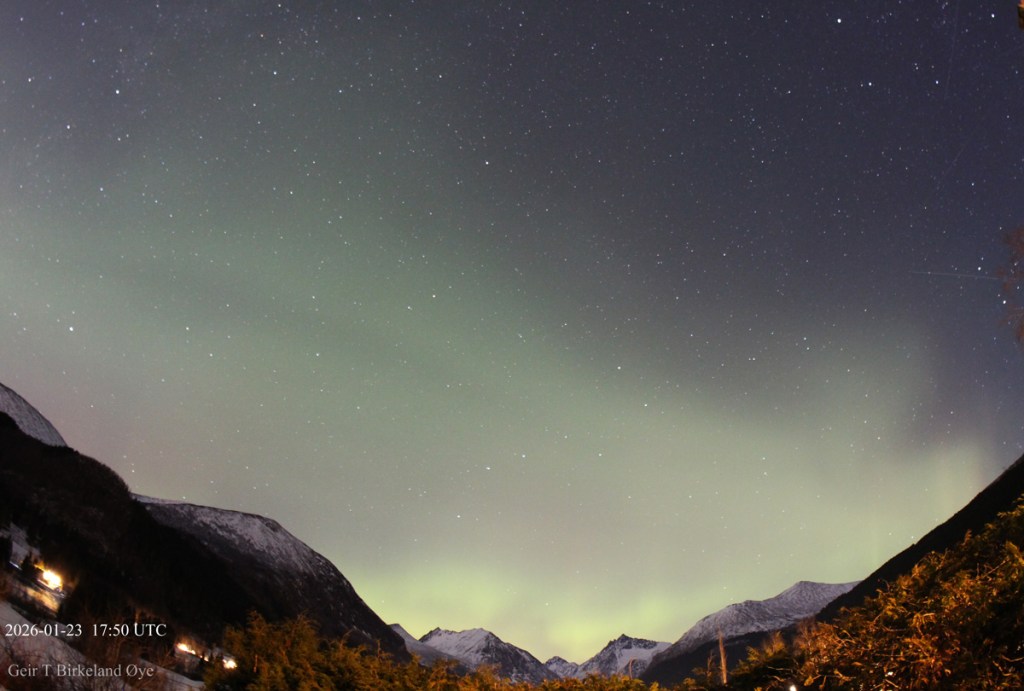
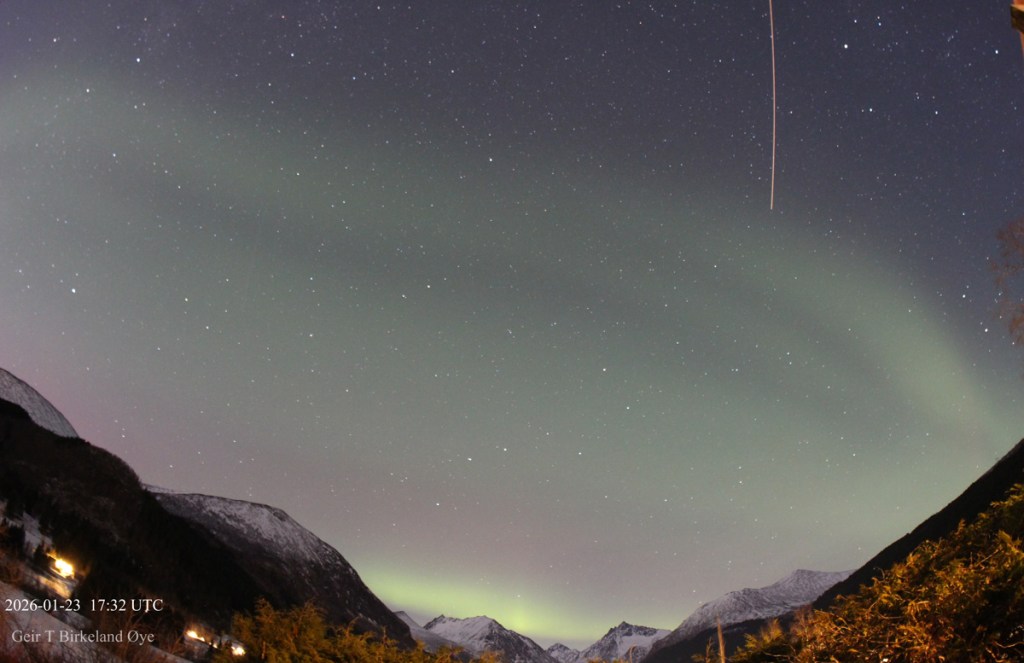


A few images of the Northern lights taken on (a cold (-20 degrees C)) night of January 7-8, 2026. An auroral band developed in the north at around midnight local time. My first observation of the aurora this year. Please, find images enclosed with time in UTC. Details: Canon 650D, 8mm fisheye-lens, Iso:1600, various exposure times